
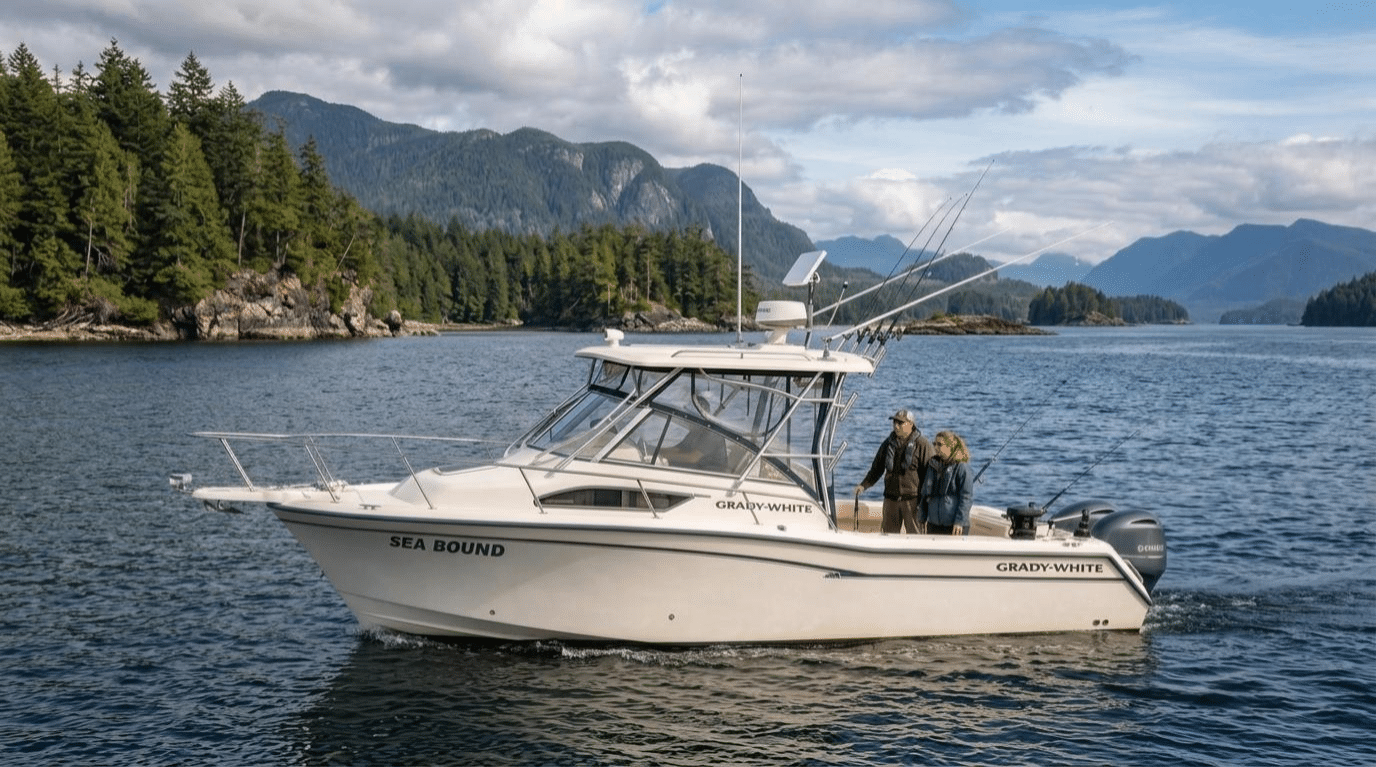
We’ve all been there. You’re tucking into a secluded cove near Winter Harbour, the salmon are biting, but your phone shows a big, fat zero for cellular service. Or you’re bouncing up a decommissioned logging road toward a pristine, unnamed remote lake, completely cut off from the world.
For years, heading out without a Starlink Mini for boat and truck into places like Zeballos or the outer coast of Vancouver Island meant accepting a total communications blackout, but this tiny piece of hardware changes the entire off-grid equation.
If your engine sputtered, your bilge pump failed, or you just needed to check a rapidly changing marine weather forecast, you were relying entirely on hope and a VHF radio.
The Starlink Mini is a literal game-changer for West Coast anglers and explorers—not just because it delivers blistering high-speed internet in the middle of nowhere, but because you can effortlessly swap the exact same unit between your marine rig, your overland truck, and your weekend campsite.
The Tech: Ultimate Portability for Anglers
The Starlink Mini was practically built for the mobile outdoorsman who demands efficiency and rugged performance:
- Size of a Laptop: It weighs just 2.4 lbs and easily slides into a standard backpack, tackle bag, or behind your truck seat.
- Built-in Wi-Fi: The router is integrated directly into the dish casing. There is no extra blue router box to mount or wire up inside your cabin or glovebox.
- Low Power Consumption: It draws a modest 25 to 40 watts. That is small enough to run off a basic 12V cigarette lighter plug, a standalone lithium battery bank, or an integrated power mount.
The Double-Duty Play: Boat to Truck in 60 Seconds
The real magic is that you don’t need to buy two separate systems. With a little planning, you can use the same dish on your dashboard or roof rack on Friday night, and have it clamped to your boat’s radar arch by Saturday morning.
1. The Mounting Strategy
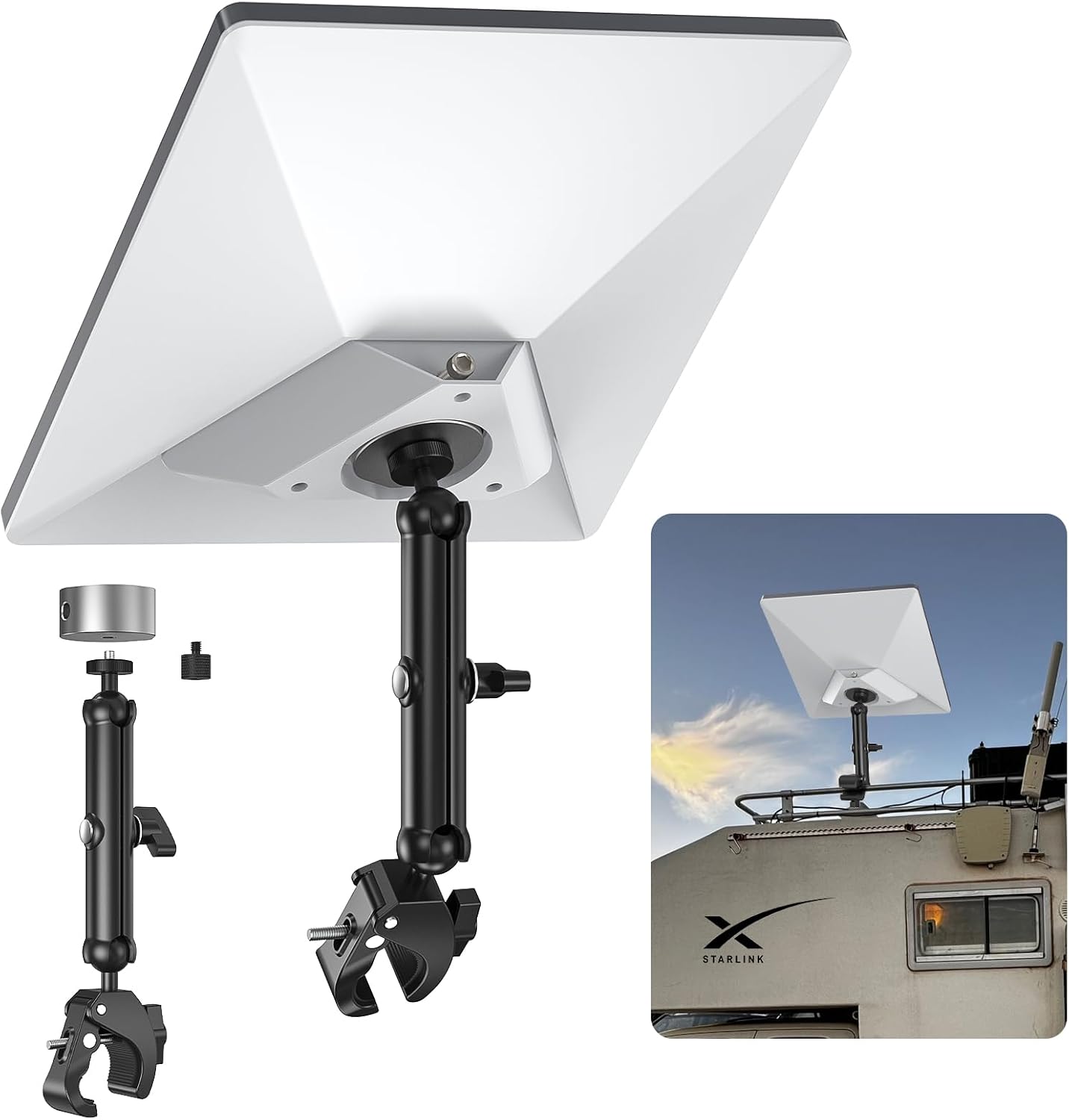
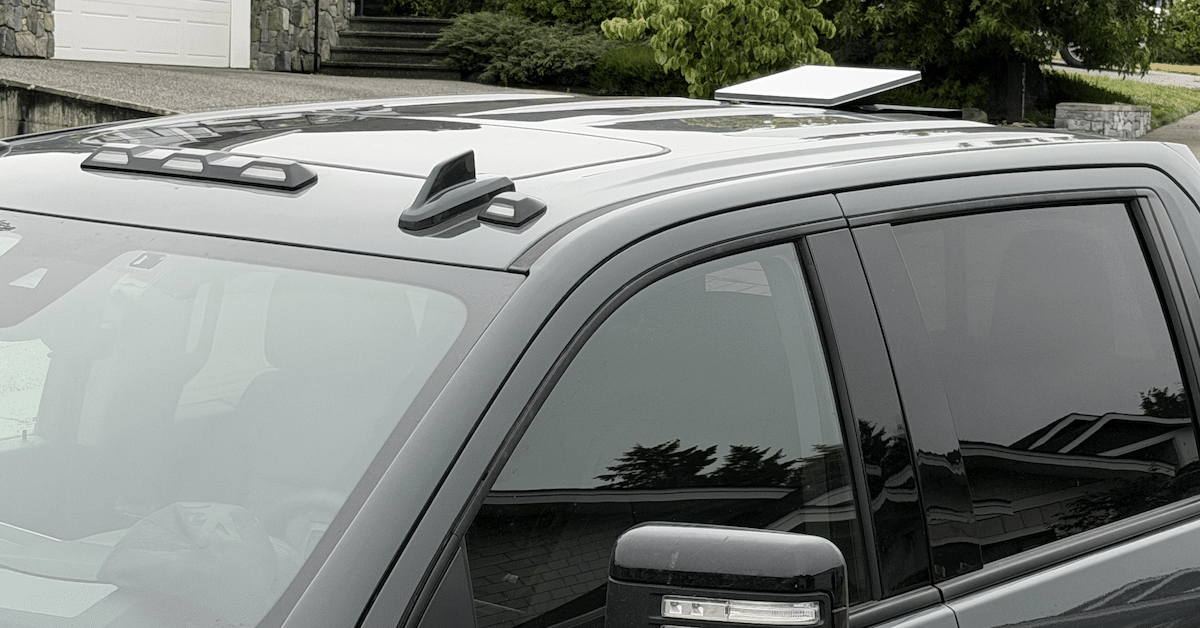
Don’t permanently bolt the dish down. Use quick-release or temporary mounts to make your dual-vehicle system modular. On the boat, a marine rail mount or a heavy-duty ram-mount clamped to your grab rails or rocket launchers keeps the dish secure in choppy saltwater. When it’s time to hit the highway, high-pull magnetic mounts allow you to slap the dish onto your truck’s cab roof or hood in seconds, then lift it off when you park.
2. The Smart Power Setup
Don’t splice into your vehicle’s factory wiring harness. Keep your power completely modular by purchasing a duplicate waterproof 12V DC power cable. Keep one cable zip-tied neatly along your boat’s console running to your accessory panel, and keep the other tucked into your truck’s glovebox to plug straight into the dash outlet. When you switch rigs, you only carry the lightweight dish itself.
How It Works in the Wild
Using it is incredibly simple. You place the dish where it has a relatively unobstructed view of the sky, avoiding thick cedar canopies or high cabin tops. Once powered up, the system takes about 2 to 3 minutes to scan the sky, locate the nearest Low-Earth Orbit (LEO) satellites, and establish a connection.
You don’t even have to manually aim it perfectly—the internal phased-array antenna handles the micro-adjustments electronically. Even tucked deep into the steep fjords of Zeballos, as long as you have a decent slice of open sky overhead, you’ll get blazing-fast speeds.
Bandwidth on the Water: Real-World Data Math
Before you sign up, you need to understand how your family’s digital habits translate into actual gigabytes—especially if you opt for one of Starlink’s metered plans. If you are on the Roam 100GB or Roam 300GB tier, data management matters. Once you blow past those limits, Starlink throttles your speed to a crawl unless you choose to pay for extra high-speed blocks. If you’re on the Roam Unlimited plan, you can ignore the budget and burn data like diesel.
| Activity | Est. Data Consumption | How Far Will 100GB Go? | Survival Tip for Anglers |
|---|---|---|---|
| HD Movie Streaming | ~3 GB per hour | ~33 hours total | Go into your streaming app settings and force the quality to Standard Definition (SD). This drops consumption to just 0.7 GB per hour. |
| 4K Movie Streaming | ~7 GB per hour | ~14 hours total | Just don’t do it. Your tablet or small cabin TV won’t show the difference anyway, and it will chew through a 100GB cap in a single weekend. |
| Online Gaming (Fortnite/Roblox) | ~100 MB per hour | ~1,000 hours | The actual gameplay data is surprisingly tiny! However, game updates are silent killers. Disable auto-updates before leaving the driveway. |
| Social Media Uploads | ~15 to 50 MB per post | Thousands of posts | Uploading high-res brag shots or a 30-second reel of a trophy Chinook will barely dent your data. Post away. |
| FaceTime / Video Calls | ~1.5 GB per hour | ~66 hours | Live streaming or FaceTiming the family from the fishing hole is incredibly efficient. Call them when the net is wet. |
| General Web Browsing | ~100 to 200 MB per hour | Hundreds of hours | Virtually unlimited. Checking Windy, Navionics, or reading your favourite outdoor magazines won’t register as a drop in the bucket. |
Dry Camping: External Battery Options & The USB-C Trap
When you drop the truck tailgate or set up camp at a remote lake, you enter the world of dry camping. There is no shore power, no idling truck engine, and no gas generator running to disturb the peace. You rely entirely on external batteries.
But beware the internet forums recommending cheap USB-C cables plugged into standard pocket power banks. Many users report the internet randomly dropping out under load. The reason comes down to voltage sag and power negotiation.
The Mini requires a steady, unyielding stream of juice. While it draws a modest 25W to 40W normally, it spikes to 60-watt peaks when booting up or fighting through thick clouds. Smart USB-C ports often briefly stop power to “renegotiate” voltage if another device is plugged in, or they sag below the required threshold when the battery drops under 50%. A microsecond dip forces the entire dish to reboot, causing a three-minute service gap. To avoid dropouts, you need a dedicated, reliable external battery setup.
Three Ways to Power Your Mini in the Backcountry
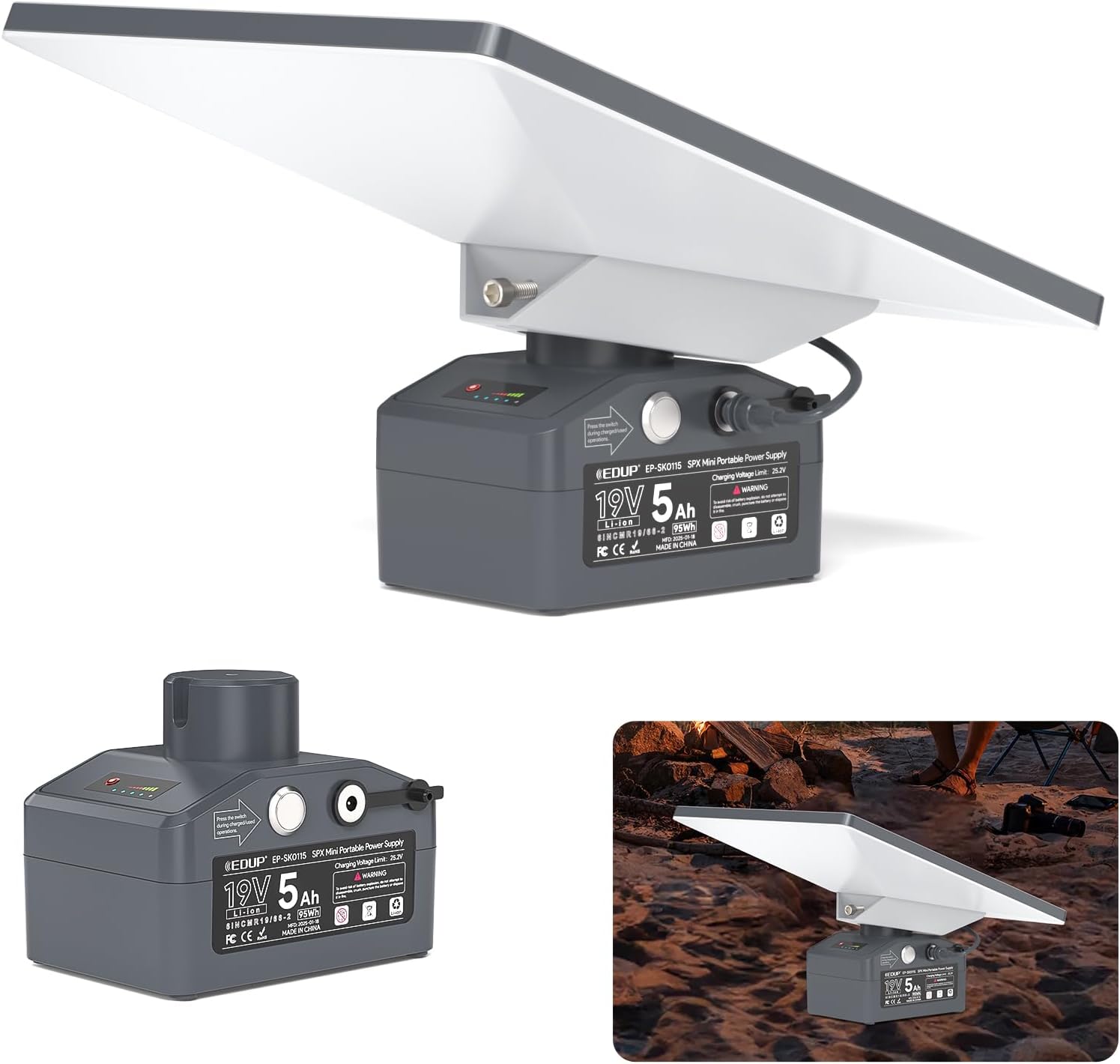
1. Ultra-Portable: The Integrated Battery Base (e.g., EDUP 95Wh 19V waterproof clip-on external battery pack)
If you want the cleanest, most packable setup possible for quick sessions or remote work by the lake, an all-in-one integrated battery power base is incredibly slick.
These custom-molded battery packs clip directly onto the back of the dish, serving as both a stand and a power source. They use a native 19V stabilized DC output barrel plug, bypassing the USB-C dropout issues entirely. At 95 Watt-hours (Wh), these units give you about 2.5 to 3.5 hours of continuous streaming and browsing.
2. The Heavy Hitter: 12V LiFePO4 Lithium Batteries (e.g., Eco-Worthy 100Ah)
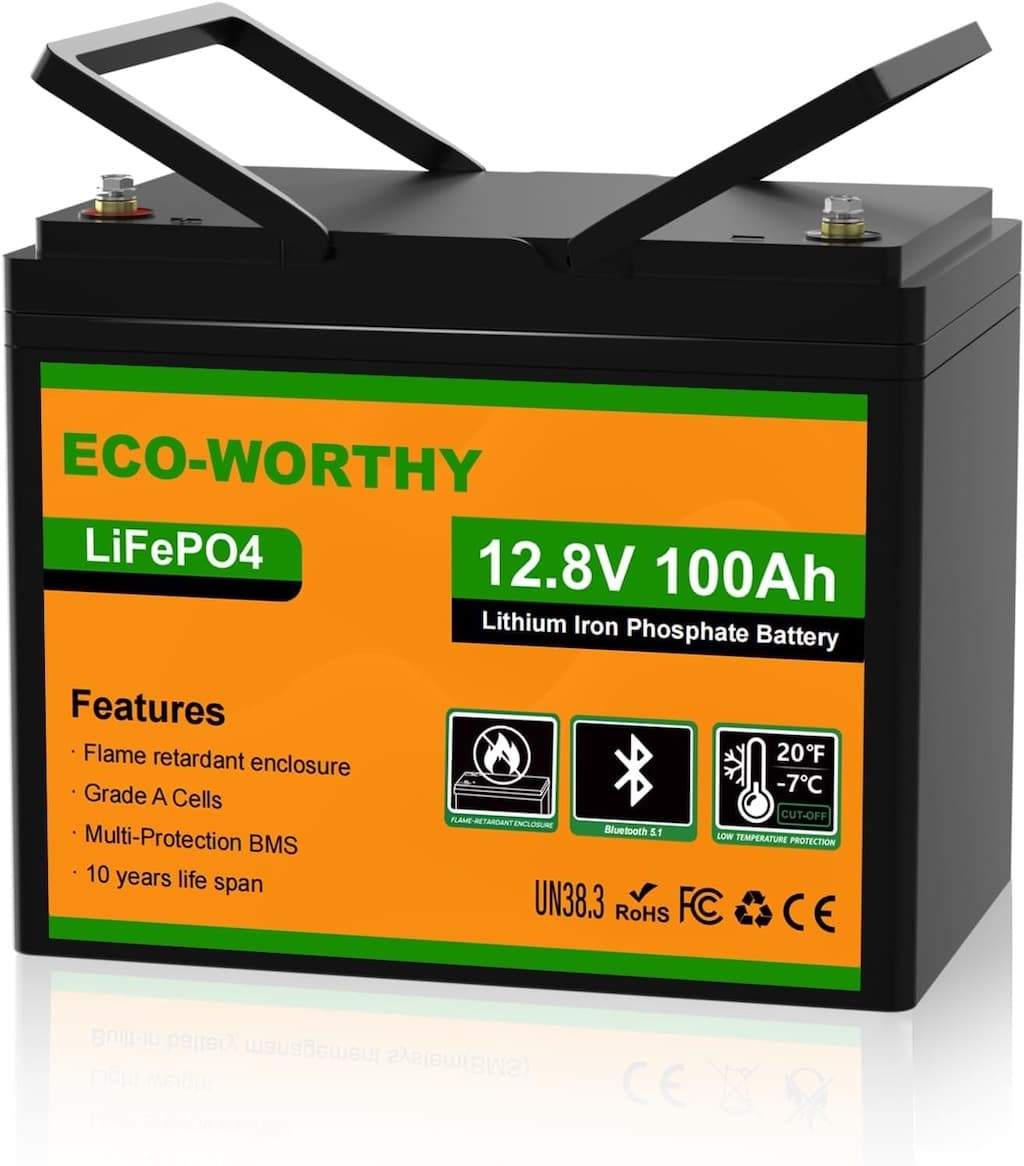
For a full weekend of uninterrupted streaming, movie nights for the kids, and heavy media uploading, a standalone Lithium Iron Phosphate (LiFePO4) deep-cycle battery is the gold standard. The Starlink Mini draws roughly 1.5 to 2.5 Amp-hours (Ah) per hour when running on a native 12V system.
If you run the dish for a heavy 8 hours a day over a 3-day weekend, you’ll consume roughly 40Ah to 60Ah of juice. A single Eco-Worthy 12V 100Ah LiFePO4 Battery delivers 1,280 Watt-hours of power. It will effortlessly run your Starlink all weekend long with enough headroom left over to power a 12V camp fridge. To connect it, you will need a high-quality 12V Female Cigarette Lighter Socket with Ring Terminals bolted permanently to your battery posts, providing a clean, fused 12V port for the hardware.
3. The Emergency Budget Play: A Standard Car/Truck Battery
Can you just hook it up to a spare 12V lead-acid automotive battery or your truck’s starting battery? Yes, but proceed with caution. Standard car batteries are built for massive, short bursts of cranking power, not long, slow drains. If you drain a starting battery past 50% capacity, you permanently ruin its lifespan.
Use this option only as a backup, and buy a heavy-duty battery alligator clip-to-12V female socket adapter to clip directly onto the positive and negative terminals of the battery.
Running the Starlink Mini via its native DC cord directly into a 12V lithium system saves up to 20% of your total battery capacity compared to running it through a 120V AC solar generator inverter. Keep it DC native to maximize your remote wilderness weekend.
🔋 Deepen Your Off-Grid Knowledge
Before you drop cash on a new power setup for your wilderness travels, make sure you understand the core differences in performance, safety, and longevity between traditional and modern cell chemistries by reading our comprehensive guide on Choosing Marine Batteries: Lithium vs. Lead-Acid.
Cost Breakdown: Hardware & Canadian Plans
SpaceX has streamlined its pricing structure in Canada, making the entry-level hardware highly accessible for regional roaming applications:
| Item / Plan | Cost (CAD) | Best For | Details |
|---|---|---|---|
| Starlink Mini Kit (Hardware) | $299 CAD | One-time purchase | Compact, backpack-sized dish with built-in Wi-Fi router. |
| Roam – 100 GB Plan | $75 / month | Casual weekenders | High-speed internet for approx. 1 week of typical use. Unlimited low-speed data after cap. |
| Roam – 300 GB Plan | $110 / month | Active families | Reliable high-speed connectivity for regular travelers. Unlimited low-speed data after cap. |
| Roam – Unlimited Plan | $200 / month | Remote workers & heavy streamers | Best performing internet on the go with unlimited high-speed data. Includes international travel. |
| Standby Mode | $10 / month | Seasonal users | Keeps your dish active for basic emergency messaging and easy reactivation. |
⚓ Crucial Tip
If you want to use the internet while your boat is cruising at 25 knots or your truck is barreling down the highway, you must opt for a plan that officially supports in-motion data. Basic Roam plans will temporarily pause your data stream if the internal GPS detects you are moving faster than 15 km/h.
The Verdict
If you only fish within sight of a major highway, stick to your cell phone. But if your adventures take you into the raw, un-serviced corners of Vancouver Island like Zeballos, Nootka Sound, or the backcountry lakes of the interior, configuring a Starlink Mini for boat and truck systems is an absolute no-brainer.
It bridges the gap between rugged isolation and modern safety. By setting up a simple, modular mount on both your truck and your boat, and pairing it with a cost-effective, modern LiFePO4 battery setup, you double the value of your outdoor investment and ensure that no matter how far off the grid you go, you’re never truly stranded.