
Deciding whether to invest in a belly boat often comes down to one simple realization: kayak fishing is great exercise and trailering an aluminum tinner is exciting, but wrestling heavy watercraft onto roof racks or burning endless fuel every weekend keeps you off the water when you should be fishing.
After years of hauling rigid hulls across British Columbia, many anglers discover that the best way to access untouched honey holes beyond casting distance from shore is a lightweight float tube. It strips away the hassle, drops your operating costs to zero, and unlocks secluded pockets of water that trailered crafts and shorebound anglers can never reach.
WHAT IS A BELLY BOAT (FLOAT TUBE)?
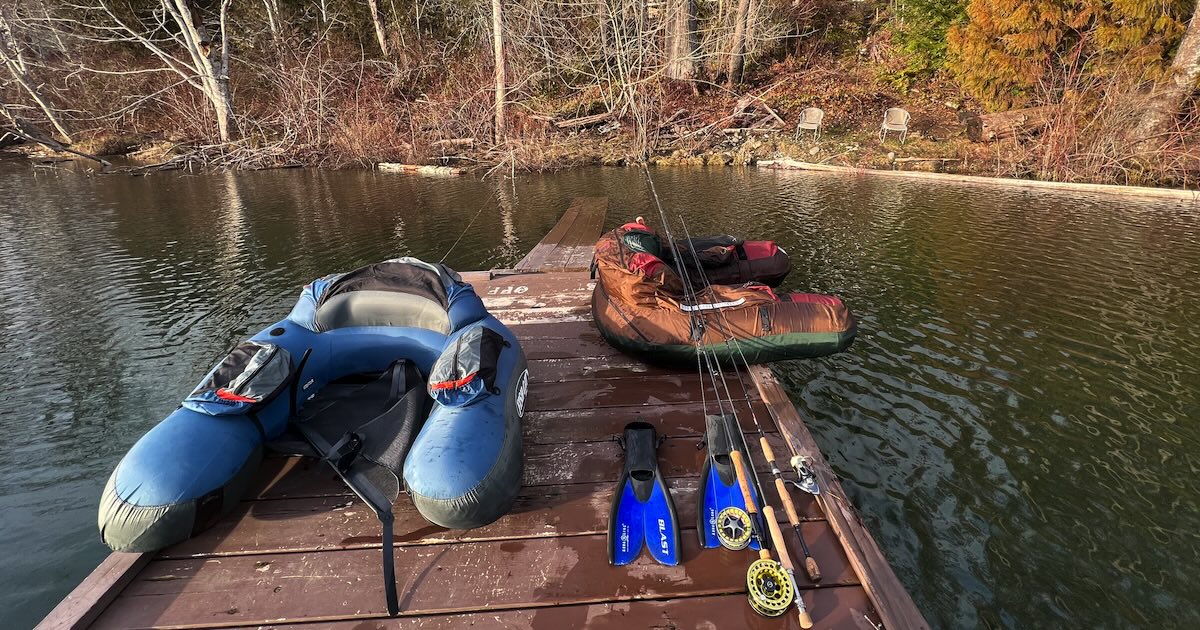
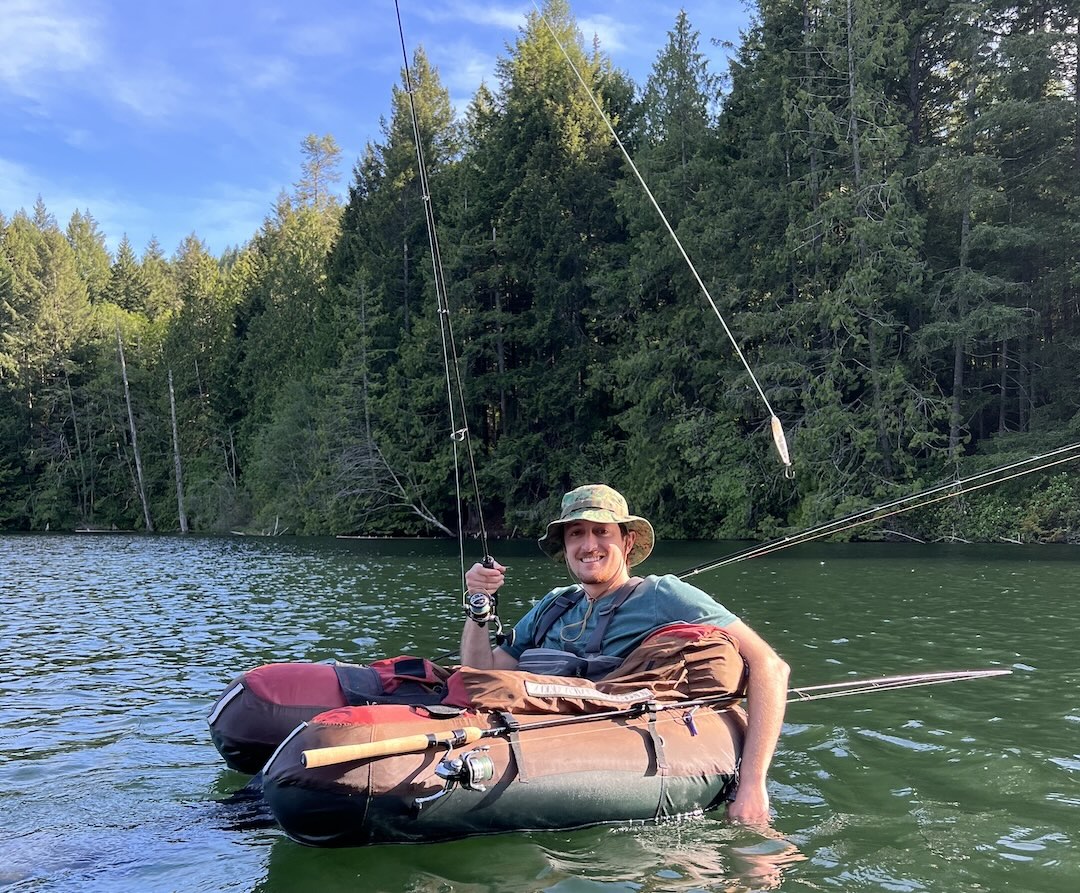
A belly boat—traditionally called a float tube or kick boat—is an inflatable personal watercraft designed to suspend an angler in a secure, seated position directly on the water. Modern models feature elevated mesh or high-density foam seating positioned between heavy-duty PVC or Cordura U-shaped or V-shaped inflatable bladders.
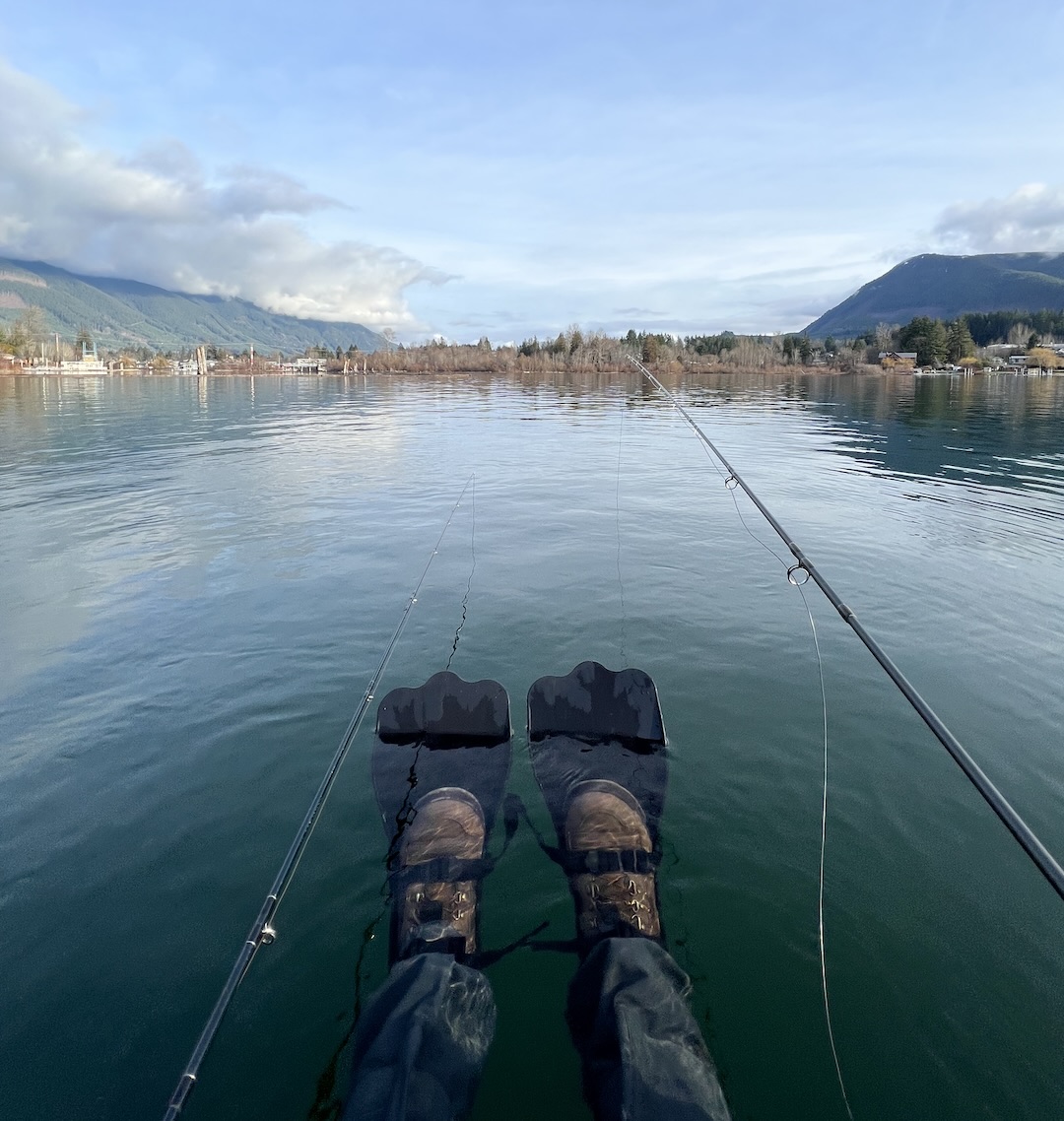
Anglers suit up in stockingfoot chest waders and wading boots, stepping into specialized float-tube fins. Propulsion is entirely foot-driven: with an easy, rhythmic backwards kicking stroke, you glide across the surface with pinpoint precision. This setup has exploded across BC’s interior and coastal waters because it offers whisper-quiet stealth, hands-free boat control, and effortless maneuverability.
WHY BUY A BELLY BOAT OVER A KAYAK OR BOAT?
While fishing kayaks and pontoon boats remain popular, a belly boat solves the storage, weight, and transport headaches that often keep anglers parked at home:
- Unmatched Portability: No boat launch, roof rack, or trailer required. When deflated, the entire craft rolls into the size of an airline duffel bag, sliding into the trunk of a compact car with room to spare.
- True Hands-Free Fishing: Paddle kayaks force you to put your rod down every time the wind drifts you off your line. In a belly boat, subtle fin kicks hold your drift, back you away from overhanging limbs, or turn your heading while both hands remain firmly on the rod.
- High Stealth Profile: Floating at surface level produces virtually zero hull displacement or slap. Spooky cutthroat trout and shallow largemouth bass will often swim directly beneath your flippers without bolting.
- Accessible Price Point: Reliable, proven setups like the Outcast Fish Cat line frequently sell new or lightly used for under $150 to $300 CAD, keeping personal watercraft access within reach of any budget.
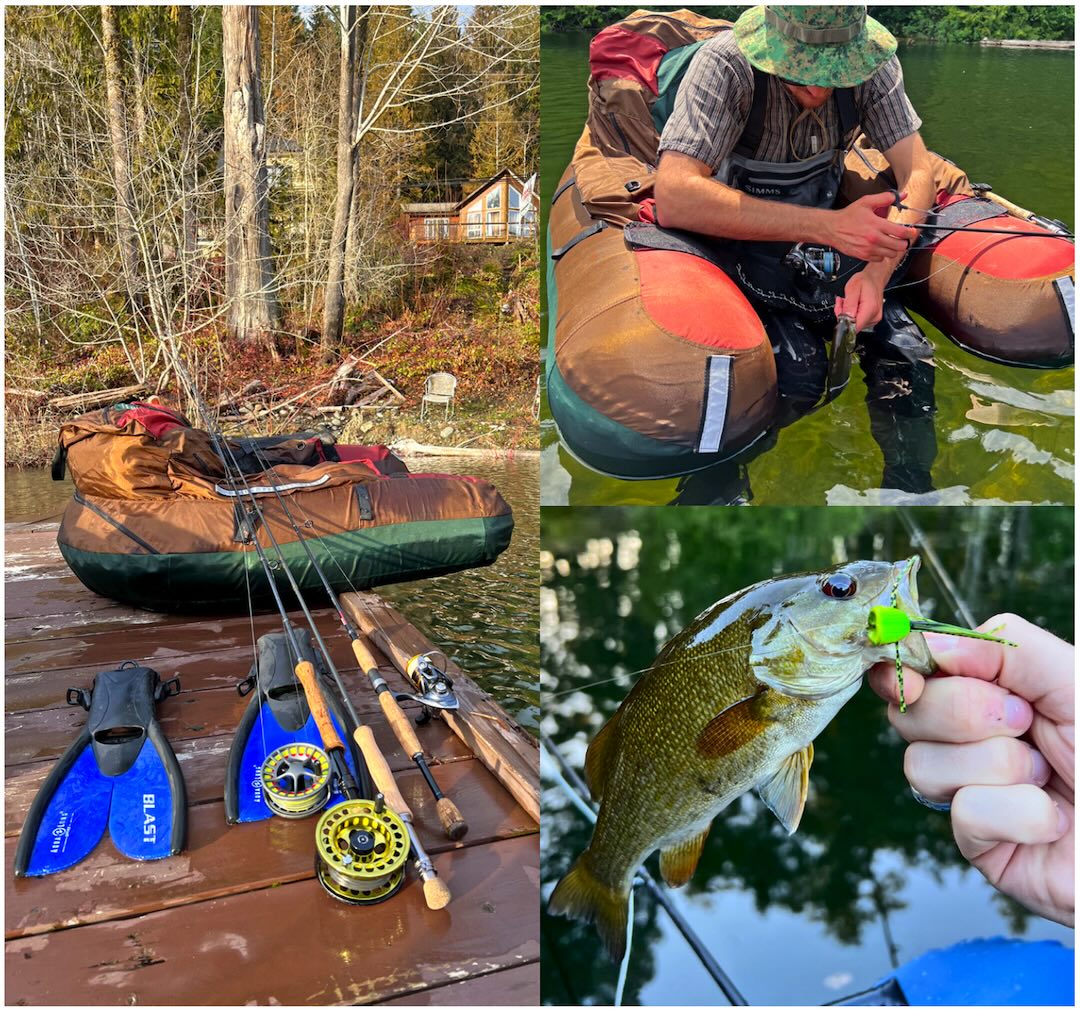
ACCESSING UNPRESSURED BACKCOUNTRY HONEY HOLES
Many of Vancouver Island’s most productive trout waters sit miles down old logging spurs with overgrown trails, decommissioned bridges, and zero launch infrastructure. Bushwhacking an 80-pound kayak through tight salal and devil’s club is exhausting; walking a 14-pound belly boat in on shoulder harness straps is effortless.
Most modern tubes feature built-in backpack D-rings and generous zippered storage compartments on each arm. You can load your tackle boxes, water bottle, rain shell, and lunch straight into the pontoons, ditching a traditional backpack entirely. Slipping into water that hasn’t seen an artificial fly or spoon all season is where the real value of a belly boat proves itself.
TACTICS FOR BASS AND TROUT
A belly boat is just big enough to carry essential gear while staying compact enough to navigate shallow backwaters. It is exempt from power-motor restrictions on sensitive lakes, slipping silently beneath low willow branches, past dock pilings, and into thick lily pad channels.
When working shoreline weeds for spring and summertime largemouth bass, this agility lets you pitch Texas-rigged plastics, buzzbaits, or weedless frogs right into heavy timber without spooking bucketmouths. If a hooked fish wraps your line around deadfall, you can kick right up to the snag and free it in seconds.
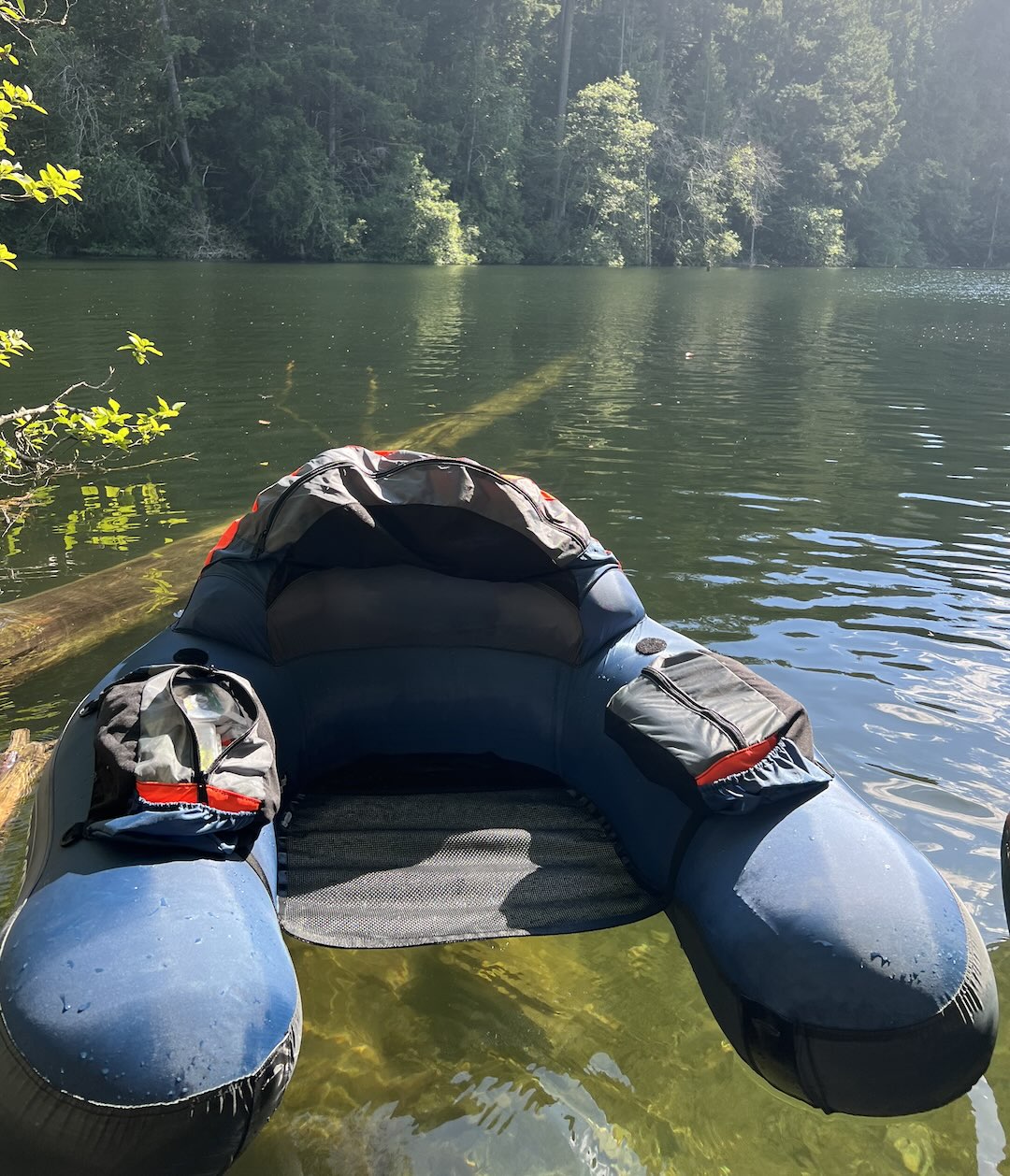
Slow-Trolling Leeches for Cutthroat & Rainbows
For stillwater fly anglers, a belly boat serves as an unbeatable slow-trolling platform. When prospecting lakes like Cowichan, Shawnigan, or Spider Lake for cruising coastal cutthroat and rainbow trout, a steady fin cadence mimics the undulating motion of swimming leeches with precision.
The natural sway of your kick combines with wave chop to pulse your fly rod tip, imparting erratic action that electric trolling motors cannot replicate. Trailing a short-tailed black or olive Woolly Bugger on an intermediate sinking line along weed drop-offs consistently out-fishes static presentations.
Never set a bare rod across your lap without a lanyard. Install coil leashes on your fly rods, net, and waterproof phone case. Kicking against unexpected wind gusts or fighting a sudden lake lunker can easily knock loose gear over the side into 30 feet of water.
Float tubes and belly boats fall under Canadian non-motorized personal watercraft guidelines. Always wear an approved, low-profile manual inflatable PFD, carry a sound signaling device (pealess whistle), and check regional boat restrictions and barbless single-hook rules via the BC Freshwater Fishing Regulations Synopsis before launching.
CARING FOR YOUR FLOAT TUBE
Modern belly boats feature tough multi-chamber bladders made from heavy nylon and PVC fabrics, making unexpected punctures rare. Simple end-of-trip maintenance ensures your craft lasts for seasons:
- Rinse Valves and Seams: Mud, silt, and pond scum can build up around inflation valves. Rinse with clean tap water after every trip to prevent grit from compromising airtight seals.
- Towel Dry Completely: Wipe down outer fabric skins with an old towel before packing away to prevent mildew and musty fabric rot.
- Fold Loosely: Deflate and fold the bladders with gentle rolls rather than hard, sharp creases to avoid stress points in cold weather.
- Store Securely Indoors: Keep your gear in a climate-controlled room or high plastic tote out of direct sunlight and safely away from rodents that chew on vinyl bladders during winter months.
- Outcast Sporting Gear: Manufacturer specifications, bladder repairs, and accessories for Fish Cat belly boats.
- BC Freshwater Fishing Regulations: Official seasonal lake regulations, motor bans, and quotas for Region 1.
- Transport Canada Office of Boating Safety: Lifejacket standards and required safety equipment for personal non-powered watercraft.
MORE VANCOUVER ISLAND FISHING GUIDES
Expand your tactics and freshwater repertoire with our top-rated guides:
Angler & IFM Field Contributor
Alec Hansen is a passionate freshwater angler and field contributor for Island Fisherman Magazine, specializing in backcountry lake access, stillwater fly presentation, and small-water tactics. Support local independent angling coverage by picking up a copy or subscribing at Island Fisherman Magazine.