

Recreational catches of strait of georgia coho salmon in 2023 and 2024 were the best the region has seen since 1994. Catches were not only exceptionally large in volume, but anglers consistently landed heavy 10- to 12-lb fish through August and September. While there is no single simple explanation, over 25 years of dedicated ocean research allow us to identify the core drivers behind this historic turnaround.
Old-timers fondly recall the decades when running out into the Strait just before dinner guaranteed a coho. Even during winter months when fish were smaller, a resident “blueback” was always on the menu. That reliable pattern shifted dramatically in the late 1980s, culminating in a full fishery collapse after 1994.
While overfishing and freshwater habitat loss played roles, the primary driver was a steep drop in ocean survival—representing a ~90% decrease compared to 1970s levels. This decline occurred synchronously across Puget Sound and the U.S. West Coast. Unraveling the mechanisms behind that drop explains why coho returns surged so dramatically in recent years.
Ocean Growth Of Smolts
How fast coho grow after entering the ocean is the single most critical factor governing their survival and migration behavior. Rapid growth during the first few marine months protects young smolts from predators and builds energy reserves required to survive their first ocean winter.
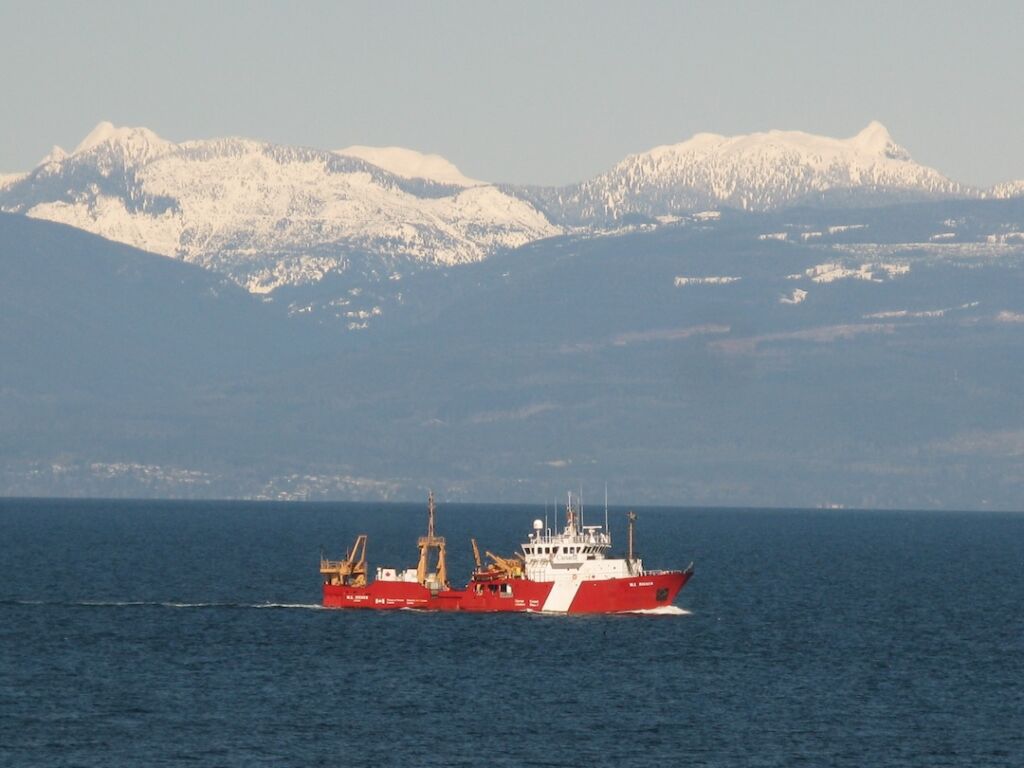
Dr. W. E. Ricker research ship carrying out marine salmon surveys in the Strait of Georgia. Photo: Dick Beamish

Research trawl net fished from the W.E. Ricker to sample juvenile salmon. Photo: Chrys Neville
Our long-term marine studies began in 1998, utilizing two-week trawl surveys on the research vessel W.E. Ricker every autumn. Sampling spanned from surface waters to 45 meters depth across all regions of the Strait—from Cape Mudge in the north down to the Canadian/U.S. border.
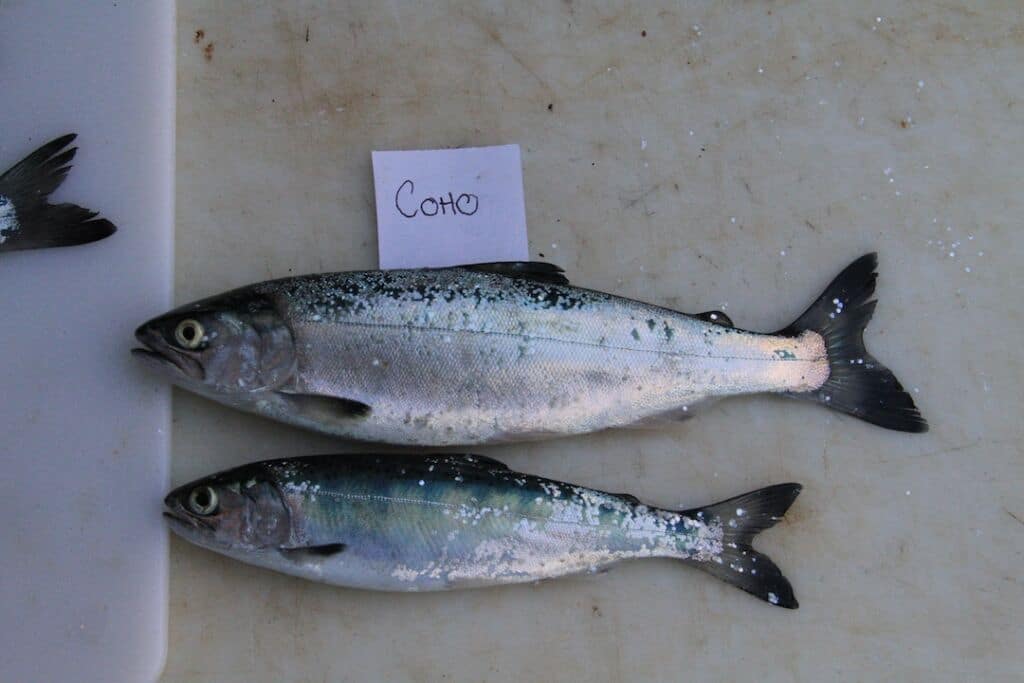
Juvenile coho salmon collected during a September research trawl catch. Photo: Chrys Neville
Catches of juvenile coho in September of their first ocean year (coho spend two years in fresh water/estuaries and one winter in the ocean) showed declining abundance from 2000 through 2008, followed by a strong upward rebound starting in 2009 (Graph A).

Graph A: Average index of juvenile coho abundance in September surveys during their ocean entry year.
Similarly, early ocean survival followed a downward trajectory until 2008 before reversing into a sustained upward trend beginning in 2009 (Graph B).

Graph B: Percentage of juvenile coho entering the Strait of Georgia that survived to September of their first ocean year. Survival remained consistently high after 2014.
Crucially, starting in 2013, researchers observed a sharp increase in the average physical length of juvenile coho during September surveys (Graph C).
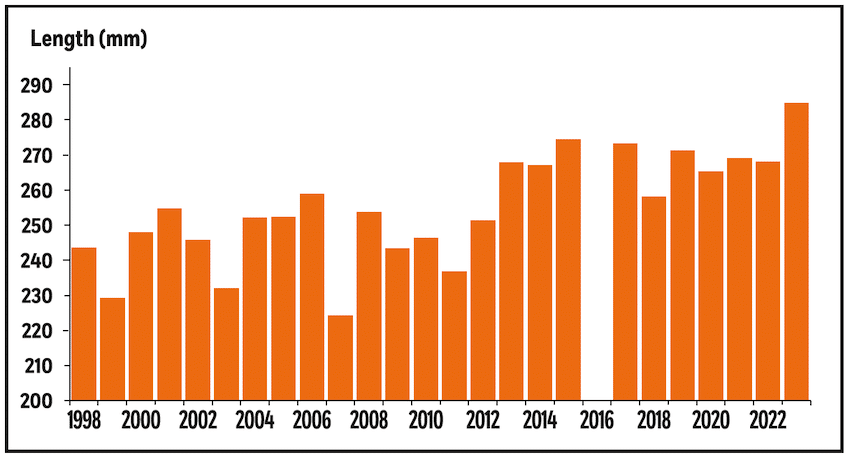
Graph C: Average length of juvenile coho in September surveys, showing a notable size increase starting in 2013.
Parallel oceanographic studies show that these coho abundance and survival trends track plankton production almost perfectly. Plankton abundance serves as a primary index for coho food availability. Food abundance during the first four marine months directly regulates strait of georgia coho salmon abundance, survival, and growth—defining the overall biological carrying capacity of the ecosystem.
Ocean Behaviour of Juvenile Coho
Prior to the mid-1990s, roughly 40% to 60% of juvenile coho remained in the Strait of Georgia over winter, while the remainder migrated to the outer west coast of Vancouver Island. Beginning in the winter of 1994–1995, that balance shattered: virtually all juvenile coho vacated the Strait late in the year and did not return until well after the following winter.
This mass migration directly caused the collapse of the local sport fishery, leaving few fish in inner waters for anglers. It was not until 2017–2018 that volunteer participants in the Avid Angler Program (such as Clyde Wicks) reported coho overwintering in the Strait once again. By the winters of 2022–2023 and 2023–2024, massive populations of coho chose to stay inside all winter.
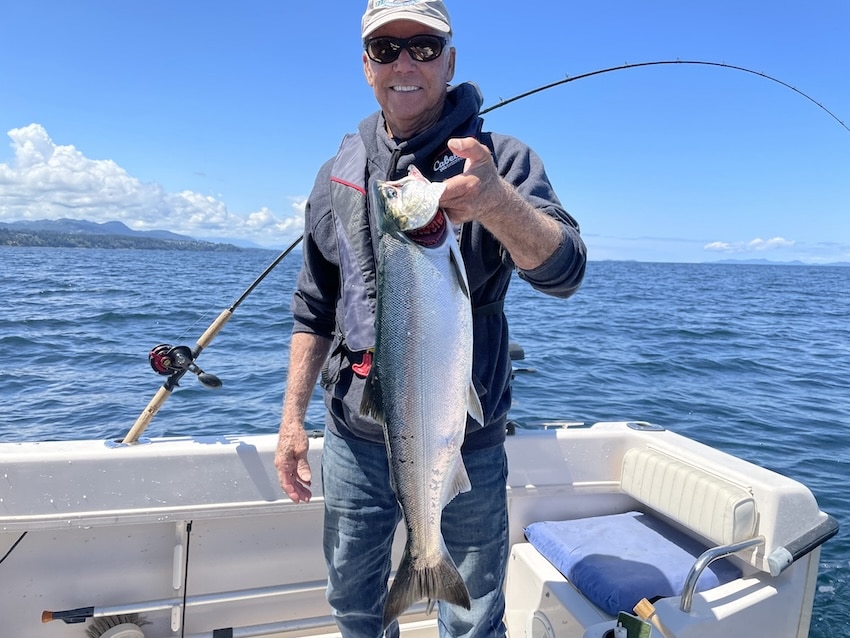
Clyde Wicks fishing off Nanaimo. Data from Avid Angler participants provided early evidence that coho were remaining in the Strait over winter. Photo: Clyde Wicks
Thus, the outstanding fishing in 2023 and 2024 stemmed directly from accelerated early growth, higher ecosystem carrying capacity, and improved survival. These factors incentivized coho to remain inside the Strait through winter and right into the summer fishing season before returning to natal streams to spawn.
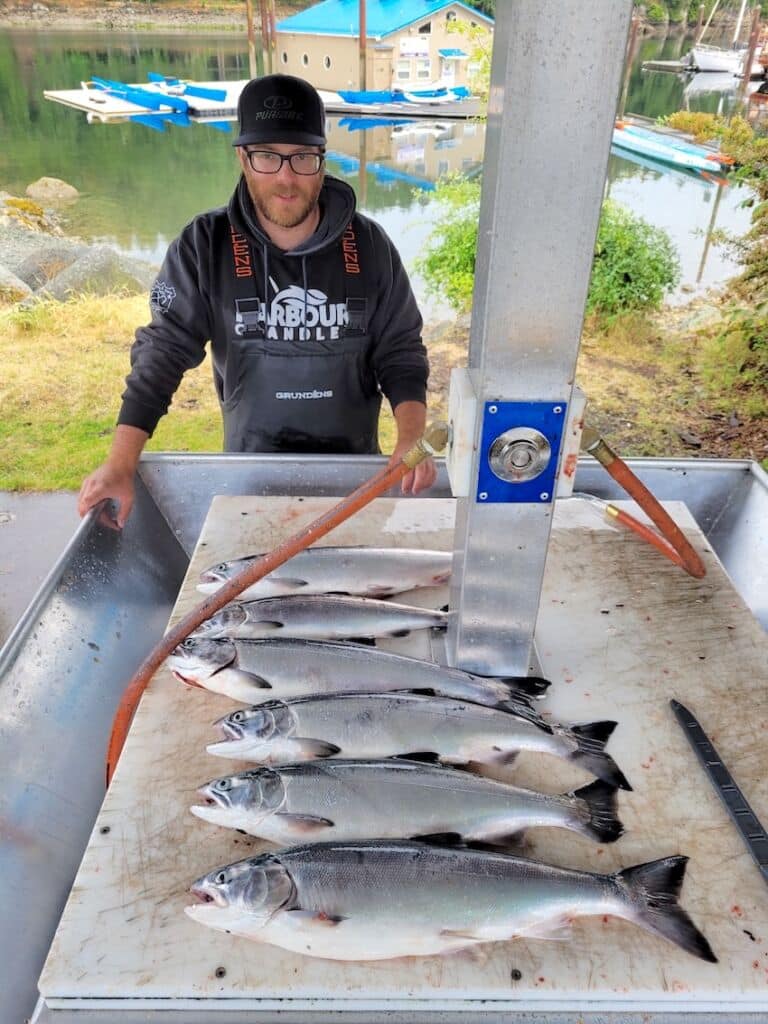
Incredible bait and coho abundance off Nanaimo in June 2024. Photo: Mike Anderson
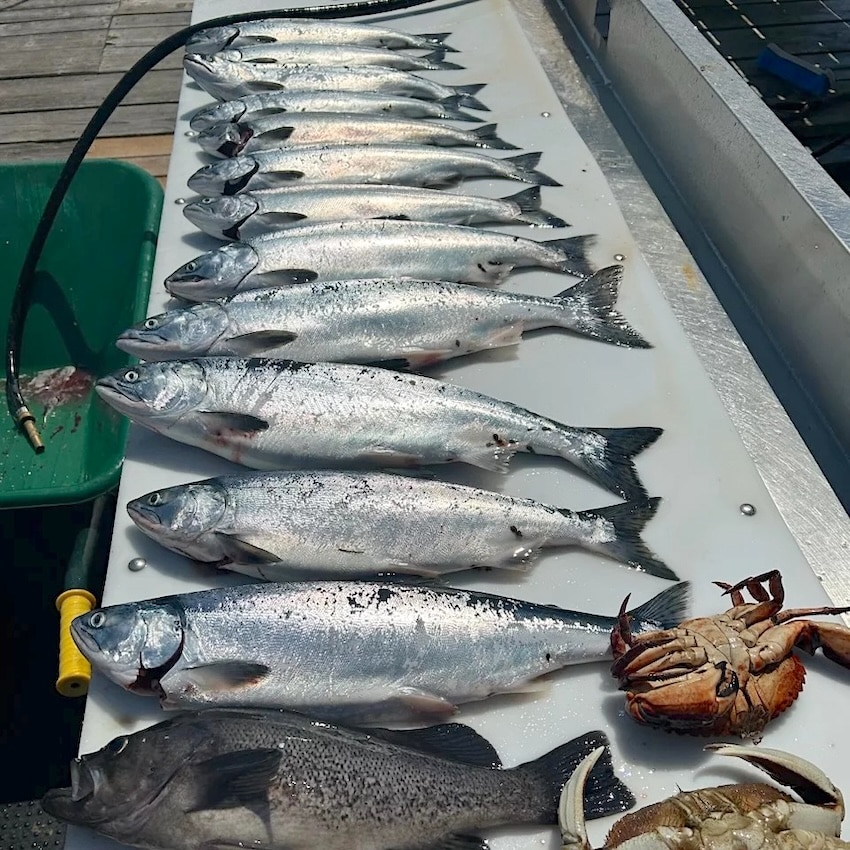
Charter guests displaying strong coho numbers in Sooke. Photo: Ron Neitsch / 2 Reel Fishing Adventures
A Scientific Hypothesis: Critical Metabolic Windows
Understanding how these marine shifts occur is vital for future fisheries management—especially as climate change alters ocean food production. Our working hypothesis is supported by extensive peer-reviewed research on salmonid physiology.
Animals naturally adapt based on environmental cues (solstices, water temperatures, prey density). During critical developmental windows, young salmon make physiological “metabolic decisions” regarding how energy is stored or used, triggering hormone production that dictates growth and migratory urges.
Coho that surpass a critical size threshold by a key seasonal date (such as the summer solstice) alter their metabolism to prioritize fat storage. Fish that accumulate high lipid reserves hit a second threshold by the autumn equinox, triggering a metabolic decision NOT to produce the migratory hormones that drive offshore movement to the open Pacific.
Why Is All Of This Important?
The fundamental rule of Pacific salmon marine ecology is simple: “Coho that grow faster sooner, survive better.” Early ocean growth during the initial weeks determines overall production across hundreds of distinct river stocks.
To safeguard future fisheries, management must protect the evolved genetic diversity of different coho populations, allowing various runs to enter the ocean across staggered timeframes. Furthermore, hatcheries can leverage this science by timing smolt releases to align with peak ocean productivity windows, maximizing survival for both hatchery and wild stocks.
🎣 EXPLORE BC SALMON FISHING GUIDES
Want to target West Coast coho and Chinook with local experts? Browse our verified directory of Vancouver Island charter captains: Island Fisherman Magazine Directory.

Dr. Richard Beamish
Order of Canada recipient and internationally recognized Pacific fisheries scientist.

Chrys Neville
DFO research biologist with over 30 years specializing in Strait of Georgia marine ecosystems.
Words by Dr. Richard Beamish and Chrys Neville. Header coho salmon fry photo by Eiko Jones Photography. This feature appeared in Island Fisherman magazine. Never miss another issue—subscribe today!