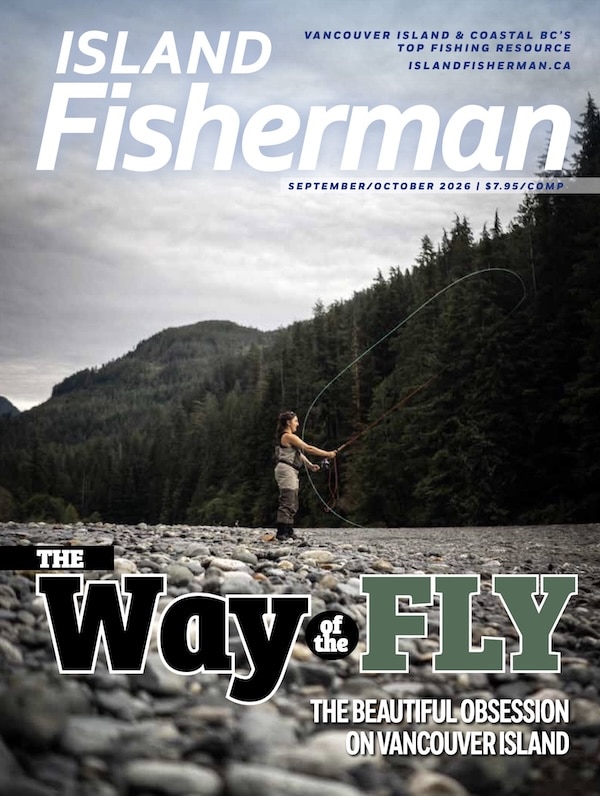

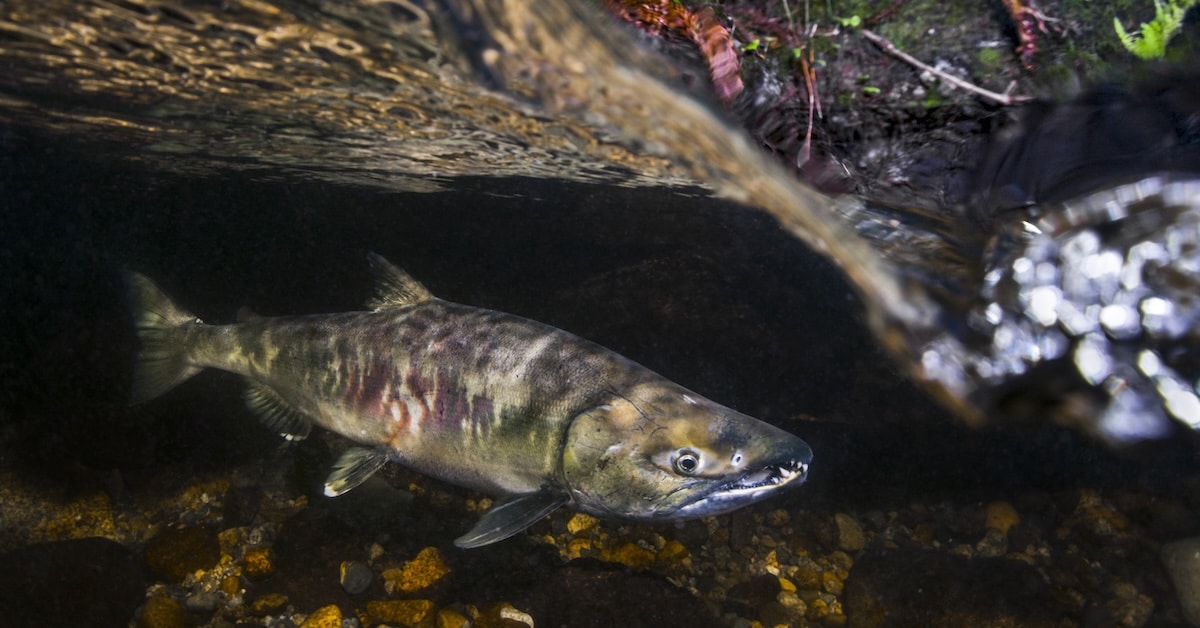
A groundbreaking study on chum salmon ocean migration has uncovered the first direct evidence that juvenile chum salmon form organized schools in the open waters of the Gulf of Alaska during their first winter. In March 2022, researchers aboard the chartered research vessel F/V Raw Spirit captured seven juvenile chum salmon grouped tightly inside a small two-meter section of a research gillnet. What makes this finding remarkable is that these individual fish originated from rivers spanning a coastline of over 1,600 kilometers—from northern British Columbia all the way to central Alaska.
While British Columbians have long marvelled at how adult salmon return to the exact stream in which they hatched, finding juvenile fish from vastly different river systems schooling together thousands of kilometers offshore reveals a level of migratory complexity never before documented in chum salmon.
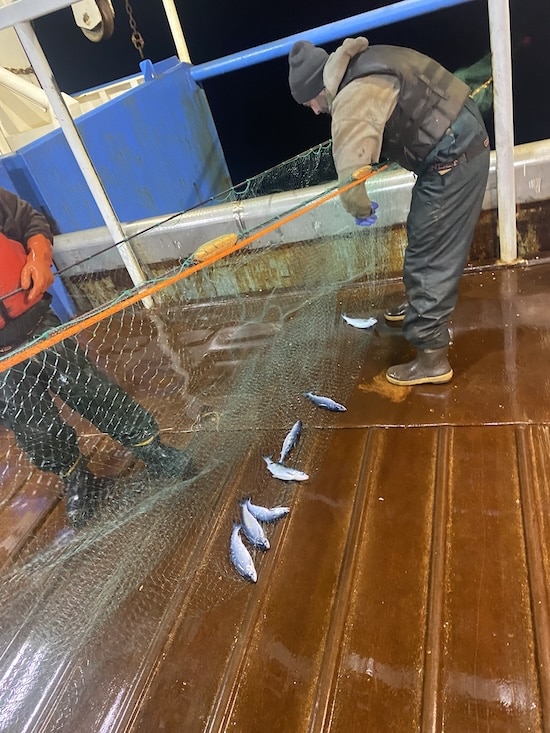
The small school of chum salmon captured in a 2 m square of gillnet. Photo: Geoffrey Martynuik
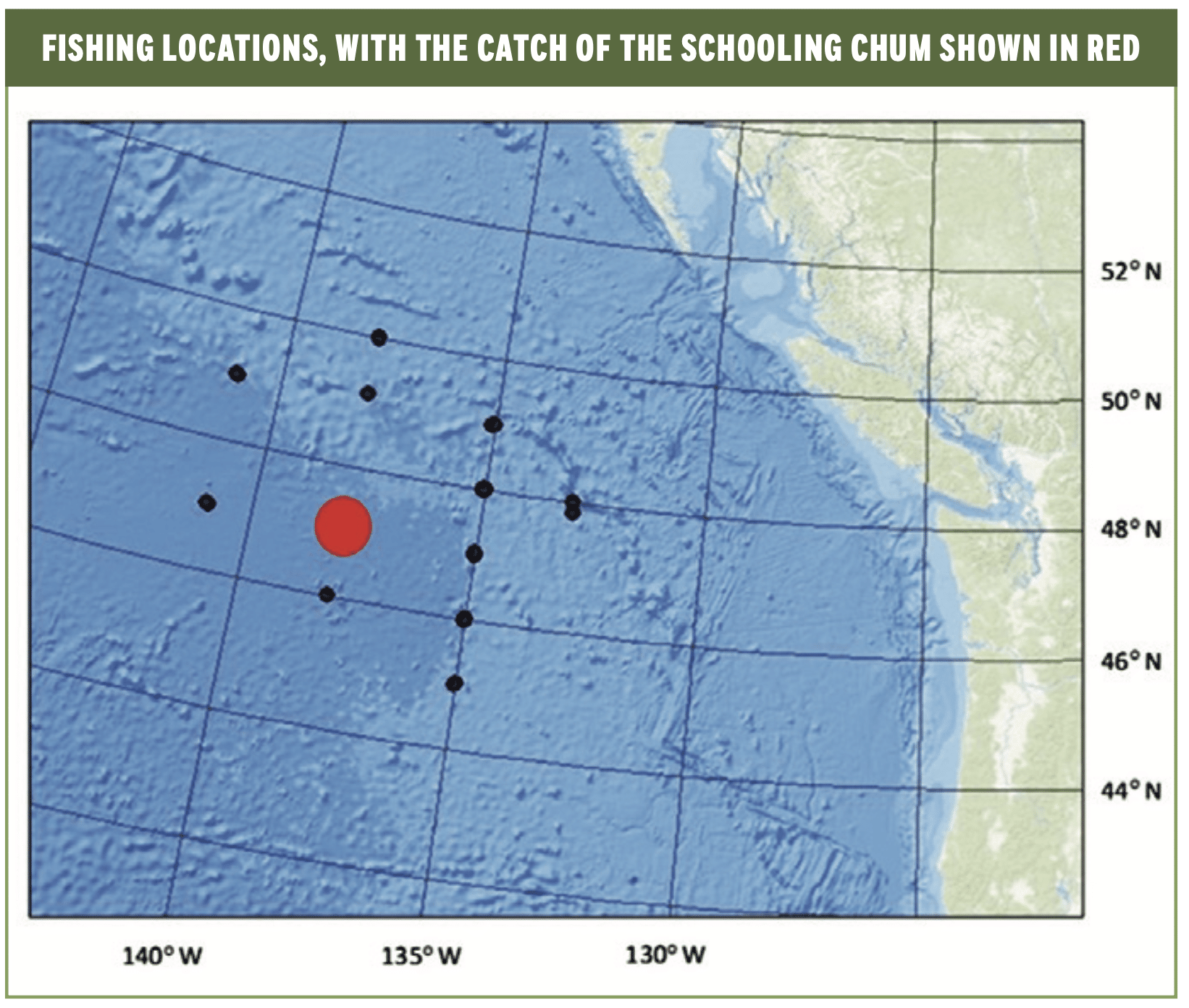
Research fishing locations in the Gulf of Alaska, with the catch of the schooling chum salmon highlighted in red.
To arrive at the exact same location in the open Pacific Ocean before their first winter, each juvenile salmon relies on an inherited genetic map and an internal geomagnetic positioning system. However, forming a cohesive school far from shore requires additional sensory mechanisms:
- Chemical Signaling (Pheromones): Each fish releases species-specific odor cues that allow nearby chum salmon to detect and locate one another in vast marine waters.
- Precise Timing Cues: Populations are genetically calibrated to initiate offshore migrations at specific intervals so they intersect ocean currents at the optimal time.
- Olfactory Memory: As mature fish eventually head home, regional scent signatures guide them back to their ancestral spawning grounds.
| Fish ID # | Geographic Origin (DNA) | Wild vs. Hatchery Status | Known Hatchery / Release Info |
|---|---|---|---|
| Fish 1 & 2 | British Columbia, Canada | Wild / Mixed Stock | Coastal BC watersheds |
| Fish 3, 4, & 5 | Southeast Alaska, USA | Hatchery Origin | Medvejie Hatchery (Released May 2021) |
| Fish 6 & 7 | Southern & Central Alaska | Hatchery / Wild Mix | Northern Gulf coast systems |
Fish form schools primarily for predator defense and efficient foraging. During winter, food resources drop significantly, and chum salmon feed predominantly on gelatinous plankton. “Group feeding” reduces the individual energy required to search for sparse prey, helping young salmon conserve energy to meet basic metabolic demands during harsh winter months.
Understanding Global Chum Salmon Catch Declines
Chum salmon spend three to four years in the ocean, representing approximately 95% of their entire lifecycle after emerging from freshwater gravel. Historically, strong ocean survival was around 3%, with an average baseline of 1.8%. However, since roughly 2016, commercial chum salmon catches across North America and Asia have experienced a sharp downturn despite global hatchery releases remaining consistently high.
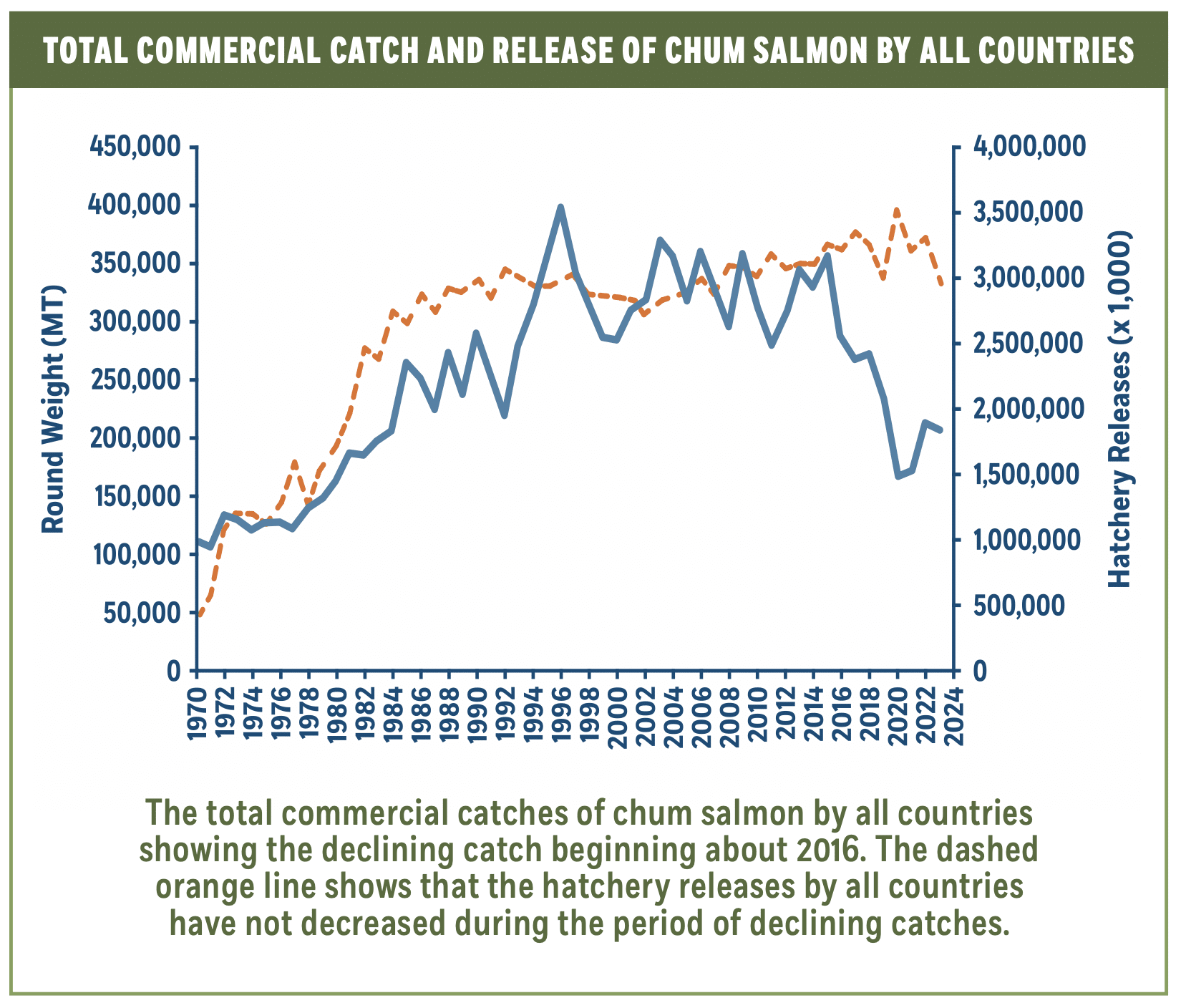
Total commercial catches of chum salmon by all nations alongside international hatchery release numbers from 1970 to 2024.
Unravelling how juvenile chum utilize open-ocean habitats during winter provides key answers to why certain populations adapt better to changing marine climates than others. Understanding these offshore dynamics ensures managers can implement effective stewardship strategies across North Pacific waters.
🎣 EXPLORE BC SALMON FISHING GUIDES
Browse our verified local operators to plan your next bucket-list BC fishing expedition: Island Fisherman Magazine Guides.

Dr. Richard Beamish
Order of Canada and Order of BC recipient, internationally respected scientist and salmon researcher.

Chrys Neville
Research biologist at the Pacific Biological Station in Nanaimo with 30+ years studying salmon marine survival.
Words by Dr. Richard Beamish and Chrys Neville. Photos courtesy of Geoffrey Martynuik, Eiko Jones Photography, Dan Bouillon, and the Science Research Team. This article appeared in Island Fisherman magazine. Never miss another issue—subscribe today!