
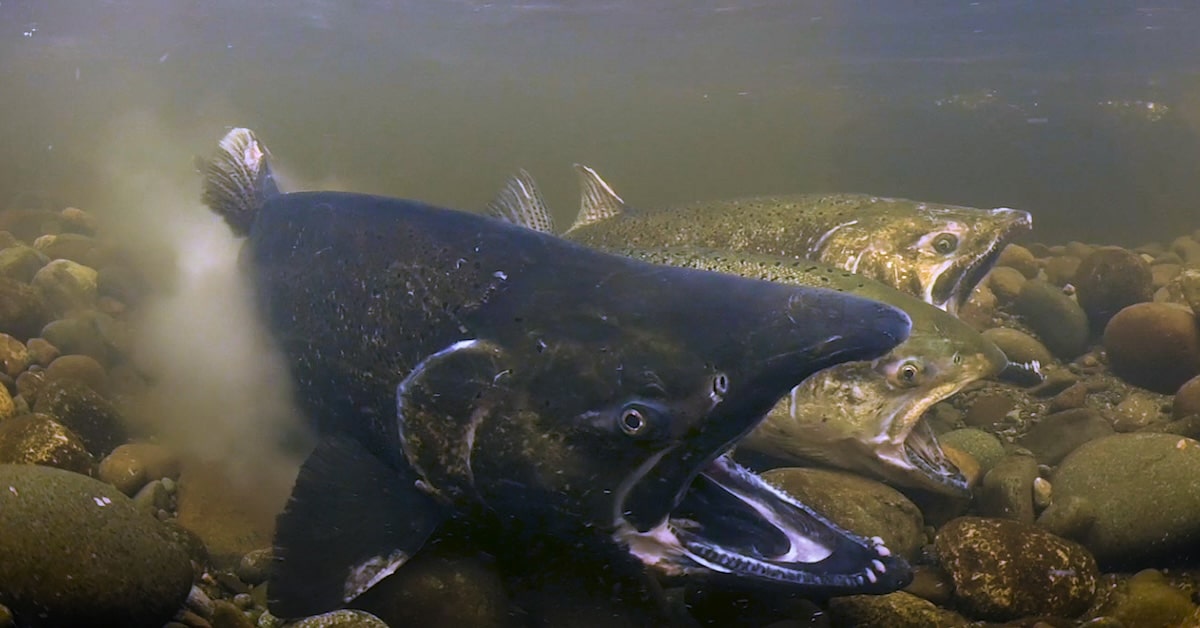
Understanding the recent historic surge in Fraser River Chinook salmon is critical for anyone who cares about West Coast angling and fisheries stewardship. The Fraser River is the major producer of Chinook salmon in British Columbia and one of the five most productive Chinook salmon rivers around the entire North Pacific. In 2023, the Fraser witnessed the largest return of Chinook recorded since detailed tracking began in 1979—an astounding return of approximately 950,000 adult fish. This was nearly double the previous record of 550,000 fish set back in 2003.
For recreational anglers across British Columbia, this massive return created unforgettable opportunities. As local Clyde Wicks reported, “Chinook fishing in the lower Strait of Georgia during this cycle was, without a doubt, the best in many years, delivering a much-needed economic boost for local charter businesses and coastal communities.”
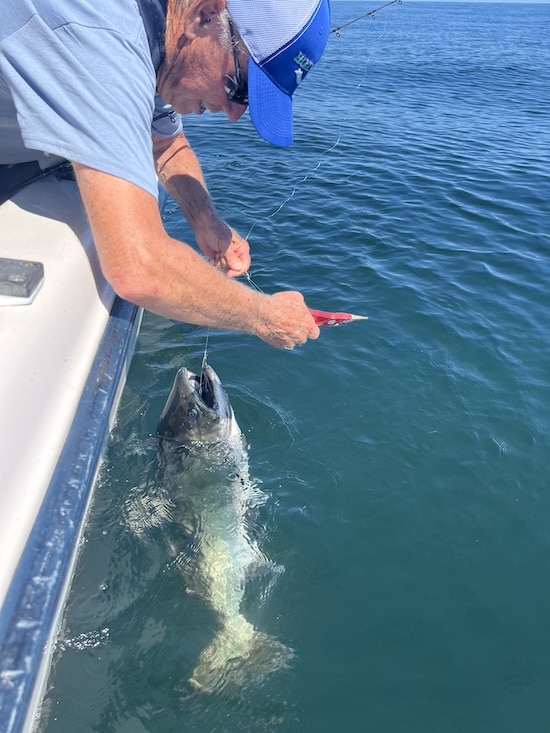
Clyde Wicks releases a 15-lb Chinook salmon in the Entrance Island area. Photo: Tim Wicks
Understanding Chinook Salmon Biology and Life History
Chinook salmon (Oncorhynchus tshawytscha) are the largest of all Pacific salmon species. While they occur on the Asian side of the Pacific, they are roughly 10 times more abundant along the west coast of North America. Adults can live up to 9 years, though most mature between 3 and 5 years of age. Early research classified Chinook into two primary life history types based on how long juveniles remain in fresh water:
- Subyearlings (Ocean-Type): Fry that migrate out to the ocean during their first spring/summer, within months of emerging from the gravel.
- Yearlings (Stream-Type): Juveniles that spend an entire winter in fresh water, migrating to the ocean in their second year of life.

Life history stages of South Thompson River Chinook salmon.
Adults returning to spawn are further categorized into spring, summer, and fall runs based on when they re-enter the river system. For example, the “summer 4.1 population” originating in the South Thompson River represents fish that return to spawn in the summer at age 4, having spent one winter as eggs in the gravel and one spring in fresh water as subyearlings before entering the marine environment.
| Population / Stock | Life History Type | Ocean Entry Timing | Primary Marine Rearing Area |
|---|---|---|---|
| South Thompson River | Subyearling (Summer 4.1) | Late June to Early July | Eastern Margin of Strait of Georgia |
| Cowichan River | Subyearling / Yearling mix | Spring | Gulf Islands (until Autumn) |
| Harrison & Chilliwack Rivers | Subyearling | Spring | San Juan Islands & Northern Puget Sound |
A Record Return in an Era of Overall Decline
Across much of the Pacific Northwest—from Alaska down to California—many wild stocks of Chinook salmon have experienced dramatic long-term declines driven primarily by reduced ocean survival. Because of this broader downward trend, a sudden record-breaking return to the Fraser River raised immediate scientific, management, and public interest.
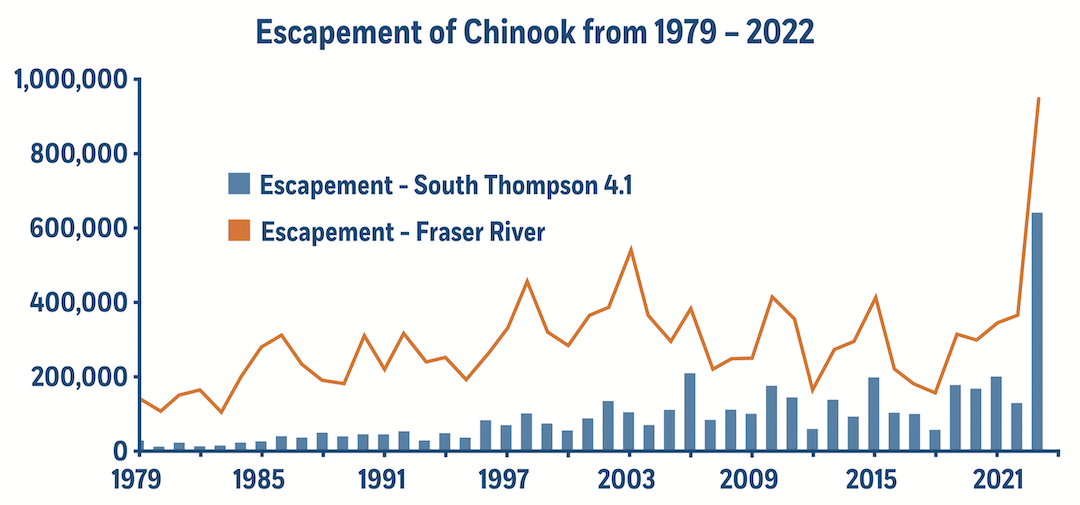
Graph A. Total escapement of spawning Chinook salmon returning to the Fraser River (orange line) and South Thompson River (blue bars) from 1979 to 2023.
The key to unraveling this surge lies in stock composition. Approximately 68% (642,000 fish) of the adult Fraser River Chinook salmon return in 2023 originated from a single system: the South Thompson River. This single return was 3.1 times larger than any previously recorded return to the South Thompson. Remarkably, South Thompson populations account for only about 10% of the roughly 130 distinct Chinook populations within the Fraser watershed.
What DNA Science and Trawl Surveys Revealed
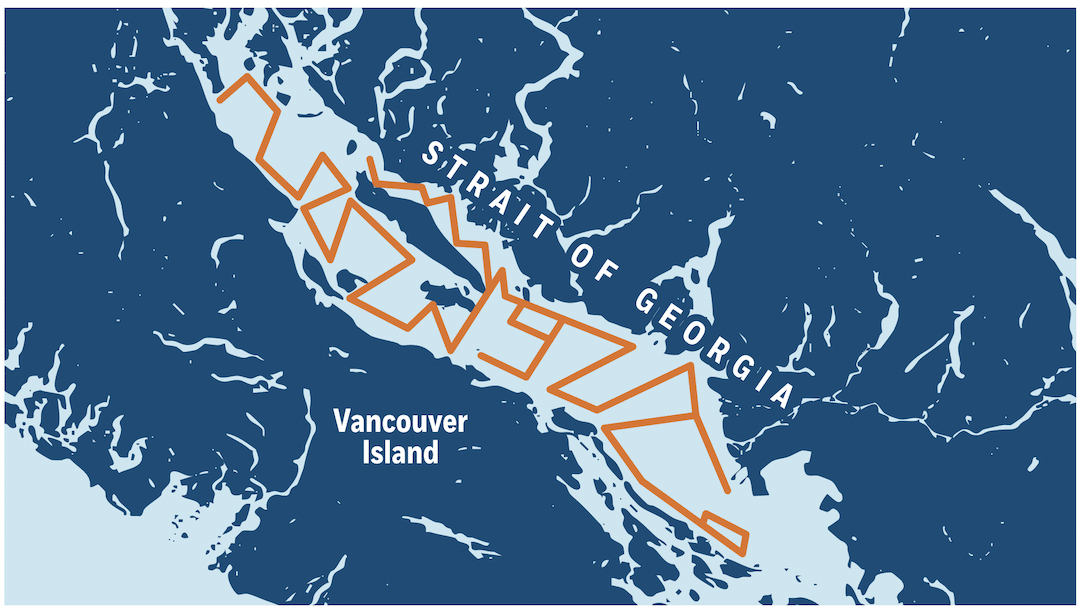
Track line followed each spring, summer, and fall across the Strait of Georgia for juvenile salmon research surveys.
Fisheries and Oceans Canada (DFO) conducts standardized juvenile salmon surveys every September across the Strait of Georgia using research vessels like the Sir John Franklin.
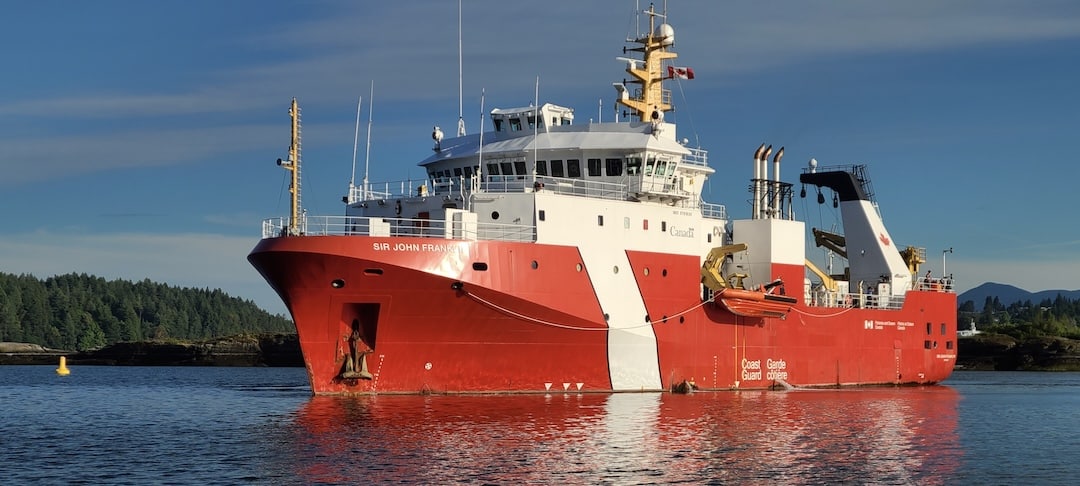
Sir John Franklin, a DFO research ship utilized for juvenile salmon stock assessment. Photo: Chrys Neville
In September 2020, research trawl surveys recorded the highest index of juvenile Chinook salmon in 25 years of monitoring.
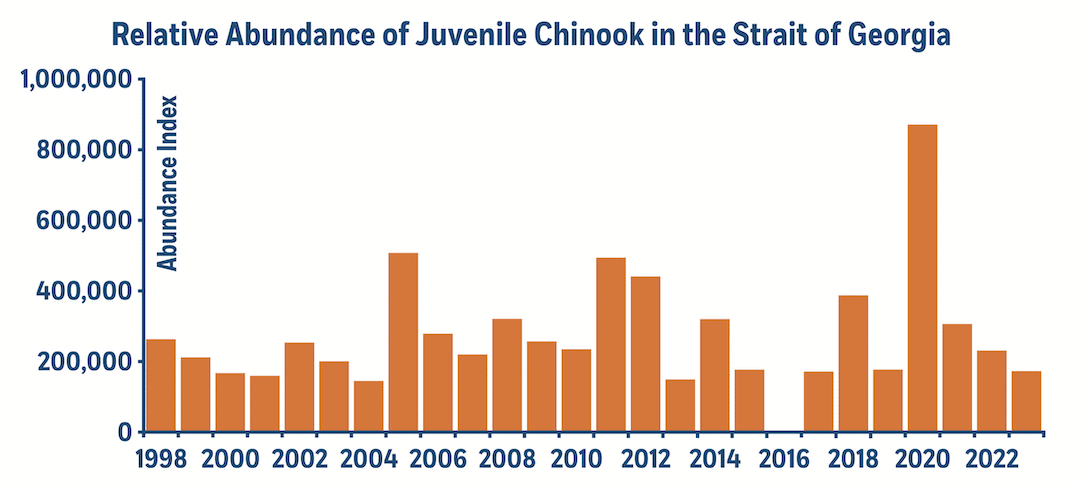
Graph B. Relative abundance of juvenile Chinook salmon during September surveys in the Strait of Georgia (1998–2023).
Subsequent DNA analysis confirmed that 63% of those juvenile catches in 2020 were South Thompson River stock. Three years later, those exact juvenile cohorts returned as the record-setting adult run of 2023. This provided definitive proof that marine survival during the initial months in the ocean directly dictates adult return numbers.
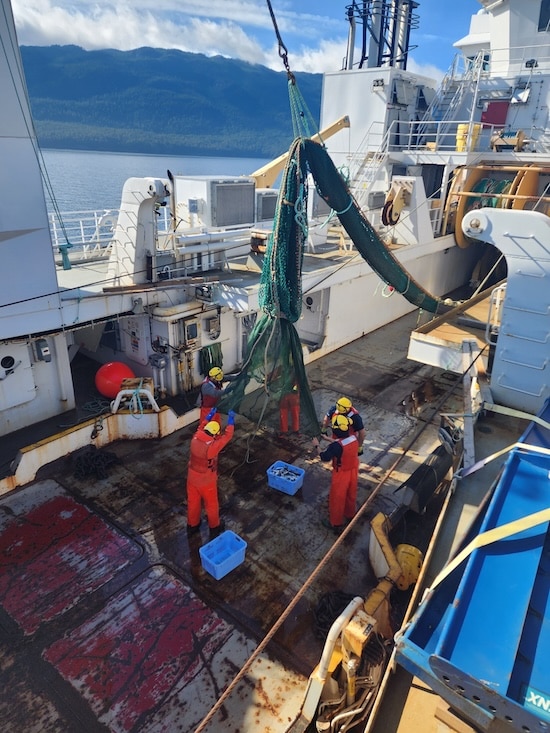
Emptying the trawl net with a catch of Chinook salmon from the Strait of Georgia. Photo: Chrys Neville
Unlike most Fraser River stocks that hit the ocean in spring, South Thompson subyearlings enter the Strait of Georgia in late June and early July—6 to 8 weeks later than other runs. Entering later along the eastern shoreline allows them to capitalize on favorable summer plankton and forage fish blooms, dramatically boosting early marine growth and survival rates. Experimental delayed releases at the Big Qualicum and Quinsam hatcheries showed 2 to 3 times higher marine survival compared to regular release timing!
Lessons for Salmon Stewardship and Fisheries Management
The extraordinary return of South Thompson Fraser River Chinook salmon illustrates that the Strait of Georgia is not a uniform, single feeding ground. Different populations have evolved distinct genetic behaviors that dictate exactly where and when they enter the marine ecosystem:
- Cowichan River Chinook rear heavily around the Gulf Islands throughout the autumn months.
- Harrison and Chilliwack River stocks utilize the waters around the San Juan Islands and northern Puget Sound.
- South Thompson stocks hug the eastern margin of the Strait of Georgia during late summer.
Because ocean conditions shift constantly due to climate cycles, different life history strategies will be favored at different times. While early-entry stocks faced lower ocean survival during this cycle, late-entry South Thompson fish thrived. Maintaining genetic diversity across all river systems ensures that salmon aggregates retain the resilience required to survive ongoing marine environmental changes.
🎣 EXPLORE BC SALMON FISHING LODGES
Looking to book a trip to an awesome lodge? Check out our lodge directory: Island Fisherman Magazine Fishing Lodges.
While human management cannot control ocean climate shifts, marine research allows us to understand why abundance fluctuates. By protecting habitat diversity and recognizing the unique marine survival abilities of individual stocks like the South Thompson run, we can ensure West Coast salmon fisheries are managed with a clear vision for their long-term potential to adapt and endure.

Dr. Richard Beamish
Order of Canada and Order of BC recipient, internationally respected scientist and salmon researcher.

Chrys Neville
Research biologist at the Pacific Biological Station in Nanaimo with 30+ years studying salmon marine survival.
Words by Dr. Richard Beamish and Chrys Neville. Photos courtesy of Eiko Jones Photography, Chrys Neville, Glen Varney, Dane Christensen, Tim Wicks, and Joel Unickow.