

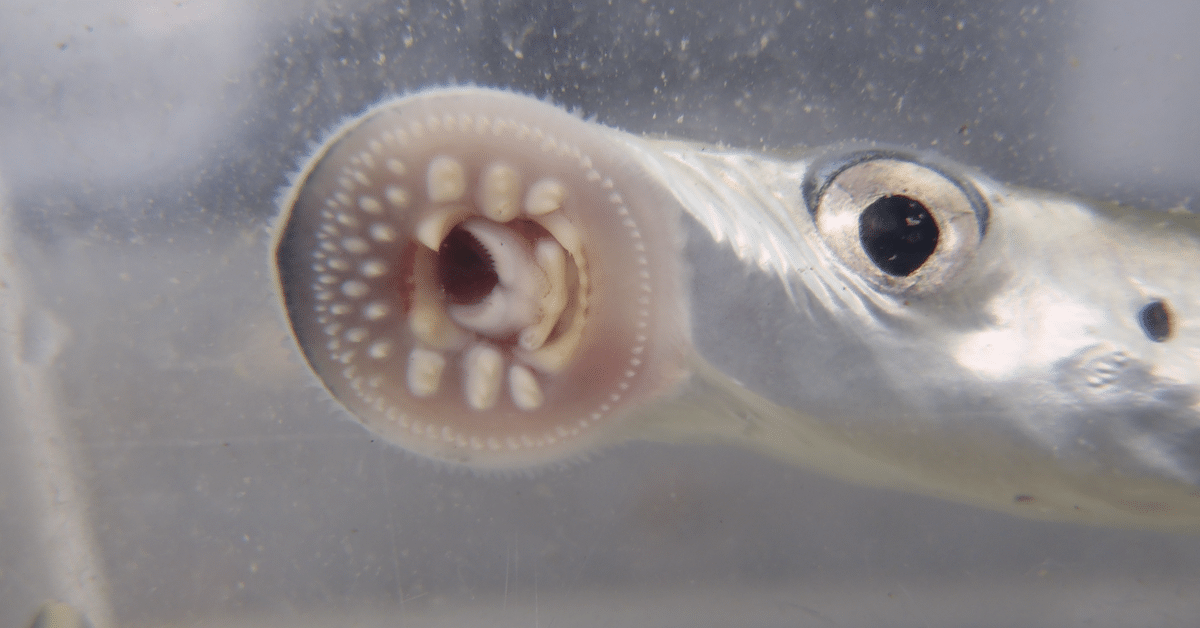
A groundbreaking study on river lamprey juvenile chinook salmon predation in the Strait of Georgia reveals that these ancient creatures are one of the single largest mortality factors for young Fraser River salmon. You have probably never heard of the river lamprey (Lampetra ayresii), even though they are the dominant organism by weight in the bottom sediments of the Fraser River downstream of Hope.
Estimates of juvenile salmon killed by river lamprey in the Fraser River plume reached an astounding 39 million fish in 1990 (including ~20 million Chinook) and 51 million fish in 1991 (~18 million Chinook). Their impact on Pacific herring is even more staggering, with annual mortalities estimated between 156 million and 203 million herring. Understanding this hidden predator is vital to unraveling the complex marine survival puzzle of West Coast salmon.
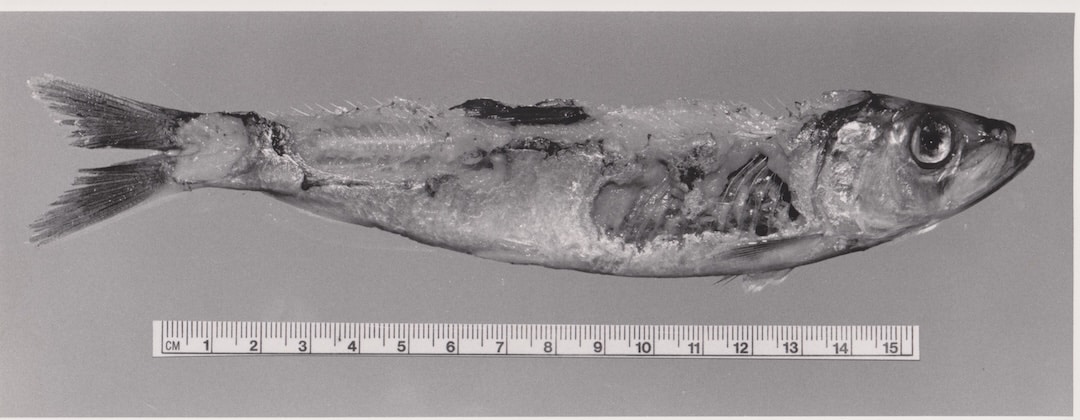
Pacific herring showing severe tissue damage caused by a river lamprey attack. River lamprey eat chunks of flesh off the back and sides of their prey, almost always resulting in death. Photo: Dick Beamish
What Are Lampreys? (360 Million Years of Evolution)
Lampreys are primitive, jawless fish that have survived on Earth virtually unchanged for over 360 million years—predating the dinosaurs. There are roughly 41 species worldwide. All lampreys spawn in fresh water and die shortly after reproduction.
After hatching, larval lampreys (called ammocoetes) live buried in soft river sediments as eyeless, toothless filter-feeders for 5 to 7 years. They then undergo a four-month metamorphosis—similar to a caterpillar becoming a butterfly—developing functional eyes, sharp teeth, and specialized digestive systems.
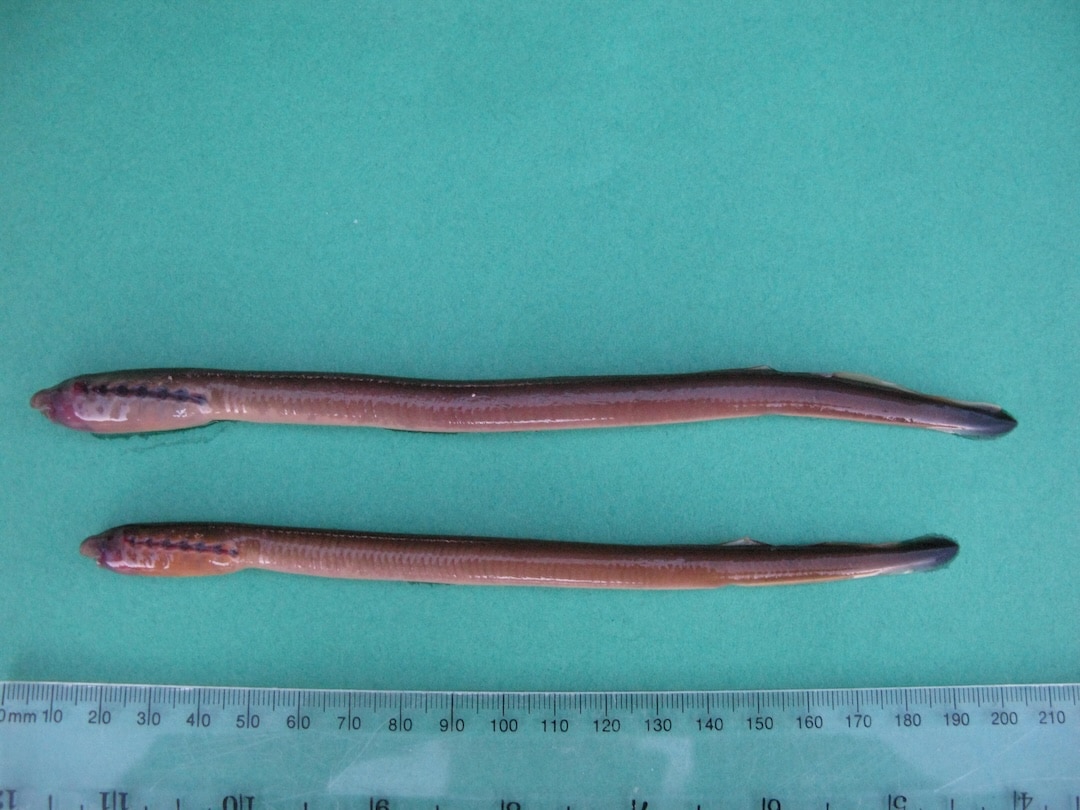
Figure 2: Larval lampreys (ammocoetes) live buried in soft river sediments as eyeless, toothless filter-feeders for 5 to 7 years. Photo: Dick Beamish
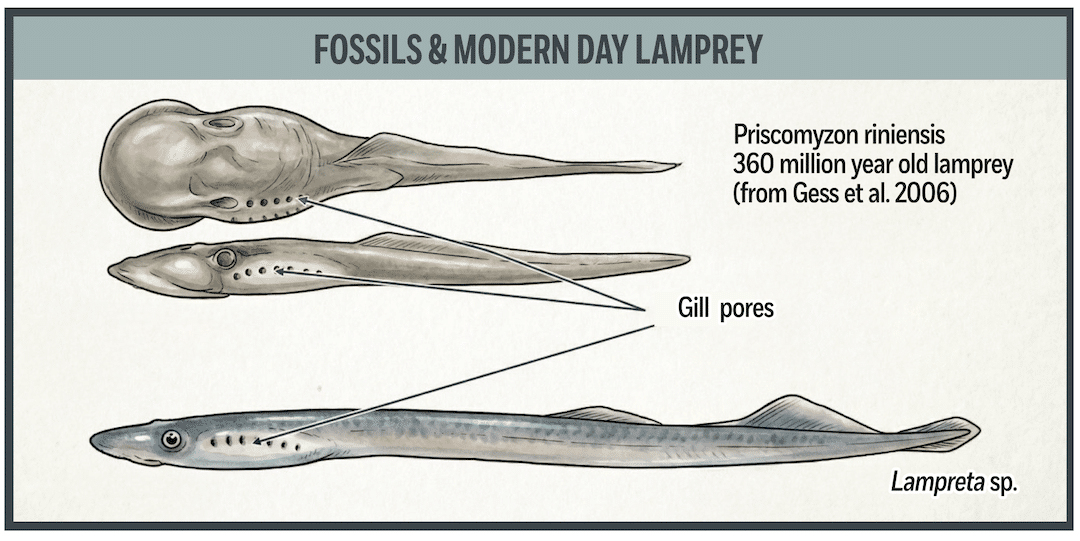
Fossil evidence shows that lampreys (Priscomyzon riniensis) have remained virtually unchanged for over 360 million years, making them one of the most successful living fossils on Earth. Diagram based on Gess et al. (2006) as published in Nature.
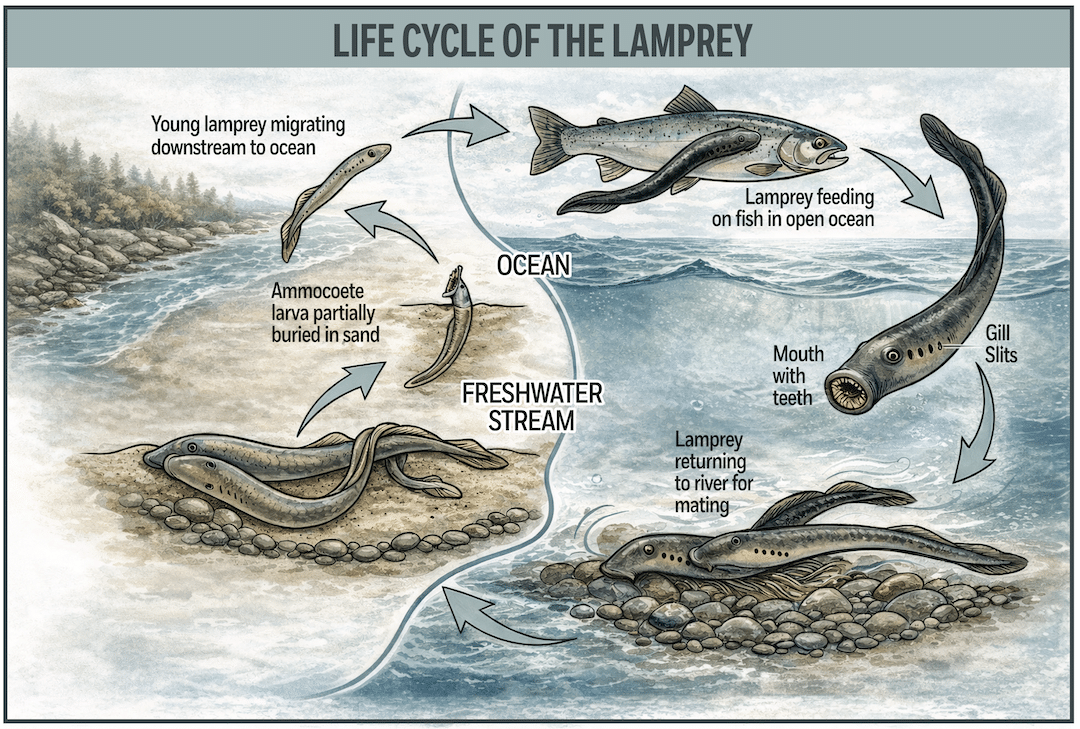
The life cycle of the lamprey: larvae (ammocoetes) live buried in river sediments for 5 to 7 years before metamorphosing, migrating to the ocean to feed on fish, and returning to fresh water to spawn.
Pacific Lamprey vs. River Lamprey Juvenile Chinook Salmon Predation
British Columbia is home to several lamprey species, but anglers frequently confuse our two migratory ocean species:
- Pacific Lamprey (Entosphenus tridentatus) — Parasitic: Present in nearly every Fraser River Chinook spawning tributary. Adult Pacific lampreys attach to larger fish (Chinook, pollock, hake) to feed on body fluids. They scrape away scales but do not kill their host.
- River Lamprey (Lampetra ayresii) — Predatory: Originating primarily from the Fraser River, young river lamprey enter the Strait of Georgia from May to June. The river lamprey juvenile chinook salmon relationship is strictly predatory, as lampreys use razor-sharp teeth to carve out actual chunks of muscle tissue from young salmon—like eating corn off a cob. Most prey die from these severe wounds, with laboratory calculations showing each individual river lamprey kills roughly 65 fish during its ocean feeding window.
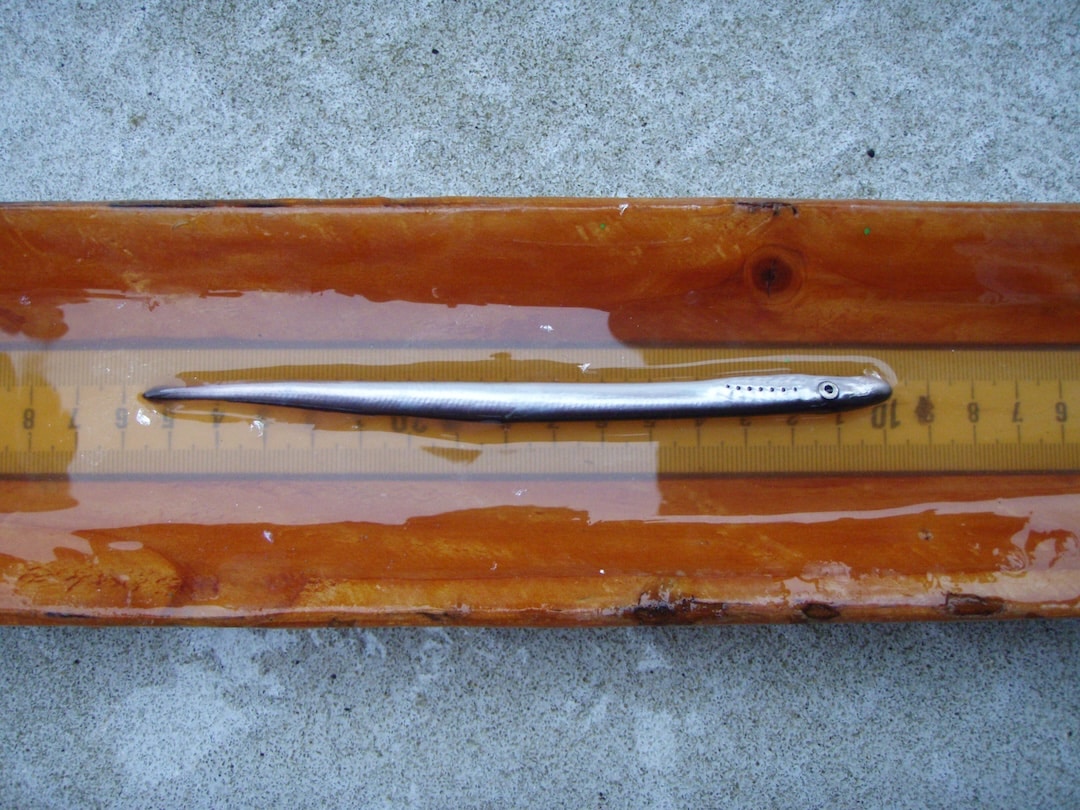
Figure 1a: Juvenile river lamprey after about 1 week in the ocean, measuring roughly 11 cm. Photo: Laurie Weitkamp
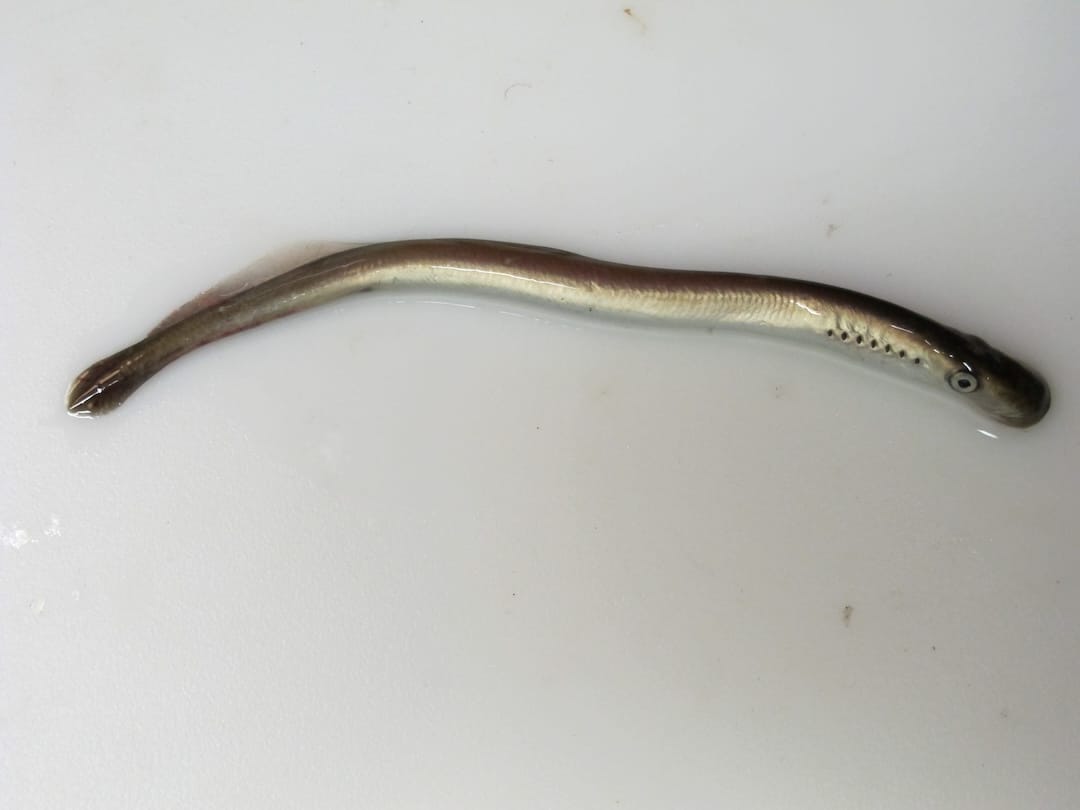
Figure 1b: River lamprey after about 3 weeks in the Strait of Georgia. The silver coloration along the sides distinguishes it from Pacific lamprey. Photo: Bill Pennell
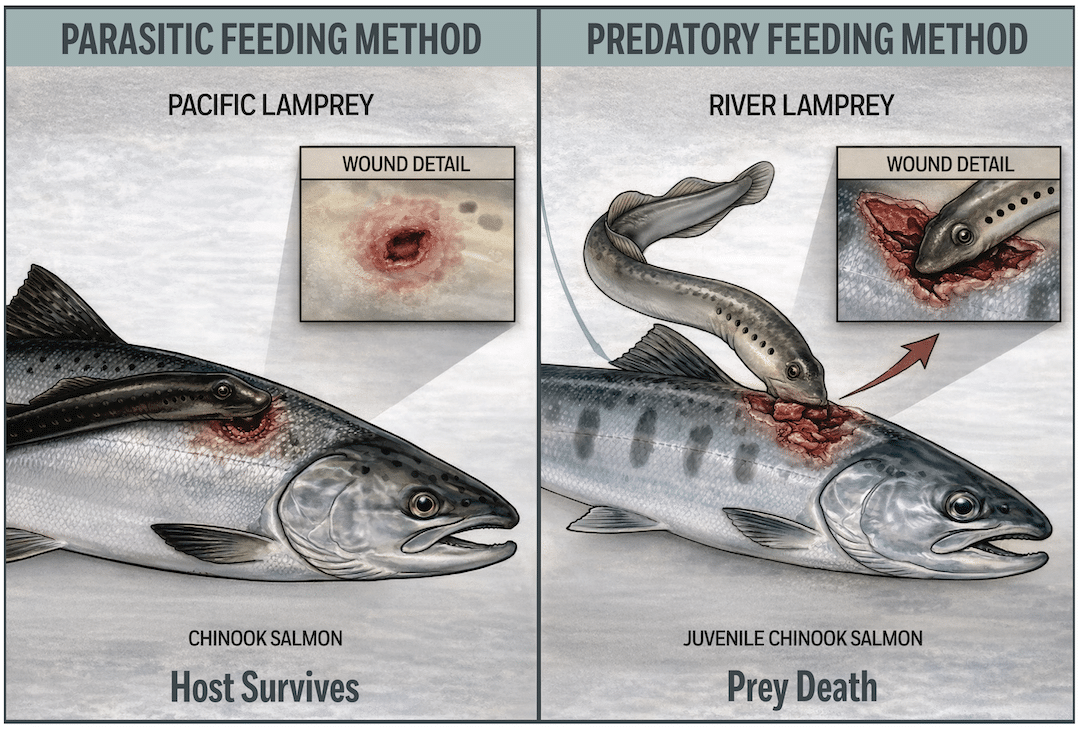
Comparison of feeding strategies: Pacific Lamprey act as parasites (host survives), whereas River Lamprey act as true predators, taking bites of flesh until the juvenile salmon dies.
| Species | Feeding Behavior | Primary Targets in BC | Host / Prey Outcome |
|---|---|---|---|
| Pacific Lamprey | Parasitic (Fluid Feeder) | Adult Chinook, Pollock, Hake | Host Survives (scars remain) |
| River Lamprey | Predatory (Tissue Eater) | Juvenile Chinook & Herring | Prey Death (~65 fish per lamprey) |
| Western Brook Lamprey | Non-Parasitic | Freshwater Sediments | Does not feed as adult |
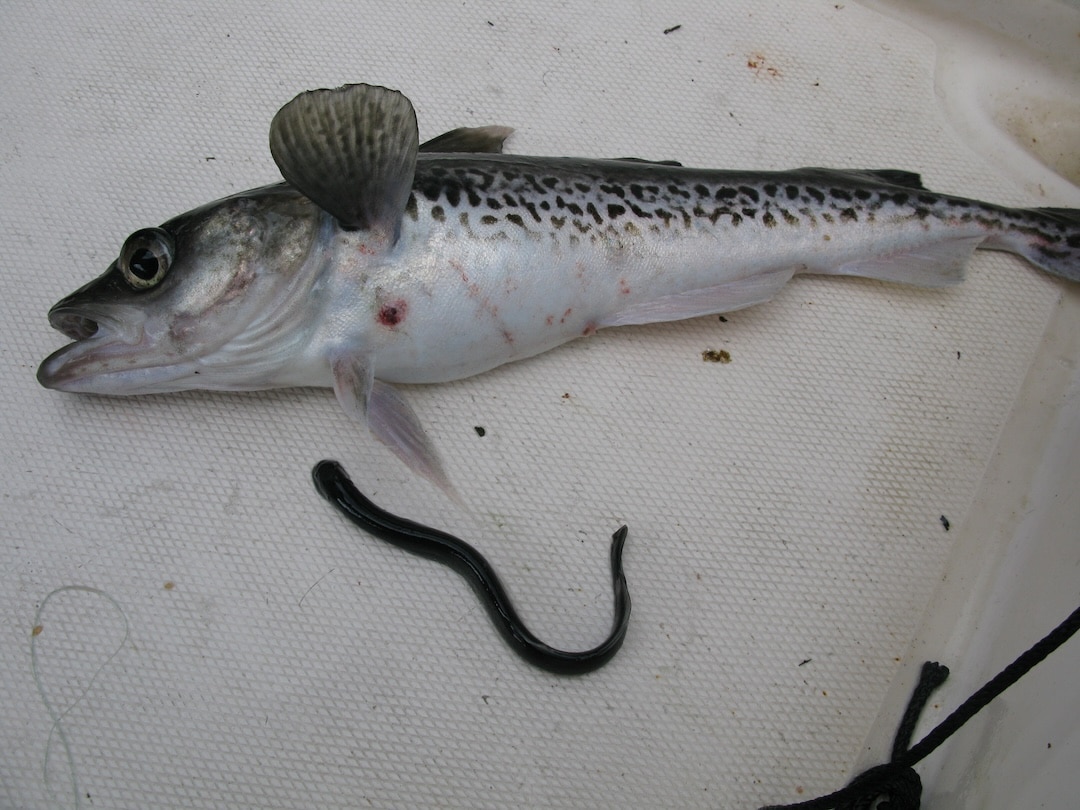
Figure 3: Juvenile Pacific lamprey alongside a walleye pollock in the Strait of Georgia. Pacific lamprey feed on body fluids without killing the host. Photo: Dick Beamish
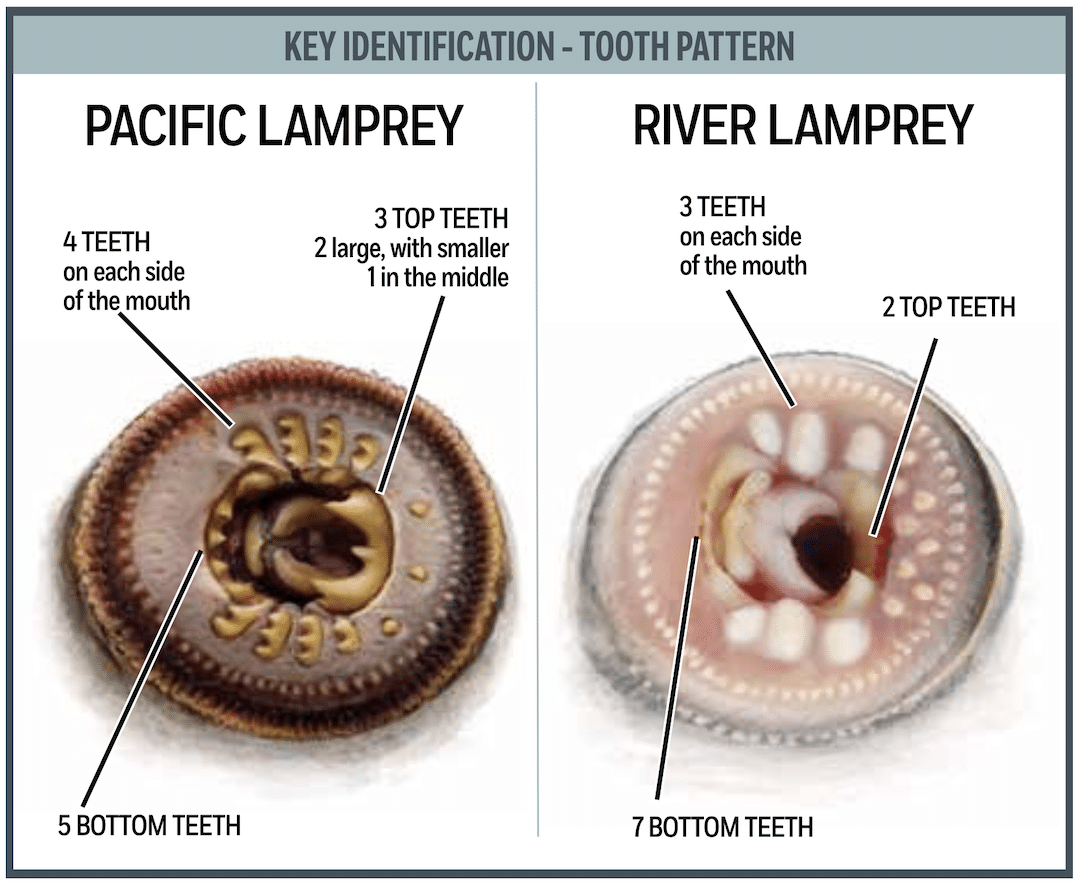
Tooth patterns are the primary identification feature: Pacific Lamprey features 3 top teeth and 5 bottom teeth, while River Lamprey has 2 top teeth and 7 bottom teeth.
Why Are River Lampreys So Abundant in the Fraser?
The lower 130 km of the Fraser River provides vast silt beds ideal for larval lampreys. Historically, White Sturgeon were the primary natural predator keeping larval lamprey populations in check. As historical sturgeon populations declined, lamprey survival surged, allowing river lamprey to multiply unchecked.
Entering the Strait of Georgia at just 11 cm (4.3 in) in spring, river lamprey feed ravenously. This heavy rate of river lamprey juvenile chinook salmon mortality causes lampreys to double in length to 25 cm (9.8 in) by September before migrating back into the Fraser River to overwinter and spawn near Hope.
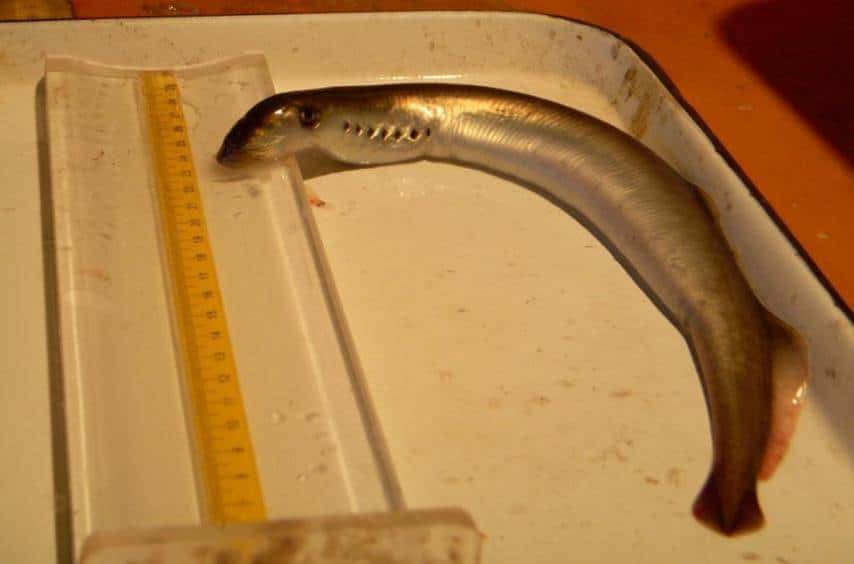
Figure 4: River lamprey caught in early September in the Strait of Georgia, demonstrating rapid summer growth to ~25 cm. Photo: Dick Beamish
In North America’s Great Lakes, invasive sea lampreys are managed using chemical lampricides and barrier dams. However, poisoning sediments in a massive, ecologically vital system like the Fraser River is impossible. One novel solution could be a commercial fishery—lamprey is considered a delicacy in Europe (such as France’s famous lamproie à la bordelaise), fetching high prices in international culinary markets.
🎣 EXPLORE BC SALMON FISHING GUIDES
Want to stay ahead of the latest West Coast salmon science, gear tactics, and fishing reports? Explore our directory of verified local charters: Island Fisherman Magazine Guides.

Dr. Richard Beamish
Order of Canada and Order of BC recipient, internationally respected scientist and salmon researcher.
Words and photos by Dr. Richard Beamish (except where noted). This feature appeared in Island Fisherman magazine. Never miss another issue—subscribe today!