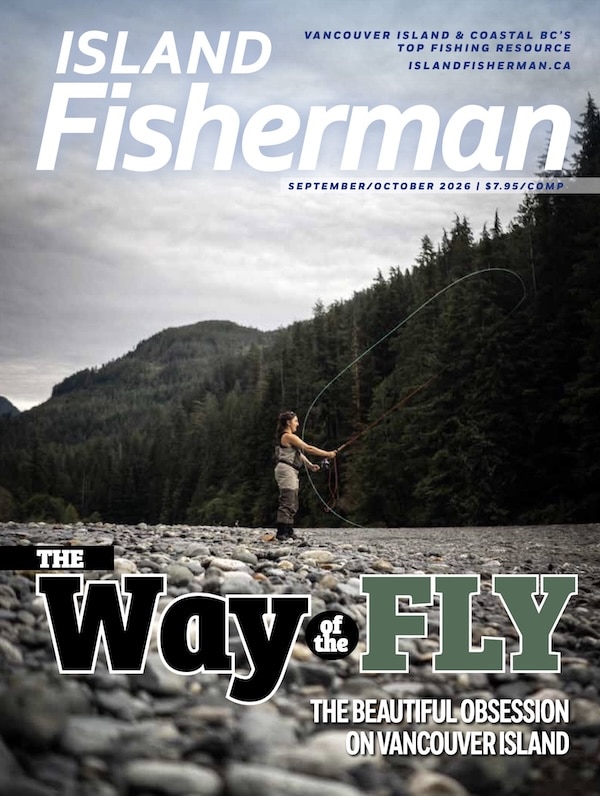

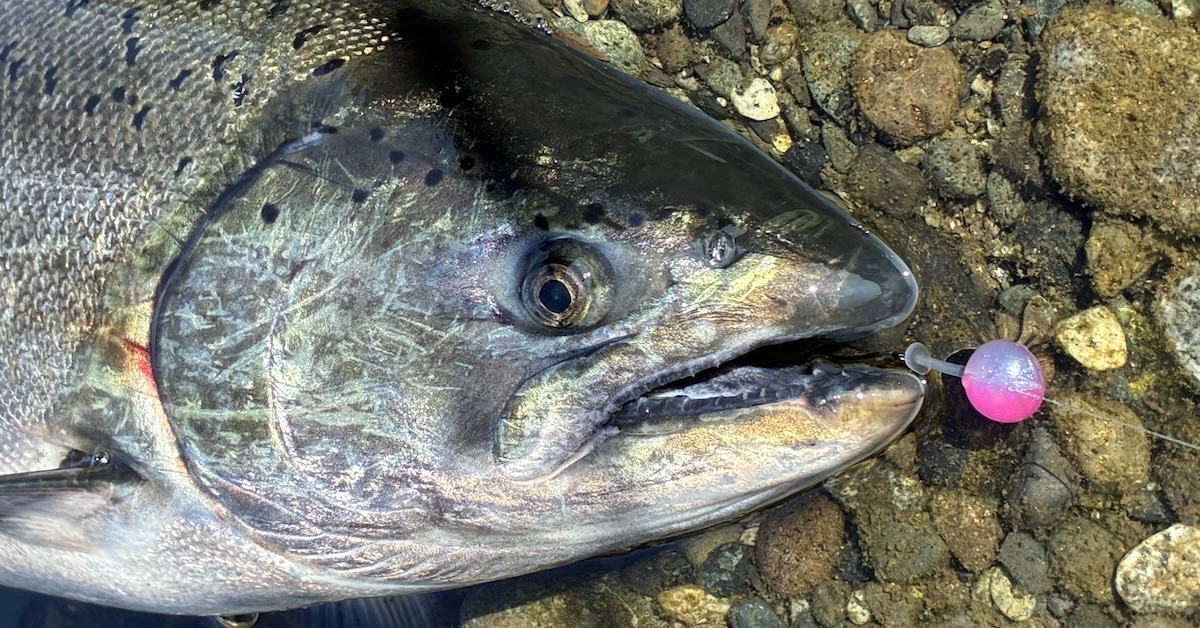
When tackling Somass River salmon fishing, adapting to shifting seasonal flows dictates whether you hook up or spend the day untangling gear on empty gravel bars.
During seasons when the Somass runs lower, slower, and crystal-clear beneath cloudless skies, standard West Coast river setups fall flat. High-water conditions with murky current typically call for bold presentations like 16 mm to 20 mm beads and heavy clusters of cured roe. However, once flows drop and visibility peaks, river Chinook turn remarkably wary. They routinely bypass oversized offerings and heavy tackle, forcing anglers to lighten leaders, downsize profiles, and refine their presentation.
The Long-Rod Float Advantage
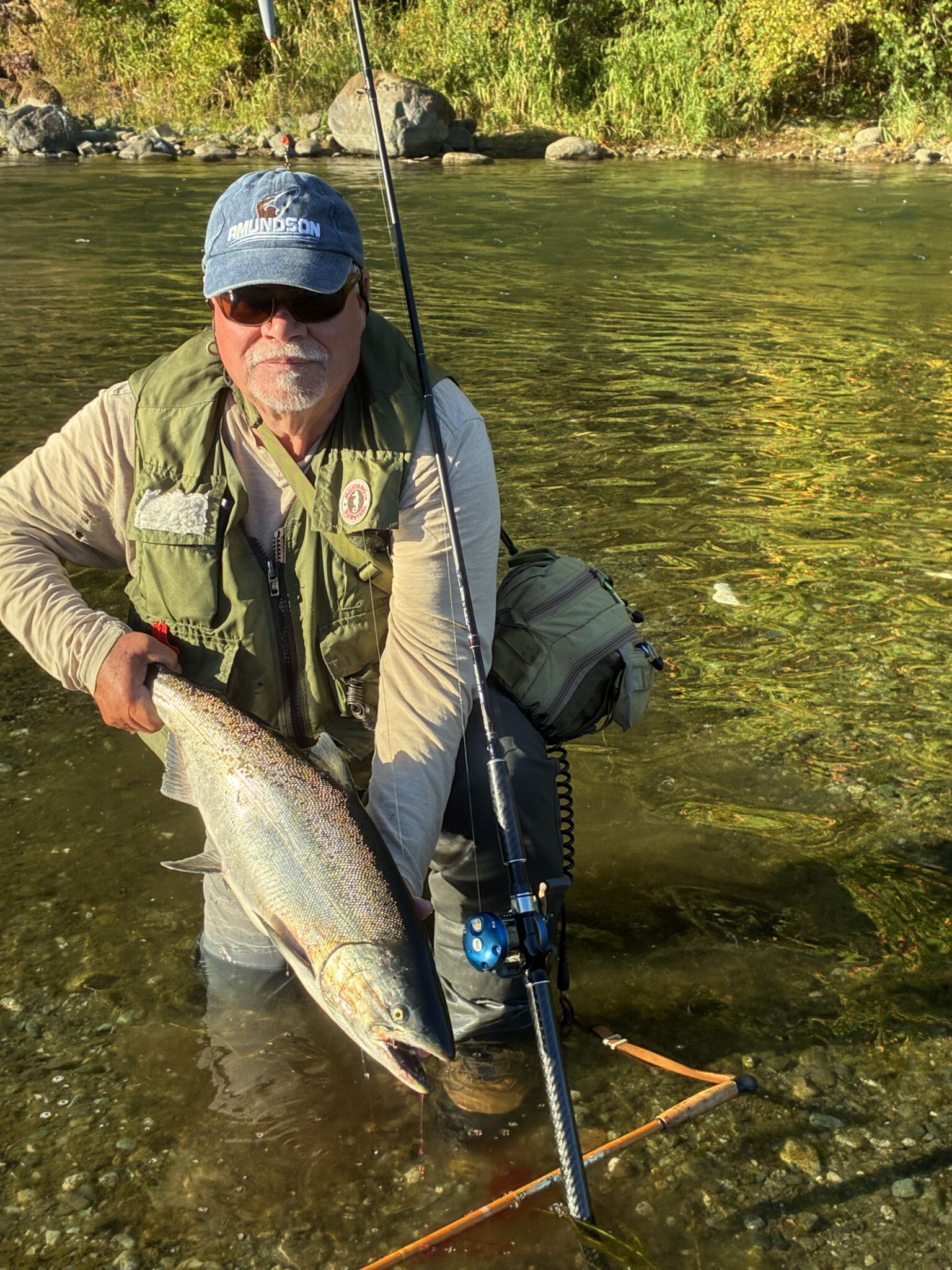
Managing line drift in low, slow current requires precise line control. A 13-foot float rod—such as the Amundson Kudos Strategy X paired with a level-wind reel—provides immediate leverage over standard shorter blanks. The additional length lets you mend line cleanly off the river surface, removing belly and slack without disturbing your terminal tackle.
Keeping line lifted high above the current seams ensures the float and bead track at natural river speed. In low water, salmon inspect offerings closely and will instantly refuse a bait dragging unnaturally. Furthermore, the extra flex in a 13-foot blank cushions sudden runs, enabling the use of lighter 10-to-12-pound fluorocarbon leaders and a 15-pound mainline without snapping off on the strike.
Downsizing Terminal Tackle and Soft Beads
Heavy lead and bulky floats make too much splash in clear river pools. Scaling down your terminal components creates a subtle entry and keeps the presentation drifting naturally through holding water.
- Floats and Weights: Step down from bulky 30-gram floats and 5/8-ounce weights to streamlined 14-to-21-gram floats balanced with 1/4-to-3/8-ounce weights.
- Hook Selection: Switch from standard 1/0 or 2/0 hooks down to a modest size #1 hook to maintain a subtle footprint.
- Drift Depth: Rather than short-floating high in the column, drop your float stop so the bead drifts near the riverbed where fish hold in bright conditions.
- Bead Diameter: Downsizing from 16 mm down to 12 mm or 14 mm soft beads outperforms oversized bait in low flows, drawing voluntary bites from staging fish.
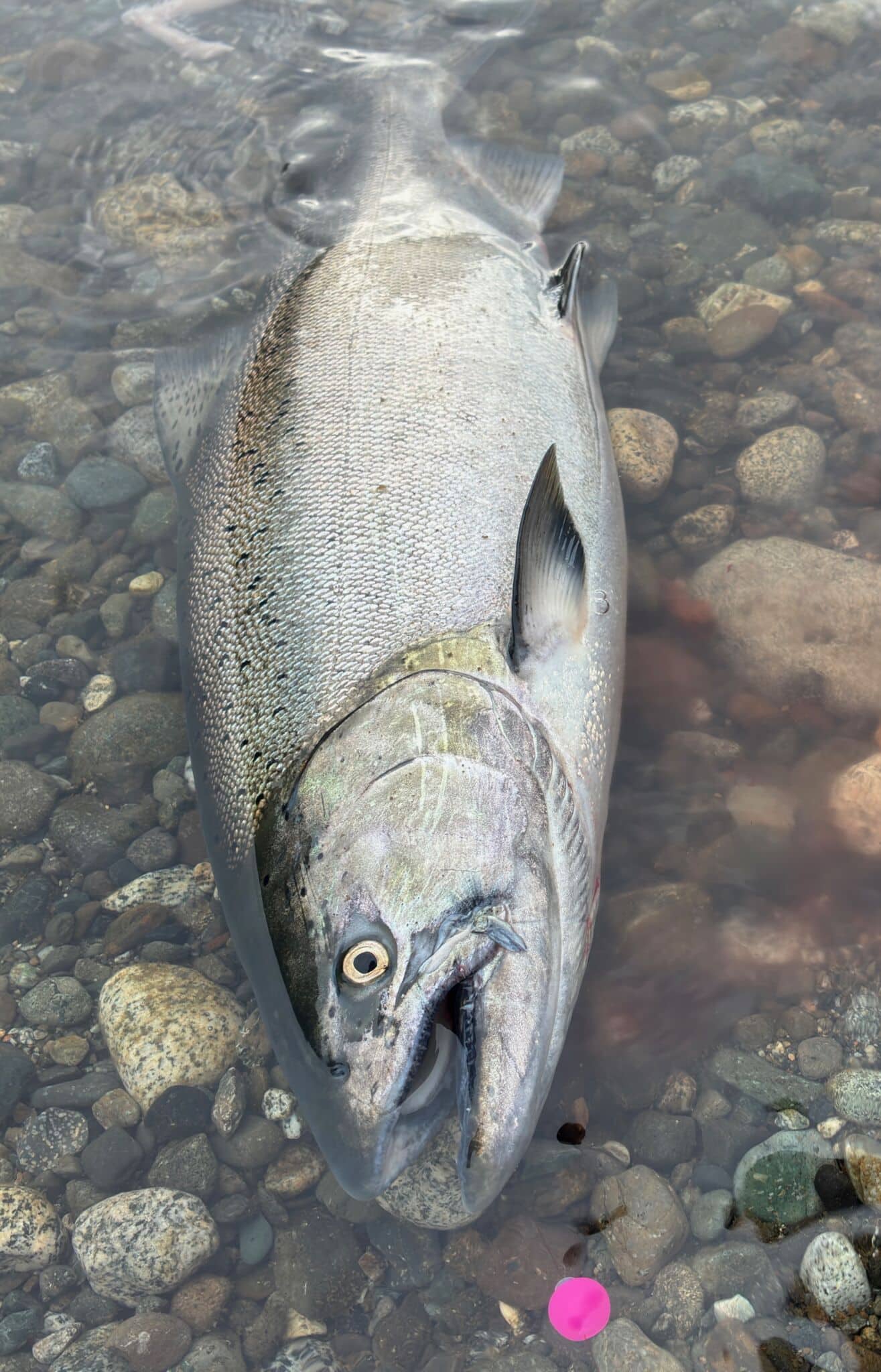
When rigging, peg the bead roughly two finger-widths above the hook eye. This distance prevents fish from swallowing the hook while consistently finding purchase right in the corner of the jaw, keeping releases clean and completely avoiding foul-hooked fish.
PRO ANGLER TIP: THE QUICK-SWITCH HYBRID RIG
Rigging both cured roe and soft beads doesn’t require re-tying all morning. Slide your bead to the top of a 2.5-foot leader and secure a small roe cluster into the hook’s bait loop knot. The bead acts as an upper visual attractor above the scent trail. When the sun peaks and fish turn off bait, clear the loop, slide the bead back down to two fingers above the hook, and drift the bare bead immediately.
Bead Selection and Water Optics
Natural cured roe remains effective in early morning low-light windows, but soft beads consistently produce once overhead light penetrates the water column. During early morning hours under low-water conditions, cooler translucent hues such as BnR Tackle’s Blue Goon or Green Hot Snot trigger aggressive takes. As the sun climbs over the tree line, switching across to classic tones like Cerise and Mottled Cerise keeps bites consistent.
REGULATORY & CONSERVATION NOTE
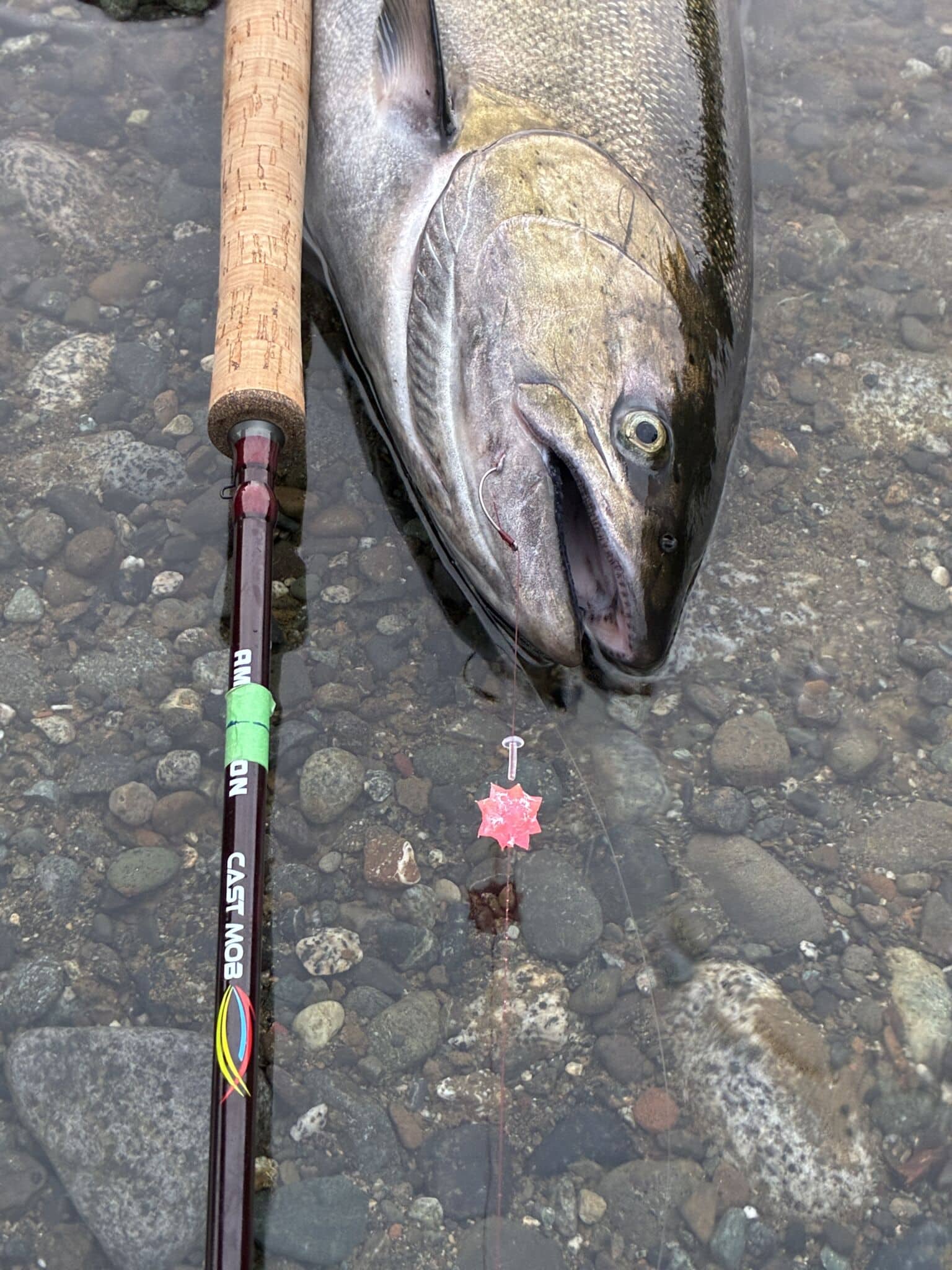
The Somass River system operates under specific finfish retention and slot size quotas. Marking measurement points directly on your rod blank using paper-based green tape allows quick in-water checks alongside your waders, and it lifts off cleanly with warm water without damaging the rod’s finish or cork handle. Always review real-time updates via the DFO Region 1 Freshwater Salmon Fishing Regulations before heading out.
Refining the Presentation in the Field
Low-water Chinook fishing requires adjusting quickly when standard tactics stall. Mechanical issues—such as dunking a reel and fouling centrifugal brakes—quickly demonstrate how crucial smooth line output is when fish strike light. Once reel maintenance and terminal weights are synchronized, the bites follow quickly.
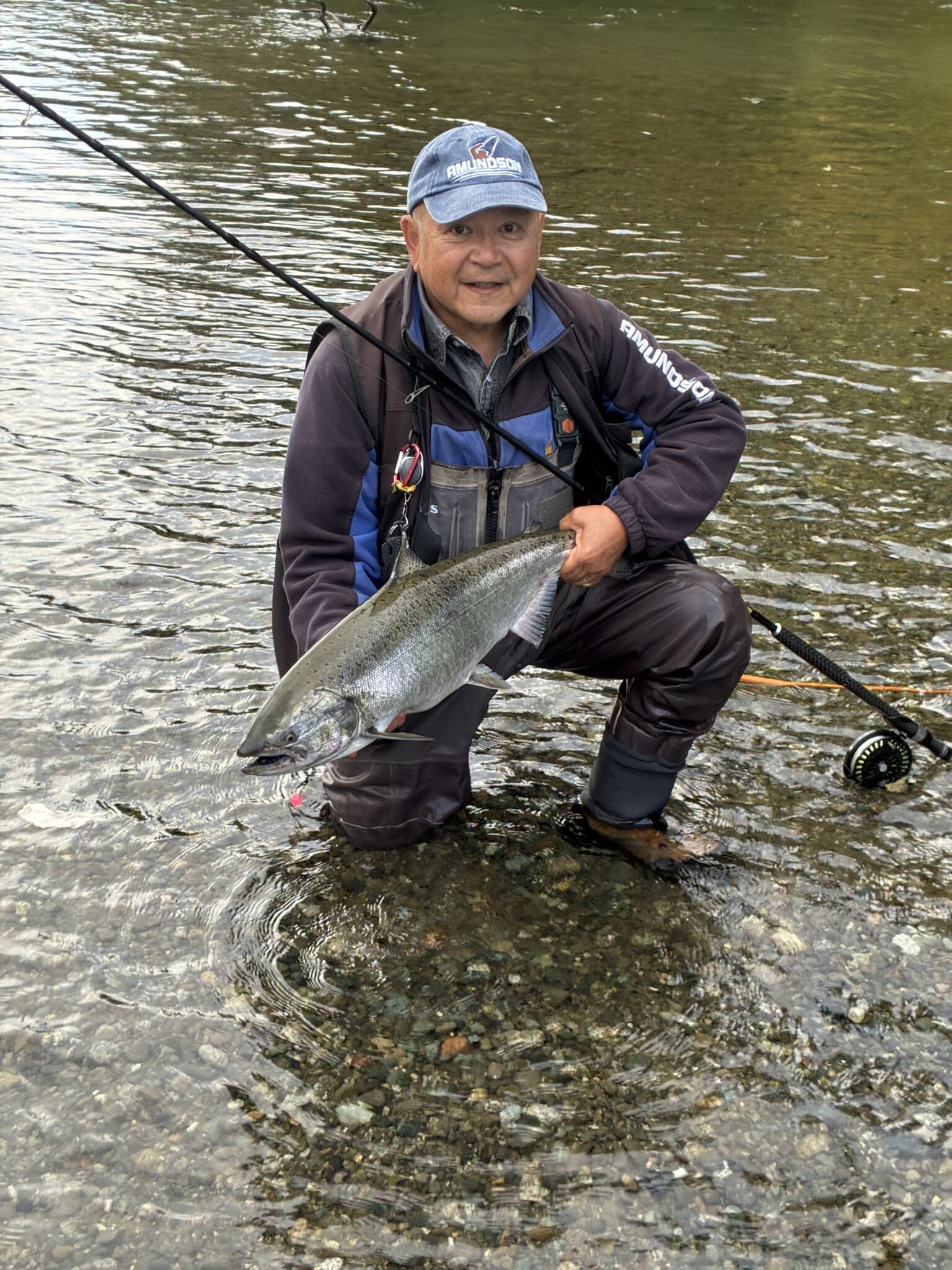
During a late-season outing on the Somass, shifting down to a 14-gram float, a 3/8-ounce balance weight, a 12 mm Blue Goon bead, and a 10-pound fluorocarbon leader turned a slow morning into a banner session. Dialing into that specific bead size and profile yielded over 20 hooked Chinook across our group. While lighter fluorocarbon leaders require smooth drag discipline on 80-plus-centimeter fish, the dramatic increase in bites makes the tactical shift well worth the effort.
GEAR & REGULATORY RESOURCES
- BnR Tackle: Soft bead selections, rigging sleeves, and drift gear profiles for river salmon and steelhead systems.
- Amundson Freshwater Rods: Long-blank float rods designed for line control and light leader presentations on BC rivers.
- DFO Region 1 Freshwater Guide: Official daily limits, gear restrictions, and real-time river notices for Vancouver Island.
MORE VANCOUVER ISLAND FISHING RESOURCES
Expand your tactics and river repertoire with our top-rated guides and local charter directory:
River Angler & IFM Field Contributor
Gil D’Oliveira is an experienced Vancouver Island river angler and regular contributor to Island Fisherman Magazine. Explore more of his tactical float-fishing setups, seasonal field reports, and terminal gear breakdowns by visiting the Gil D’Oliveira author archive, and support independent local angling journalism by exploring subscription options at Island Fisherman Magazine.