

Presented in partnership with the Pacific Salmon Foundation
In a remote river system on the rugged west coast, a major breakthrough for Vancouver Island Chinook recovery is taking place as threatened salmon return to newly rebuilt spawning grounds. The local Chinook run in the Muchalat and Gold River watersheds—designated as Threatened by the Committee on the Status of Endangered Wildlife in Canada (COSEWIC) in 2020—has suffered for decades from heavy historical logging runoff and climate-driven flow extremes that degraded critical gravel beds.
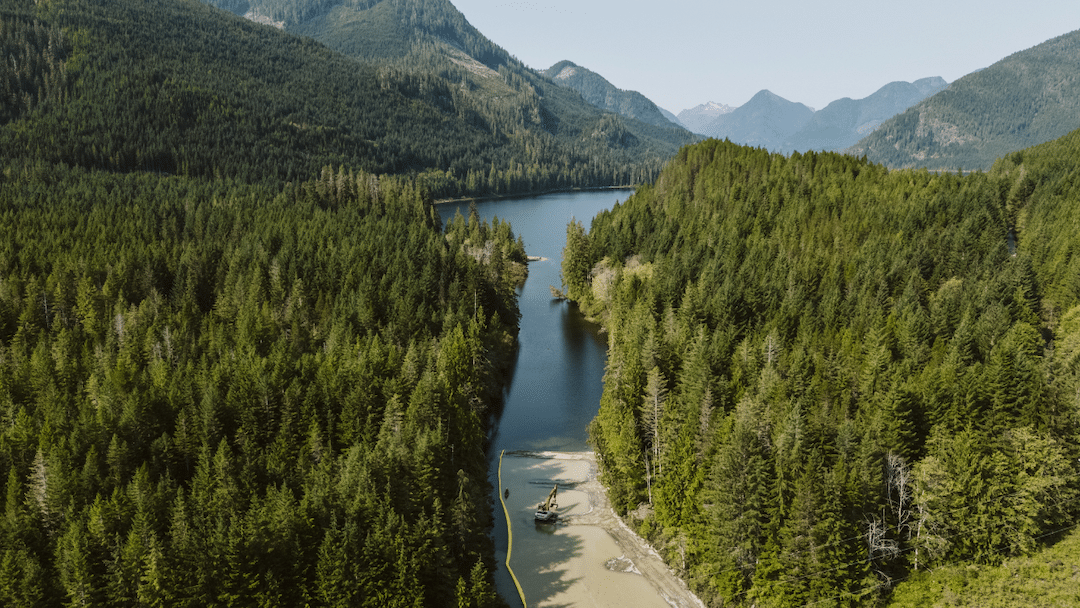
“If you come here in the fall, you’ll see massive amounts of fish coming through here,” said Kent O’Neill, President of the Nootka Sound Watershed Society. “But spawning isn’t as prolific as it should be because the fish don’t have enough quality habitat.” To reverse this trend, the Pacific Salmon Foundation (PSF) stepped forward with vital grant funding to rebuild the site at the outflow of Muchalat Lake, located near Gold River roughly 90 kilometres west of Campbell River.
On-the-Ground Action for Vancouver Island Chinook Recovery
Backed by $560,000 in dedicated funding from PSF, Phase 1 construction launched in August 2025. Restoration specialists from Ecofish Research spent several weeks carefully preparing high-grade spawning gravel and readying the riverbed to minimize disturbance to the surrounding aquatic ecosystem. Heavy machinery was deployed directly in the channel to place the washed gravel, completing the installation in early September 2025.
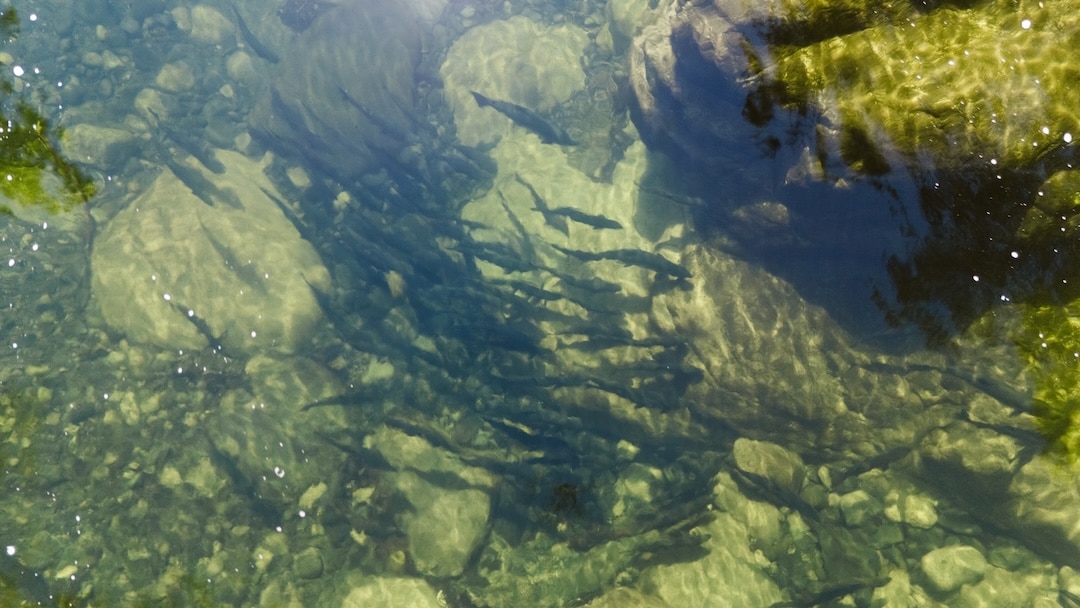
The direct intervention created 200 metres of premium spawning habitat, and the biological response was immediate. Within four weeks of project completion, hundreds of wild Chinook were actively cutting redds in the freshly laid gravel. Biologists project that this revitalized corridor will substantially accelerate Vancouver Island Chinook recovery, supporting an estimated 1,000 to 2,000 spawning adults annually.
Protecting Restored Beds from Drought and High Flow
Building on the momentum of Phase 1, PSF helped fund a crucial second stage during the summer of 2026: an engineered constriction feature right at the outflow where Muchalat Lake feeds into the Muchalat River. Narrowing this channel moderates water velocities, preventing sudden seasonal torrents from washing out the freshly deposited gravel while maintaining sufficient depth during periods of summer drought.
- Hydraulic Protection: Channel narrowing shields new gravel beds from scouring floodwaters during heavy autumn atmospheric rivers.
- Drought Resilience: Constriction maintains essential pool depth and flow volume when summer tributary levels drop.
- Long-Term Capacity: Safeguards salmon spawning capacity to support 1,000 to 2,000 returning mature Chinook year after year.

Collaborative Stewardship in Nootka Sound
Complex watershed rehabilitation requires dedicated grassroots teamwork. This project brought together the Nootka Sound Watershed Society, the Mowachaht/Muchalaht First Nation, Ecofish Research, and Trinity Consultants Canada, with major capital funding provided by the Pacific Salmon Foundation. In Gold River, a tight-knit community of 1,300 residents where salmon culture runs deep, wild salmon recovery represents both environmental heritage and local economic stability.
“People from all over the world come here to fish, so restoring salmon habitat and protecting our streams is really good news,” said Chief Jerry Jack of the Mowachaht/Muchalaht First Nation.
“I love this project because I think it is showing what is possible,” stated Jason Hwang, Chief Program Officer and Vice President of Salmon at PSF. “There’s a lot of bad news out there for salmon, and sometimes people can lose hope and wonder—can we make a difference? By supporting a project like this and helping the local people who have made this project possible, we’re showing that we can make a difference and that we can get wins for salmon.”
REGULATORY & CONSERVATION NOTE
Muchalat River and upper watershed tributaries feature designated seasonal freshwater conservation closures to protect returning spawners. In tidal waters around Nootka Sound (Area 25), anglers should always consult the real-time DFO Tidal Waters Sport Fishing Guide for retention limits, finfish closures, and boundary notices before dropping lines.
HABITAT STEWARDSHIP TIP
When river fishing or exploring remote Vancouver Island waters in late summer and fall, avoid wading across shallow tailouts and gravel bars. Walking across freshly deposited beds can crush buried eggs and destroy the redds critical to Vancouver Island Chinook recovery.
Major contributions from the RBC Foundation, Steelhead Lager, the BigCoast Forest Climate Initiative, and individual donors made this project possible. Muchalat is one of several critical salmon systems across British Columbia where PSF is driving high-impact rehabilitation.
About This Content
This feature is sponsored content presented by the Pacific Salmon Foundation in partnership with Island Fisherman magazine to highlight wild salmon enhancement and habitat restoration across British Columbia. To learn more or support their province-wide initiatives, visit psf.ca.
Feature Your Story in Island Fisherman
Are you spearheading a vital conservation project, launching innovative marine gear, or guiding on coastal waters? Partner with Island Fisherman magazine to place your mission directly in front of tens of thousands of passionate West Coast anglers and stewardship leaders across our high-visibility print, digital, and web platforms.