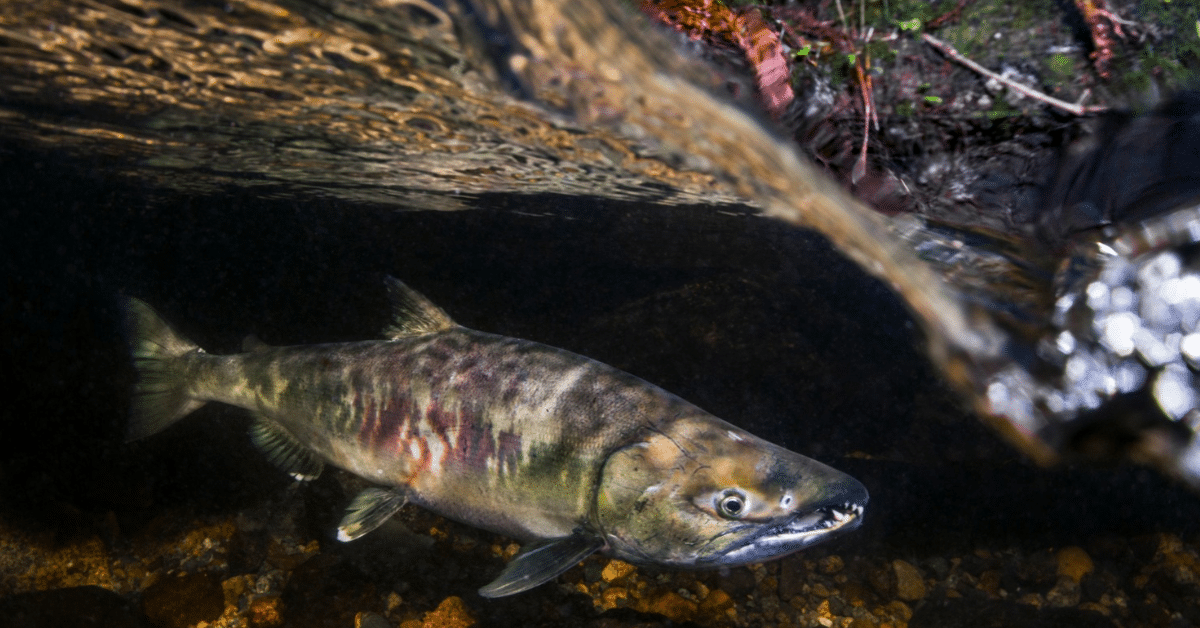
If you had 1.5 million Fraser River chum salmon on your 2026 fisheries bingo card, go buy a lottery ticket.
Fisheries and Oceans Canada (DFO) dropped a genuine eye-opener: an in-season run size estimate of 1,521,000 chum salmon returning to the Fraser River watershed. Based on the Albion test fishery’s 6.75-inch gillnet catches, this median estimate cruises comfortably past the 800,000 escapement threshold required to trigger recreational retention.
For tackle shops, river bums, and salt trollers looking for an excuse to burn mixed fuel into November, this isn’t just good news—it’s an unexpected fall gift.
Why 1.52 Million Fraser River Chum Salmon is a Welcome Shock
The 800,000 escapement benchmark is DFO’s core conservation threshold required to consider recreational retention opportunities in the Fraser River system. In seasons where runs fail to track cleanly past this target, managers maintain strict non-retention rules or complete river closures.
Seeing the in-season Albion test fishery model climb to 1,521,000 chum salmon—surpassing the escapement goal by over 721,000 fish—defied conservative early projections. Following the historic 2021 atmospheric river that severely scoured gravel beds across the watershed, many stock assessment expectations for this 4-year-old cycle line were cautious. Instead, consistent test catches through late October confirmed strong ocean survival and triggered immediate recreational openings.
DFO Chum Openings: Exact Waters, Dates & Limits
DFO’s moving window closures designed to protect co-migrating Interior Fraser Steelhead mean these openings roll out on staggered start dates. Here is the operational breakdown:
| Waters & Specific Subareas | Effective Dates | Daily Limit | DFO Notice / Order |
|---|---|---|---|
| Fraser River Mouth Subareas 29-6, 29-7, 29-9, 29-10 |
Oct 31 – Dec 31, 2026 | 4 Chum | FN1183 VO 2026-RCT-473 / RFQ-474 |
| Fraser Tidal Waters Downstream of Port Mann Bridge (Subareas 29-11 to 29-14, 29-17) |
Oct 31 – Nov 30, 2026 | 4 Chum | FN1183 |
| Fraser Tidal Waters Mission Bridge downstream to Port Mann (Subareas 29-15, 29-16) |
Nov 2 – Nov 30, 2026 | 4 Chum | FN1183 |
| Fraser Non-Tidal Mainstem Mission CPR Bridge to Hope Hwy 1 Bridge |
Nov 3 – Nov 30, 2026 | 2 Chum | FN1179 VO 2026-RFQ-476 / RCT-477 |
| Cowichan River (Upper) 66 Mile Trestle downstream to Sandy Pool boundary |
Nov 4 – Dec 31, 2026 | 2 Chum | FN1196 VO 2026-RFQ-480 |
| Cowichan River (Lower) Sandy Pool boundary downstream to tidal boundary |
Nov 16 – Dec 31, 2026 | 2 Chum | FN1196 |
| Squamish River (Region 2) Designated sport waters |
Effective Oct 30, 2026 | 0 (Non-Retention) | FN1167 |
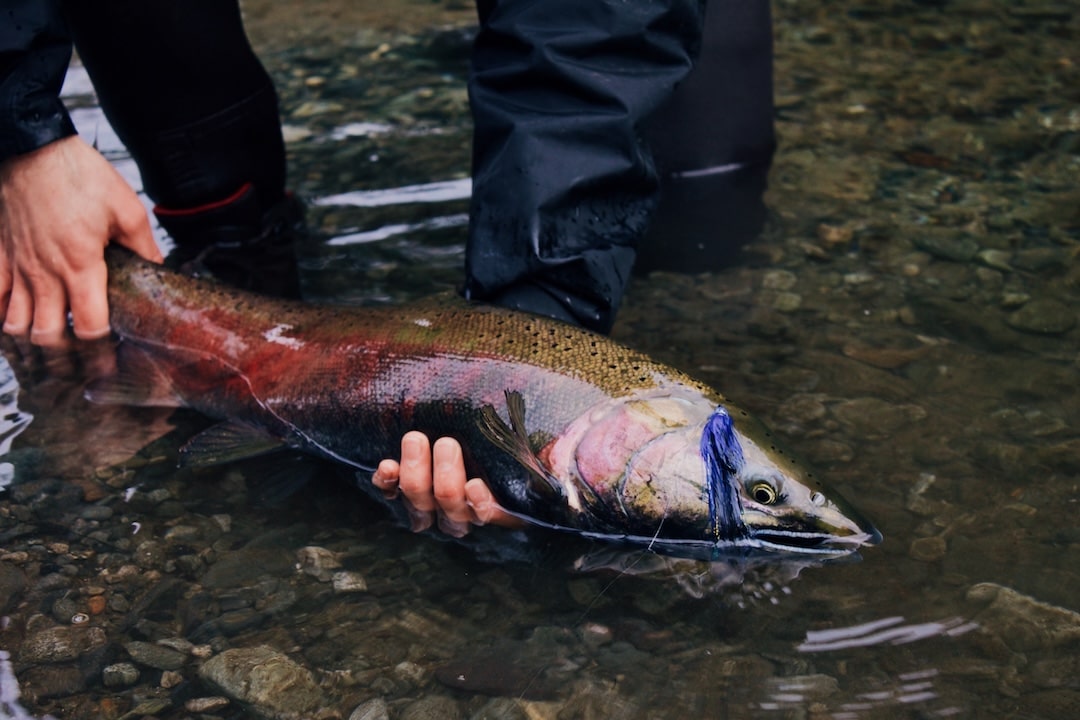
Open-Ocean Schooling: The Science of High Survival
How does a run like this pull off a comeback? It starts out in the deep blue.
Research on chum salmon ocean migration published in Island Fisherman revealed the first direct proof that juvenile chum form structured offshore schools during their critical first winter in the Gulf of Alaska (see Chum Salmon Ocean Migration Discovery). Genetic tracking from winter research gillnets demonstrated that juveniles from rivers over 1,600 km apart—from northern B.C. to central Alaska—find each other in the open ocean and school up.
Chum rely on inherited geomagnetic navigation and chemical pheromones to group together thousands of miles from shore. Traveling as a cohesive pod lets them conserve critical metabolic energy while foraging on sparse winter gelatinous plankton. With historic marine survival rates averaging around 1.8% to 3%, a 1.5-million-fish Fraser River chum salmon return means these ocean-going nomads found prime feeding conditions throughout their offshore tour.
🎣 SALTWATER MASTERCLASS
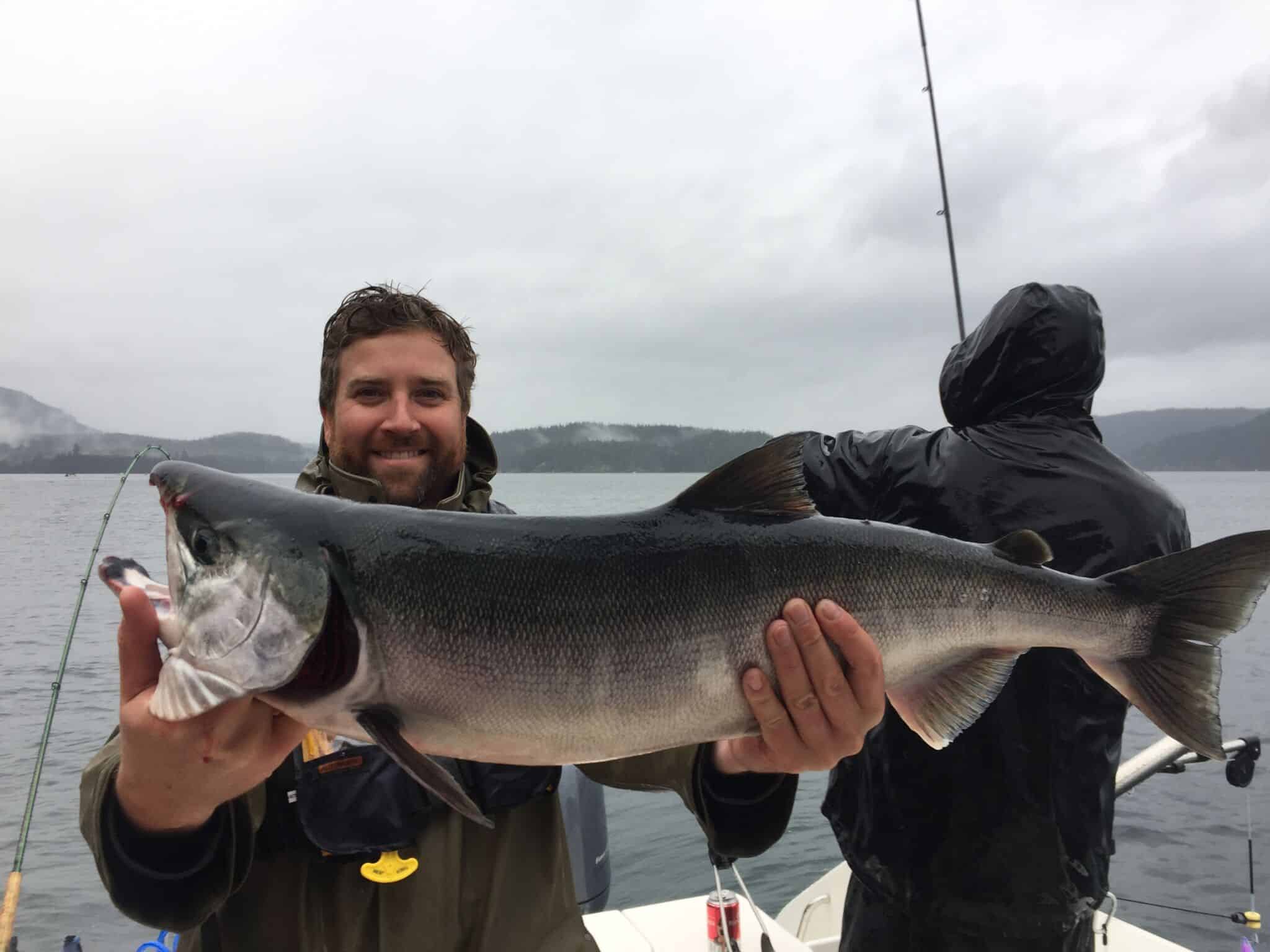
HOW TO CATCH MORE CHUM SALMON
Thinking about heading out to intercept these brute runs in the salt? Don’t fish for them like chinook. Chum are a different beast altogether:
- Troll Dead Slow: Keep boat speed between 1.2 and 1.8 knots—just fast enough to get your dodger swinging side-to-side or your rectangle flasher barely turning.
- The Dummy Wall: Run dummy flashers off your cannonball and stack rods 20 feet apart to create an irresistible wall of flash.
- Mini Lures Only: Chum feed heavily on krill, euphausiids, and jellies. Downsize to 2.5-inch micro-hoochies (like Michael Baits) in cerise, bubblegum pink, chartreuse, or purple, tied on short 24- to 36-inch leaders of stiff 40-lb leader line.
The Bigger Picture: A Welcome Spike in a Changing Ocean
While a 1.52-million Fraser return is cause for celebration on the water, renowned salmon researcher Dr. Richard Beamish noted to Island Fisherman that this strong showing is an extraordinary exception against a much sterner, basin-wide reality.
Preliminary commercial salmon catch figures from across the North Pacific indicate that total harvest numbers across all nations in 2026 will hit their lowest levels in 50 years. While Japanese commercial chum catches have plunged from 270,000 tonnes in the mid-1990s to roughly 10,000 tonnes, and Russian harvests have dropped from a 2018 peak of over 666,000 tonnes down to around 99,000 tonnes, British Columbia’s own historical benchmarks tell a similar story. Good commercial catches in B.C. once averaged approximately 75,000 tonnes; current catches sit near 7,000 tonnes.
Dr. Beamish’s historical escapement data from Vancouver Island and Fraser watersheds illustrate the broader trend that regional chum stocks have been navigating over the past decade:
| River System | 2023 Spawner Count (est.) | 4-Year Average | % Decline (vs. 4-Yr Avg) | 12-Year Average | % Decline (vs. 12-Yr Avg) |
|---|---|---|---|---|---|
| Fraser River | 470,000 | 581,669 | -19% | 919,760 | -49% |
| Cowichan River | 29,039 | 93,700 | -69% | 156,110 | -81% |
| Nanaimo River | 22,219 | 36,370 | -39% | 68,750 | -68% |
| Nitinat River | 12,700 | 33,600 | -62% | 135,420 | -91% |
| Puntledge River | 11,989 | 16,260 | -26% | 44,780 | -73% |
| Big Qualicum River | 5,967 | 7,840 | -24% | 60,930 | -90% |
Looking at the Fraser River’s long-term timeline (1998–2023), terminal returns once regularly topped 2.5 to 3.5 million fish—hitting near 3.8 million in 1998, 3.5 million in 2001, and over 3.1 million in 2004—before tapering into lower cyclical bands and narrower harvest windows.
| Era / Benchmark | Run Scale (Terminal Return) | General Fishery Character |
|---|---|---|
| Historical Peaks (1998, 2001, 2004) | 3.1M – 3.8M fish | Heavy commercial fleet catches >200,000 fish; open recreational angling. |
| Moderate Recovery Years (2012, 2016) | 1.8M – 2.8M fish | Consistent escapement exceeding goals with standard fall openings. |
| Constrained Return Window (2018–2023) | 350,000 – 1.2M fish | Low terminal numbers, non-retention triggers, and limited commercial take. |
| 2026 In-Season Estimate | 1,521,000 fish | Median estimate beats 800K target by 721K, unlocking retention. |
🔬 SCIENCE IN FOCUS
WHAT SHIFTING OCEANS MEAN FOR OUR FUTURE
As ocean food capacity tightens across the North Pacific, traditional management—like assuming the ocean has limitless feed for more hatchery fry—is being re-evaluated. Modern research is turning toward recognizing wild populations that possess the genetic tools to adapt to new marine conditions.
Watch future issues of Island Fisherman Magazine for an upcoming exclusive report.
Discovery Passage Tradition: 24th Annual Brown’s Bay Charity Chum Derby
Further up the inside passage, the unmistakable crack of downrigger releases and wet rain gear took over Seymour Narrows as Brown’s Bay Resort hosted its 24th Annual Charity Chum Derby (see 2026 Chum Derby Announcement).
Running October 24–25, the derby is a true cornerstone of Vancouver Island angling heritage. Between the heated entertainment tent, the final seasonal hurrah at the marina restaurant, and endless stories told over dock cleats, it celebrates the hard-pulling “dog salmon” while raising crucial funds for community charities.
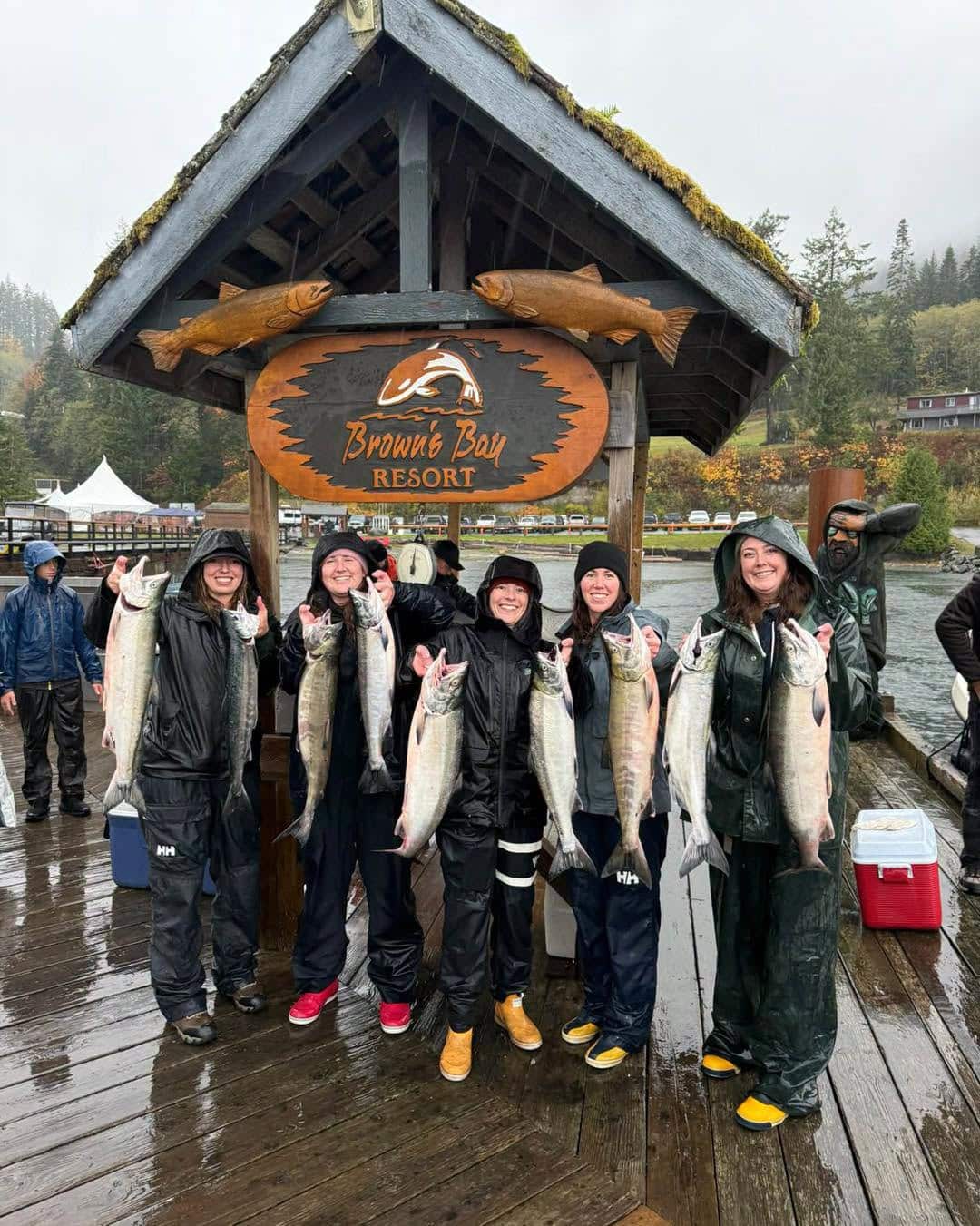
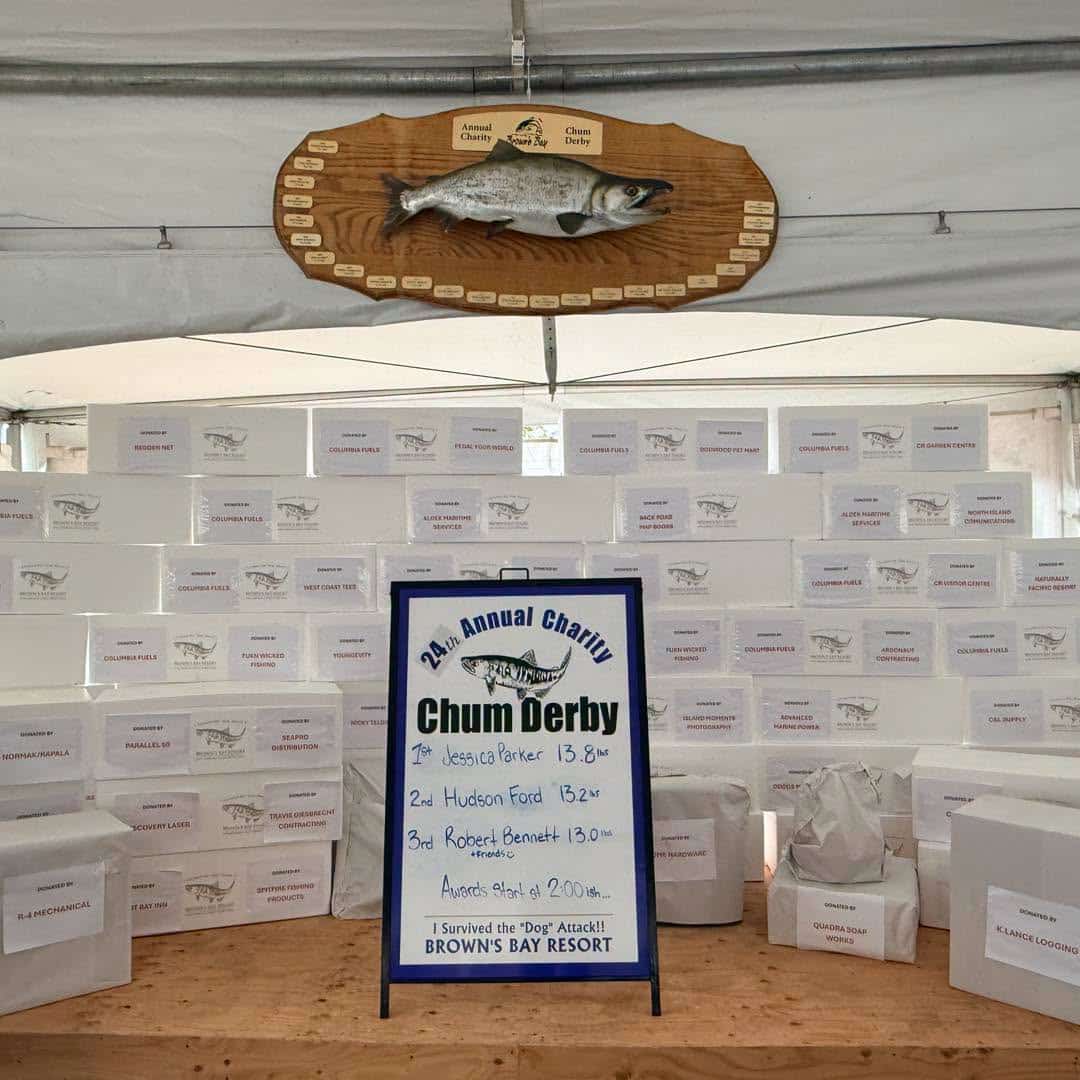
When the scales closed, the 2026 winners proved that Discovery Passage churns out serious weight:
| Place | Angler | Weight |
|---|---|---|
| 1st Place | Jessica Parker | 13.8 lbs |
| 2nd Place | Hudson Ford | 13.2 lbs |
| 3rd Place | Robert Bennett & Friends | 13.0 lbs |
Terminal Tackle & Compliance Check
Before you throttle up, make sure your rig is fully compliant:
- Single Barbless Hook: Mandatory across all BC tidal and non-tidal salmon fisheries.
- Hook Gap Gauge: Keep single hooks within the legal 22 mm point-to-shank limit. A Canadian nickel (21.2 mm across) is a handy measuring guide; if the gap swallows a quarter (23.88 mm), it’s too wide.
- Check Before You Launch: Always verify last-minute variation orders and test fishery updates directly via the DFO Fishery Notices Search Portal.

Stay Ahead on BC Waters
Tactical rigging guides, regional run timing, DFO regulation updates, plus subscriber-only lodge deals and exclusive BC marine partner discounts. Delivered straight to your inbox.
"*" indicates required fields