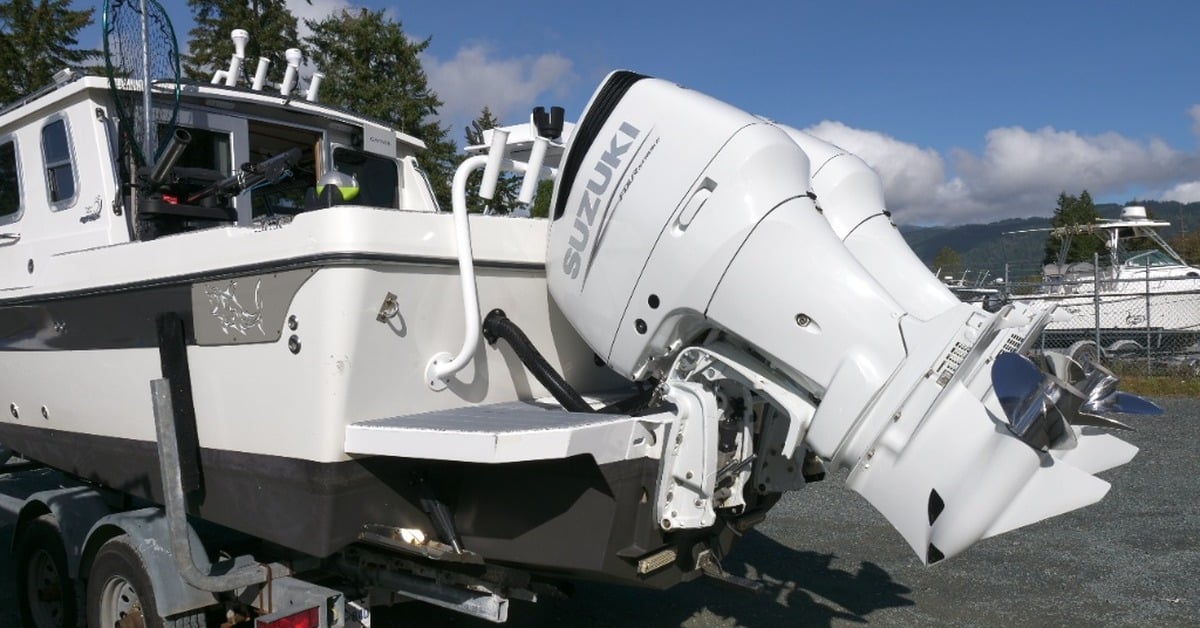
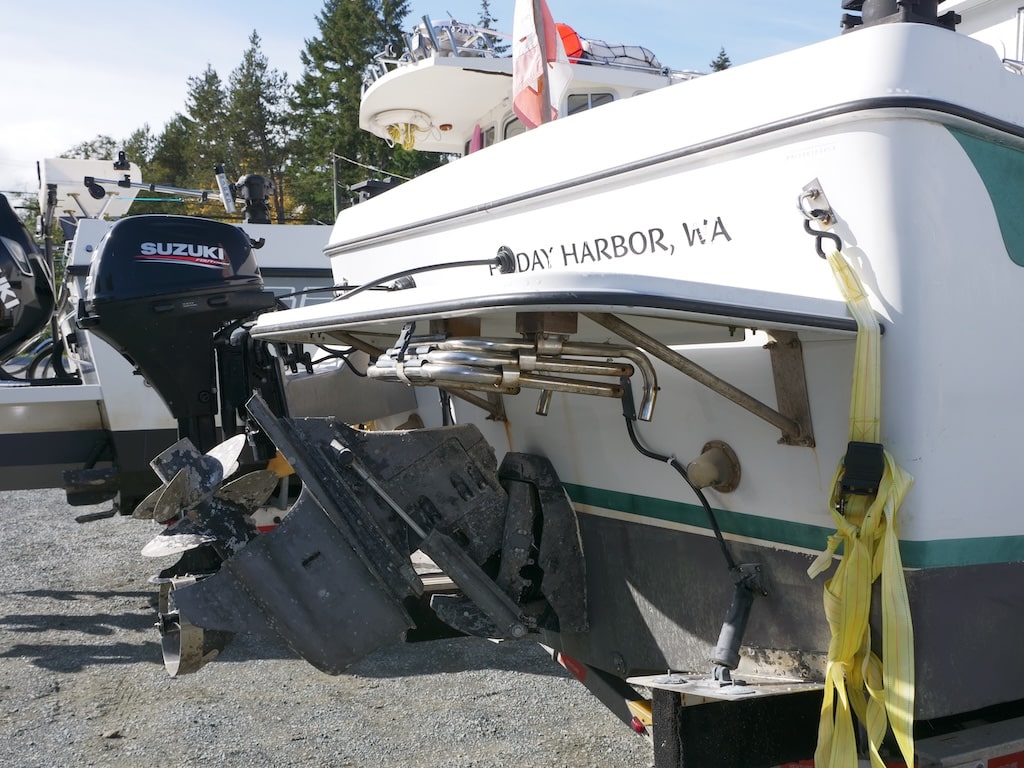
An outboard pod conversion represents one of the most transformative investments a coastal British Columbia boat owner can make. Every serious boater on the Coast knows the feeling: You’re drifting over a rockpile off Amphitrite Point or working the heavy rips off Swale Rock in Barkley Sound, and in the back of your mind sits an aging cast-iron inboard engine block. It’s enclosed in a damp engine box taking up a third of your cockpit floor, connected to an outdrive leg living permanently in corrosive salt water.
For decades, stern drives (inboard/outboards) were the coastal workhorse. Today, finding qualified marine technicians willing to pull corroded exhaust manifolds, replace leaking rubber bellows, and chase obsolete drive parts has become a major headache.
To understand the exact scope of this operational shift, Island Fisherman recently surveyed coastal vessel owners across Vancouver Island, the Gulf Islands, and the Lower Mainland. The findings from our 2026 Coastal BC Boater & Repower Study (N=638) reveal an eye-opening reality: Over 70% of the coastal fleet sits squarely in the 90- to 250-horsepower sweet spot, fuel economy and extended range have overtaken top-end speed as the primary purchasing driver, and over 1,400 boaters across our readership are actively exploring inboard-to-outboard pod conversions.
To dig into the real-world mechanics, engineering, and economics of pod conversions, I sat down with Ryan Fleischhacker of Breakers Marine. Operating from Port Alberni and Bamfield, Breakers has served as the West Coast proving ground for extreme commercial guides, remote lodges, and hardcore offshore sporties since 1990.
2026 Coastal BC Boater & Repower Study (N=638)
42.2%
28.5%
39.0%
26.6%
23.5%
The Golden Ticket: Scooping Classic Hulls for Outboard Conversions
One of the most compelling trends on the Coast today is not buying a brand-new $180,000–$400,000 vessel, but hunting down a proven, heavy-water hull at a steep discount and transforming it into a modern, turnkey offshore machine.
“If you can find an older 24′ or 26′ Hourston Glascraft, you’ve got the golden ticket. Everyone wants those classic offshore hulls. Vintage Hourstons, Double Eagles, Bertrams, and local builds like Monaro cut through West Coast chop exceptionally well. They were built back when fibreglass was heavily hand-laid. They carry a bit more structural weight, but that weight works to your advantage—it delivers an unbelievable ride in big coastal water.”
— Ryan Fleischhacker, Breakers Marine
Because many of these late-1980s to early-2000s hulls are listed with blown or tired stern drives, savvy buyers can often scoop them up for pennies on the dollar. But before handing over cash, Ryan urges buyers to bring a professional into the equation.
“You have to start with a rock-solid backbone,” stresses Ryan. “The pod and the new outboards will be phenomenal, but they must mount to clean, uncompromised structure. Before committing, get a proper marine surveyor or structural fibreglass technician to tap the stringers, inspect the engine beds, and check the transom core for moisture or rot. If there is soft wood hiding behind that glass, that adds extra structural rebuild costs before the pod can even be hung.”
The Coastal Fleet Clock: Survey Benchmarks
- 59.3% of Coastal Hulls Are 20+ Years Old: Pre-2006 hand-laid glass and heavy-gauge welded aluminum vessels dominate the regional fleet.
- 56.9% of Engines Exceed 500+ Hours: More than a quarter (25.4%) have logged over 1,000 saltwater hours.
The verdict: Heavy-water hulls endure, but aging outdrives and stern drives are past due for replacement.
The Engineering Truth: Flotation Pods vs. Tubular Brackets
When executing an outboard pod conversion, hanging heavy four-stroke power 24 to 30 inches behind the transom moves the vessel’s centre of gravity aft. This is where improper design leads to disastrous handling issues like porpoising, extreme stern squatting, or dangerous high-speed bow-steer.
“You cannot simply bolt an open tubular bracket to a heavy Coastal boat and call it a day,” Ryan warns. “A tubular bracket provides zero lift. A true flotation pod is a custom-fabricated, fully sealed aluminum chamber whose bottom surface extends the boat’s running bottom plane. That enclosed air chamber counteracts the physical weight of the outboards, provides buoyant lift out of the hole, and allows the hull to plane at lower, more fuel-efficient speeds.”
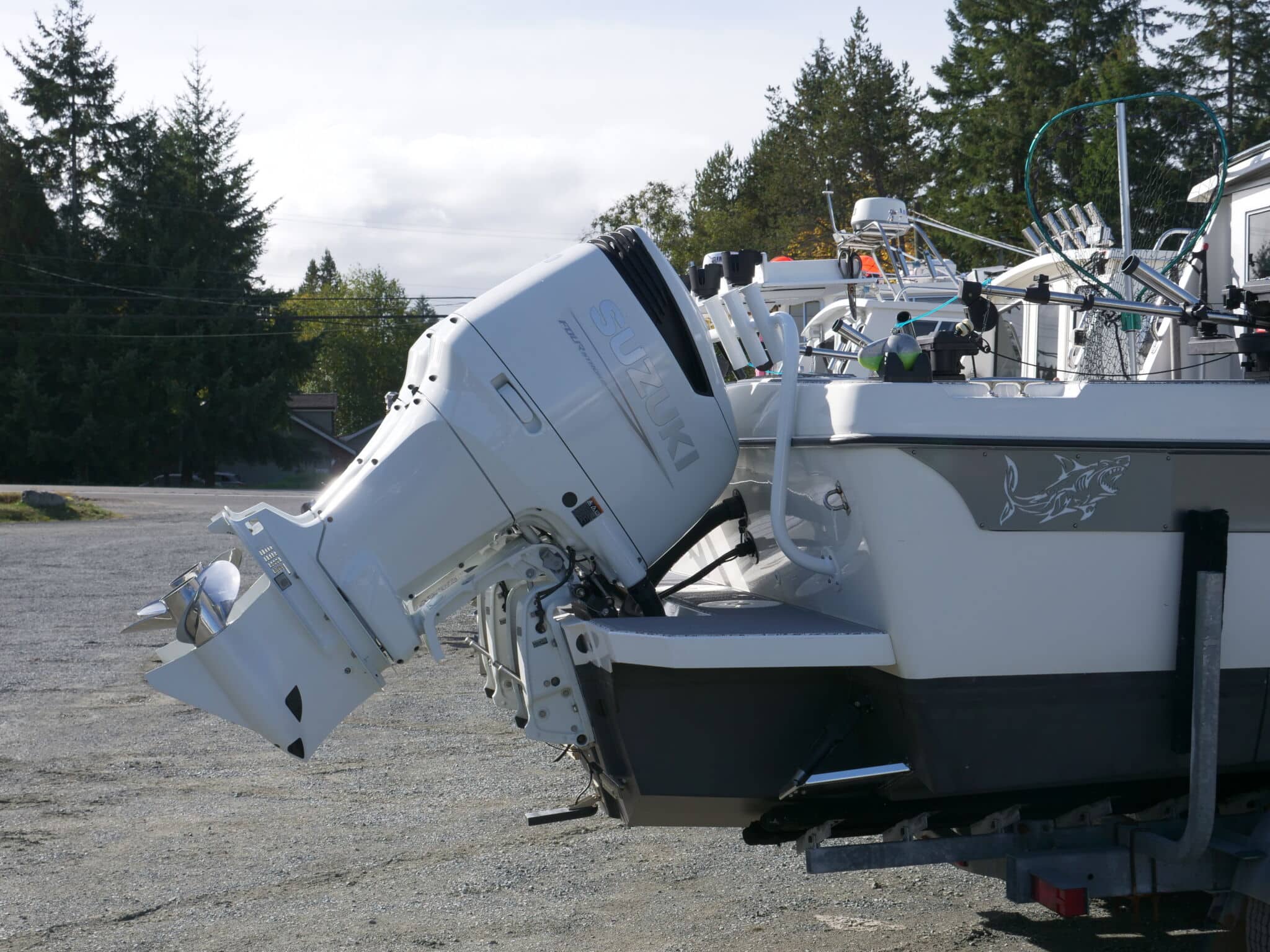
Breakers works with specialized custom fabricators who build each pod tailored to the hull’s specific transom angle and deadrise. Crucially, the outboards are mounted using external transom-bracket pads, meaning engine mounting bolts never penetrate the pod’s sealed flotation chamber—eliminating internal leaks permanently.
The Case for Suzuki: Engineering for the Set-Back Transom
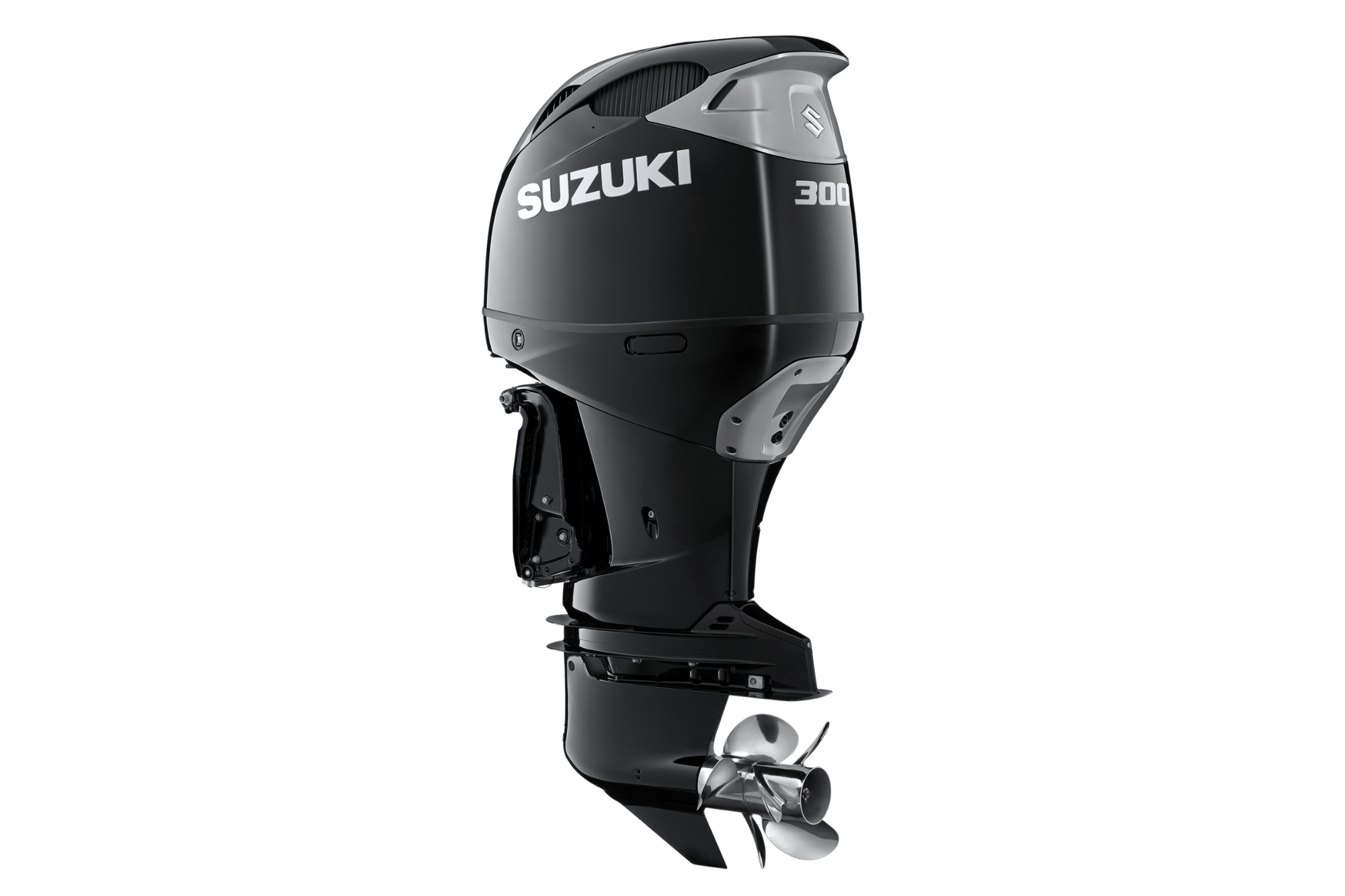
Breakers Marine has been exclusively aligned with Suzuki Marine for over three decades. From a rigging and naval engineering perspective, several proprietary Suzuki technologies make them particularly suited for an outboard pod conversion:
- The Offset Driveshaft (Forward Centre-of-Gravity): On a pod conversion, keeping excess weight off the extreme aft leverage point is paramount. Suzuki achieves this through a two-stage gear reduction design that places the engine’s crankshaft ahead of the driveshaft. This shifts the entire powerhead forward directly over the transom bracket, significantly reducing transom strain, minimizing stern squat, and improving hull balance on plane.
- Naturally Aspirated Displacement vs. Boost: Heavy-water hulls loaded with gear, iced fish boxes, 300 litres of fuel, and three anglers require immense low-end grunt to get up on step. While other manufacturers rely on superchargers to generate torque from smaller blocks, Suzuki builds large-displacement, naturally aspirated powerheads. This delivers massive low-end torque with fewer moving parts, cooler operating temperatures, and bulletproof long-term reliability in saltwater.
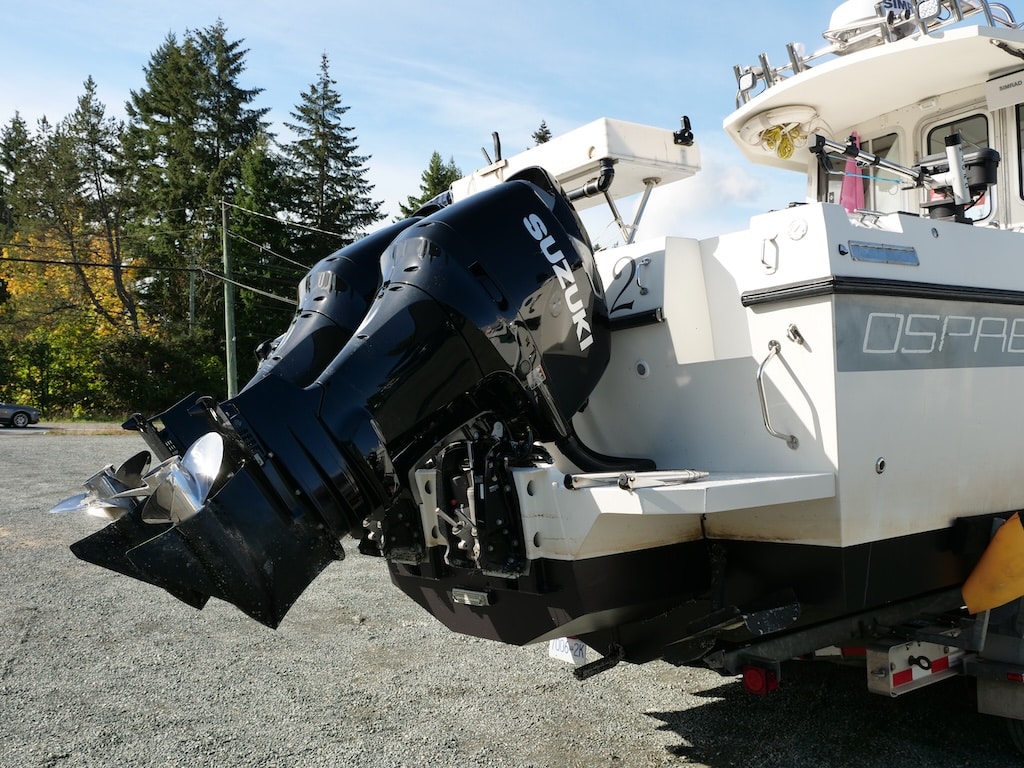
- Dual-Prop Directional Stability: For boats in the 24′ to 30′ range, Suzuki’s contra-rotating dual-propeller system (DF300B/DF350A) eliminates “prop walk” entirely. Two counter-rotating propellers bite clean water simultaneously, maintaining true tracking in heavy following seas, providing exceptional low-speed dockside control, and holding plane at lower cruising RPMs.
- Oil-Bathed Timing Chains vs. Rubber Belts: From a maintenance perspective, Suzuki four-strokes utilize a self-adjusting steel timing chain operating inside an enclosed oil bath. Unlike competitors using exposed rubber timing belts with tensioners that demand expensive replacements around the 1,000-hour mark (often exceeding $1,200), Suzuki’s chain is continuously lubricated, self-adjusting, and protected from corrosive salt air for the life of the engine.
The Auxiliary Kicker Surge: The “West Coast Special”
Our study revealed that 21.0% of Coastal boaters are actively looking to replace or add a new four-stroke auxiliary trolling motor. In the past, kickers were clamped onto flimsy, spring-loaded drop-brackets bolted beside the outdrive. Ryan Fleischhacker strongly advocates against this legacy workaround.
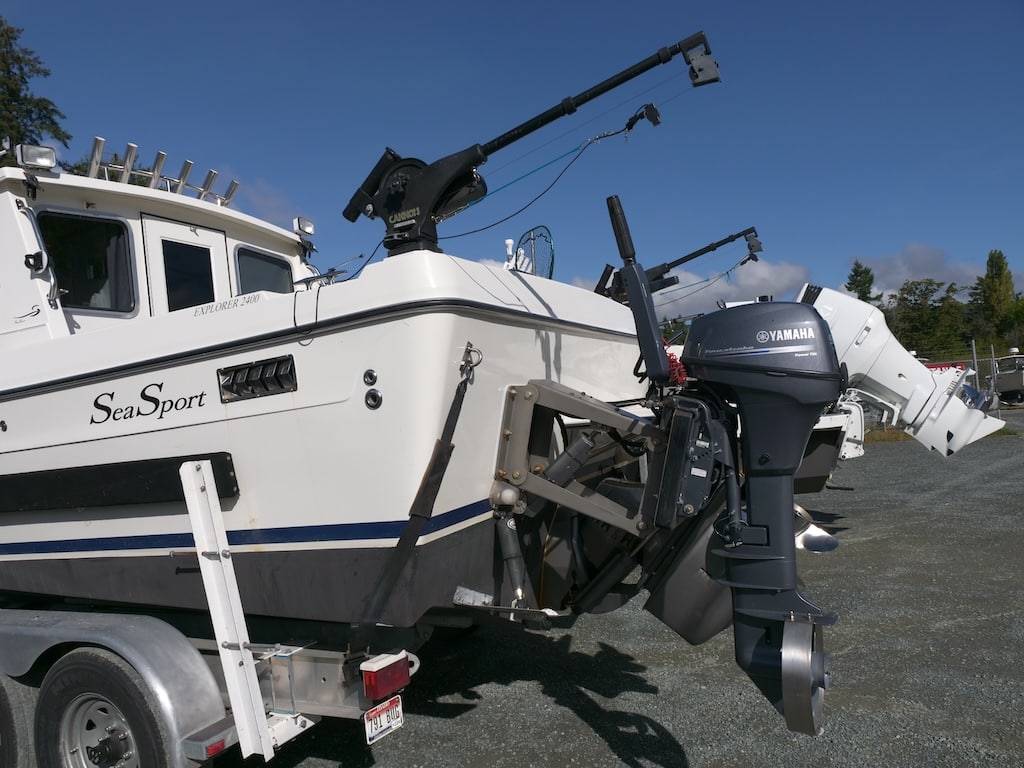
“If you are investing in a pod, always have the fabricator build the kicker bracket directly into the pod structure in line with the main engine,” Ryan explains. “That allows us to rig what I call the ‘West Coast Special.’ We connect the kicker directly to the main engine’s hydraulic steering ram using a heavy-duty stainless tie rod with ball joints. There are no complex electric motors or extra helms. Wherever the steering wheel points the main, the kicker turns in unison. Even better, that large main outboard lower unit acts like a massive rudder in crosswinds, giving you pinpoint steering control during an eight-hour troll.”
Furthermore, Suzuki’s DF9.9B, DF15A, and DF20A kickers feature battery-less Electronic Fuel Injection (EFI). EFI completely eliminates the clogged pilot jets and gummed carburetors that plague boaters after winter storage. Paired with a class-leading 12-amp charging alternator, these kickers easily keep modern marine electronics, radars, and electric downriggers powered without flattening house batteries.
Recouping Investment: The Salvage & Fuel ROI
Can you offset the build cost of an outboard pod conversion? Absolutely. Running stern drives, Bravo III, or Volvo Penta outdrive legs, fresh-water cooling kits, and transom shields hold strong residual value on local classifieds and commercial marine groups. Selling pulled gear frequently recovers $2,500 to $5,000 toward the conversion budget.
Combined with seasonal manufacturer warranty promotions (such as Suzuki’s 5-year coverage programs) and saving hundreds of dollars each autumn on winterization and outdrive servicing, modernizing a proven coastal hull is one of the smartest investments an offshore boater can make.
“When commercial guides repower with Suzuki, the first thing they talk about is fuel savings. When you spend 100 days a year offshore, that fuel efficiency directly protects your bottom line.”
— Ryan Fleischhacker, Breakers Marine
Retail Buyer’s Guide: Turnkey Repower & Pod Feasibility
To help boaters budget accurately, the matrix below outlines realistic baseline costs for an outboard pod conversion on a typical 22- to 26-foot heavy-water coastal vessel:
| Component Stage | Approx. Baseline Cost | What This Involves & Why It Matters |
|---|---|---|
| Custom Flotation Pod | $6,000 – $8,000 painted | Custom marine-grade aluminum fabrication matched to hull deadrise, integrated bottom plane for buoyant lift, exterior powder coating, and sealed external engine mounting studs. |
| Transom Prep & Glasswork | ~$2,000* | Removing old stern drive assembly, grinding, laminating structural composite/glass backing into the outdrive hole, sealing through-hulls, and colour-matched gelcoat finishing. |
| Hydraulic / Digital Steering | ~$3,000* | New commercial-grade hydraulic helm, heavy-duty steering cylinders, high-pressure lines, and custom stainless steering linkage. |
| Fuel Delivery Modernization | $500 – $600* | Overhauling fuel delivery lines, replacing anti-siphon valves, and installing high-capacity primary 10-micron water-separating fuel filters (re-using sound internal hull tanks). |
| Auxiliary Trolling Kicker | DF9.9B / DF20AT EFI | Battery-less EFI trolling motor with 12-amp charging output and integrated tie-bar steering tied directly to the main outboard ram. |
| Primary Power Packages | DF200 / DF250 / DF300 |
Single Outboard: Boaters almost universally step up to the DF300AP ($37,299 MSRP) over the DF250 ($34,199–$36,199) due to identical block weight and minimal price delta. Twin Application: Twin DF200s deliver maximum redundancy and stability for offshore hulls. |
*Disclaimer: All pricing figures above represent approximate, baseline industry estimates. Every vessel is unique, and final quotes depend on transom structural core health, custom aluminum fabrication requirements, and rigging complexity. Baseline fabrication and labour estimates subject to formal shop inspection.
Words by Joel Unickow | In partnership with Breakers Marine
Premier Authorized Suzuki Marine Dealer
Breakers Marine is Vancouver Island’s premier full-service marine refit and repower facility. Operating from Port Alberni and Bamfield, Ryan Fleischhacker and his team specialize in custom aluminum flotation pod conversions, digital four-stroke repowers, and heavy-water commercial rigging. Breakers services coastal boaters across Vancouver Island, the Lower Mainland, and ships complete turnkey packages out-of-province.
Planning a Repower or Considering a Transom Pod Conversion?
Whether you want to assess your hull’s structural feasibility for an outboard pod conversion, explore Suzuki DF9.9B to DF350A package pricing, or discuss transom weight balance, Ryan Fleischhacker and the Breakers Marine team are available for technical consultations.
Direct Shop Line: (250) 724-3346
Partner With Island Fisherman | Coastal Market Intelligence & Lead Generation
Looking to benchmark your market, launch a high-impact seasonal campaign, or connect directly with verified coastal BC boaters? Island Fisherman’s custom sponsored research and survey programs deliver verified dockside data, qualified sales leads, and integrated print and digital editorial features.

Stay Ahead on BC Waters
Tactical rigging guides, regional run timing, DFO regulation updates, plus subscriber-only lodge deals and exclusive BC marine partner discounts. Delivered straight to your inbox.
"*" indicates required fields