Planning an offshore trip for winter harbour fishing means committing to the very edge of the map, where the modern world simply stops trying to reach you. There is a moment, when blacktop changes to an endless spine of gravel stretching out past Holberg, where your cell service bars drop to zero. The dust kicked up by your truck hangs in the dense, old-growth air like smoke, and the heavy thrum of your tires on corrugated rock becomes the only soundtrack that matters.
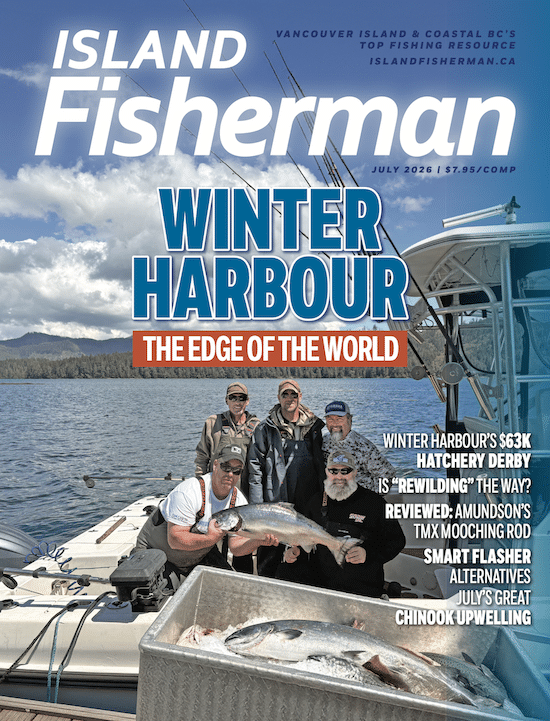
I made the drive up here from Nanaimo to immerse myself in the legendary 3rd Annual Biggest, Baddest, Toughest Fishing Derby on the West Coast and to spend some serious time on the water with Captain Matt Giasson of Fair Fight Fishing Charters. Let’s be completely honest from the outset: This is not a casual Sunday drive to a manicured marina. This is a journey to the literal edge of Vancouver Island—a rugged, wind-whipped outpost where wild geography collisions create one of the most prolific marine ecosystems on the planet.
For the locals who call this moss-draped haven home, and for the anglers who respect it enough to make the trek, Winter Harbour isn’t just a spot on a map. It’s a badge of honour.
Surviving the Gravel Highway to Winter Harbour Fishing
Getting to Winter Harbour by land is half the adventure, and it demands your full respect. If you choose to skip the floatplane or the flight into Port Hardy and opt for the overland haul, you are committing to a serious stretch of active, unpaved logging road.
When navigating long logging roads, you’ll inevitably encounter washboard—those relentless, bone-rattling ripples in the dirt best managed by maintaining a steady, momentum-keeping speed. To maximize traction and save your suspension, stick to following the tracks worn into the road by previous vehicles. If you suddenly hear a terrifying squeak or screech echoing from one of your wheels, don’t panic about your wheel bearings just yet (you hope!). Nine times out of ten, it’s just a rogue pebble trapped between your brake rotor and dust shield; simply stop, shift into reverse, and drive backward for a few yards to dislodge it and restore the peace. Inevitably, the pebble will wear down and dislodge if that doesn’t work.
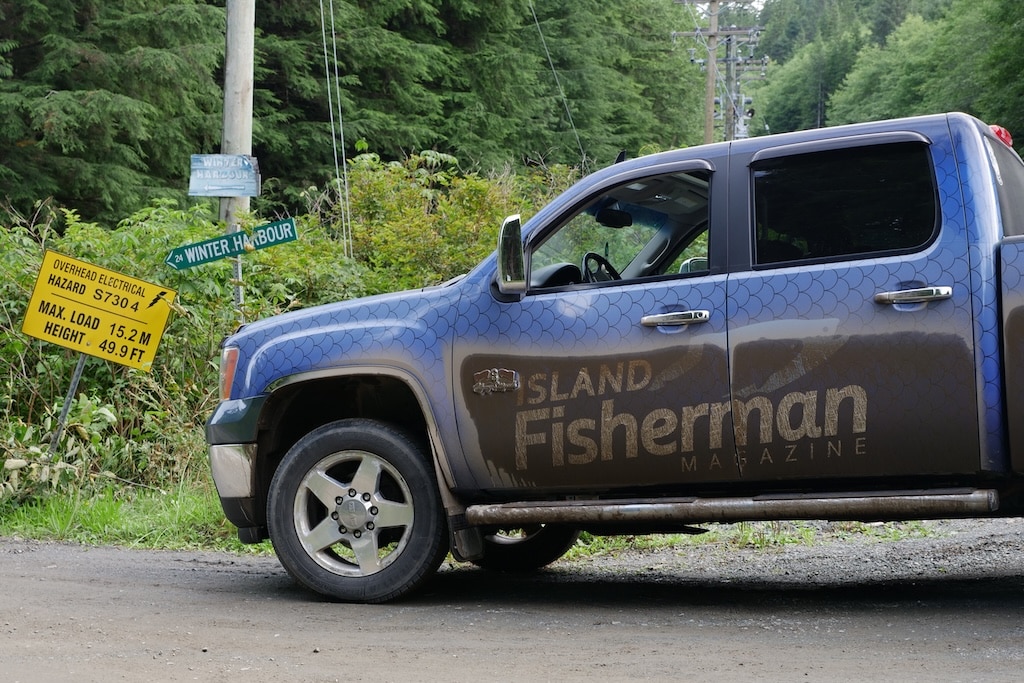
This road will test your equipment. If you attempt this drive, do not rely on the flimsy emergency jack that came under your truck’s back seat; bring a real hydraulic bottle jack, a proper heavy-duty tire iron, and at least one robust spare. Furthermore, a programmable VHF logging radio is non-negotiable for monitoring industrial truck traffic on these blind corners because when a fully loaded logging truck comes barreling down a single-lane grade, you need to know its mile marker long before you see its grille. Toss a sharp axe or a chainsaw in the back, too. If a coastal blow brings a rogue cedar down across the road, you are your own road crew out here.
But the rewards for keeping your eyes peeled are spectacular. On my drive up, I had four separate black bears dart out on different occasions across the road, their coats thick and glossy against the gravel. Even more breathtaking was a small herd of massive, prehistoric-looking Roosevelt elk standing like statues in the misty clearing. It is a stark reminder that you are a visitor in a truly wild kingdom.
The Six-Person Sanctuary
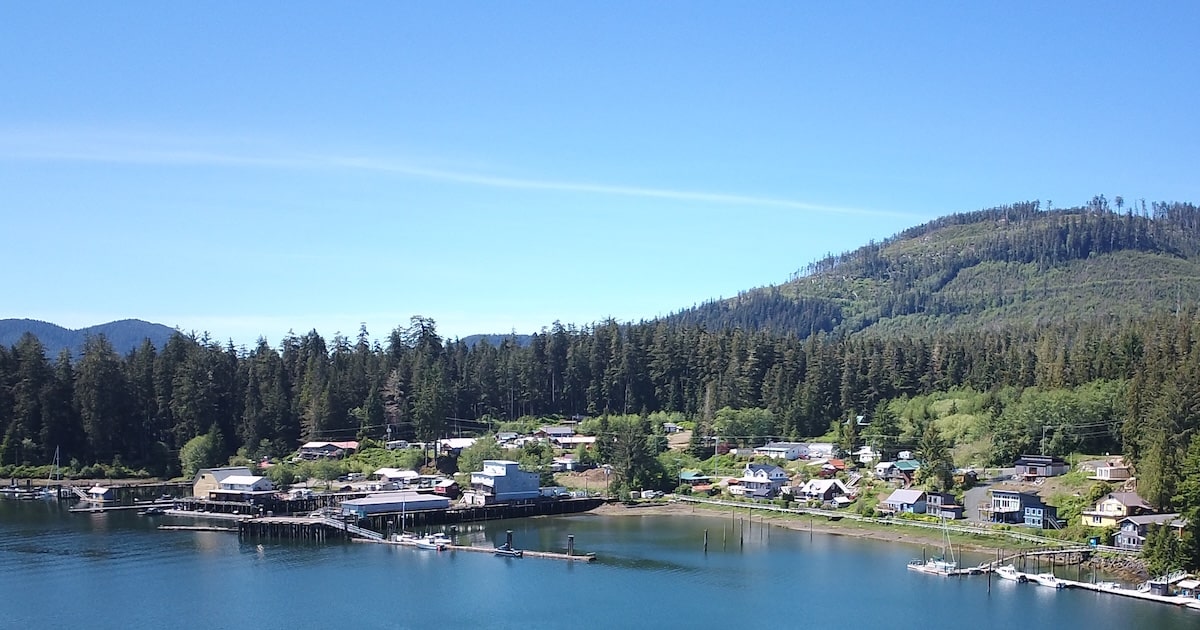
When you finally roll into town, the geography turns into a narrow, but breathtaking, landlocked sanctuary that has shielded ships from the wrath of the Pacific since the 1800s. Local rumour is that the permanent, year-round population of Winter Harbour is just six resilient souls. While the exact census fluctuates depending on who is sitting on the porch, the town’s rich commercial history is etched into every piling.
Until the late 1990s, this was a booming commercial fishing hub, packed with over 700 boats, multiple general stores, a schoolhouse, and a legendary buying station where industry giants processed millions of pounds of salmon. When the commercial fleet was scaled back by regulations in 1997, the crowds vanished, leaving behind an eerie but beautiful peace that was quickly inherited by the sport fishing community. If you fall head over heels for this lifestyle, there is real estate out here. Raw land and off-grid coastal cabins occasionally pop up on the market for anglers seeking dedicated access to prime winter harbour fishing grounds.
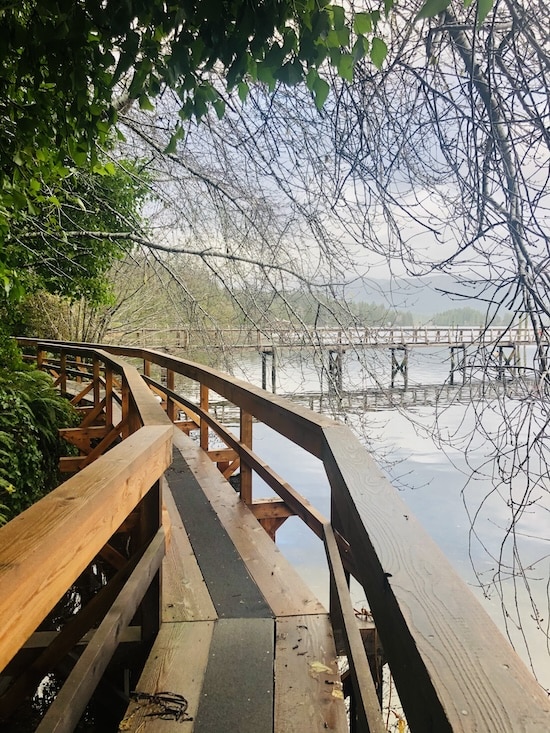
The iconic wooden waterfront boardwalk was originally the only highway through Winter Harbour before the main gravel road was carved out. Built to connect the community’s homes, general stores, and bustling fish-buying stations, it served as the literal lifeline of the village. Every pound of supplies, every interaction, and generations of coastal history travelled along these very planks. Walking it today is like stepping straight into a coastal archive, offering a front-row seat to the natural beauty of the rugged harbour. For more destination background, explore our regional overview on Wonderful Winter Harbour.
The Outpost: A Lifeline on the Water
At the heart of the modern village stands The Outpost General Store, run by Greg and Andrea Vance. Calling it a “general store” feels like an understatement; it is the social and logistical spine of Winter Harbour. After a notoriously brutal winter that hammered the coast, Greg and Andrea completely stepped up for the community, installing a brand-new, state-of-the-art dock system to welcome the season’s fleet.
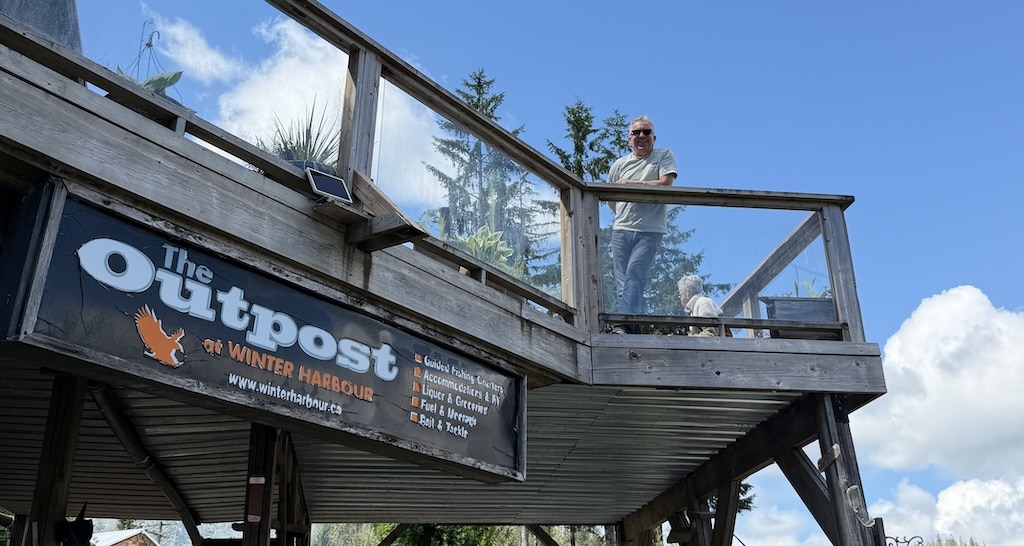
The Outpost functions as a fully operational marina, fuel dock (gas and diesel), campground, and accommodation provider. Step inside, and the shelves defy the remote location. They have a pristine wine selection, a fully stocked liquor store, top-tier local fishing tackle dialled into the exact regional colourways, and high-end, heavy-weather apparel built to withstand a horizontal West Coast deluge. It is the ultimate gathering place where guides and independent anglers pull up a stool on the covered deck at dusk to swap notes, dissect charts, and share a laugh after a long day on the salt.
The Oceanography of the “Salmon Highway”
To truly master winter harbour fishing, you have to understand the hard science of why the salmon congregate here. The coastal bathymetry of Northern Vancouver Island is unique compared to the southern banks like La Perouse. Down south, you might steam 25 to 100 nautical miles offshore to find tuna off the continental shelf. In Winter Harbour, the shelf drops off into the deep abyss right on your doorstep.
The 50-Fathom Edge & The “Bulge”
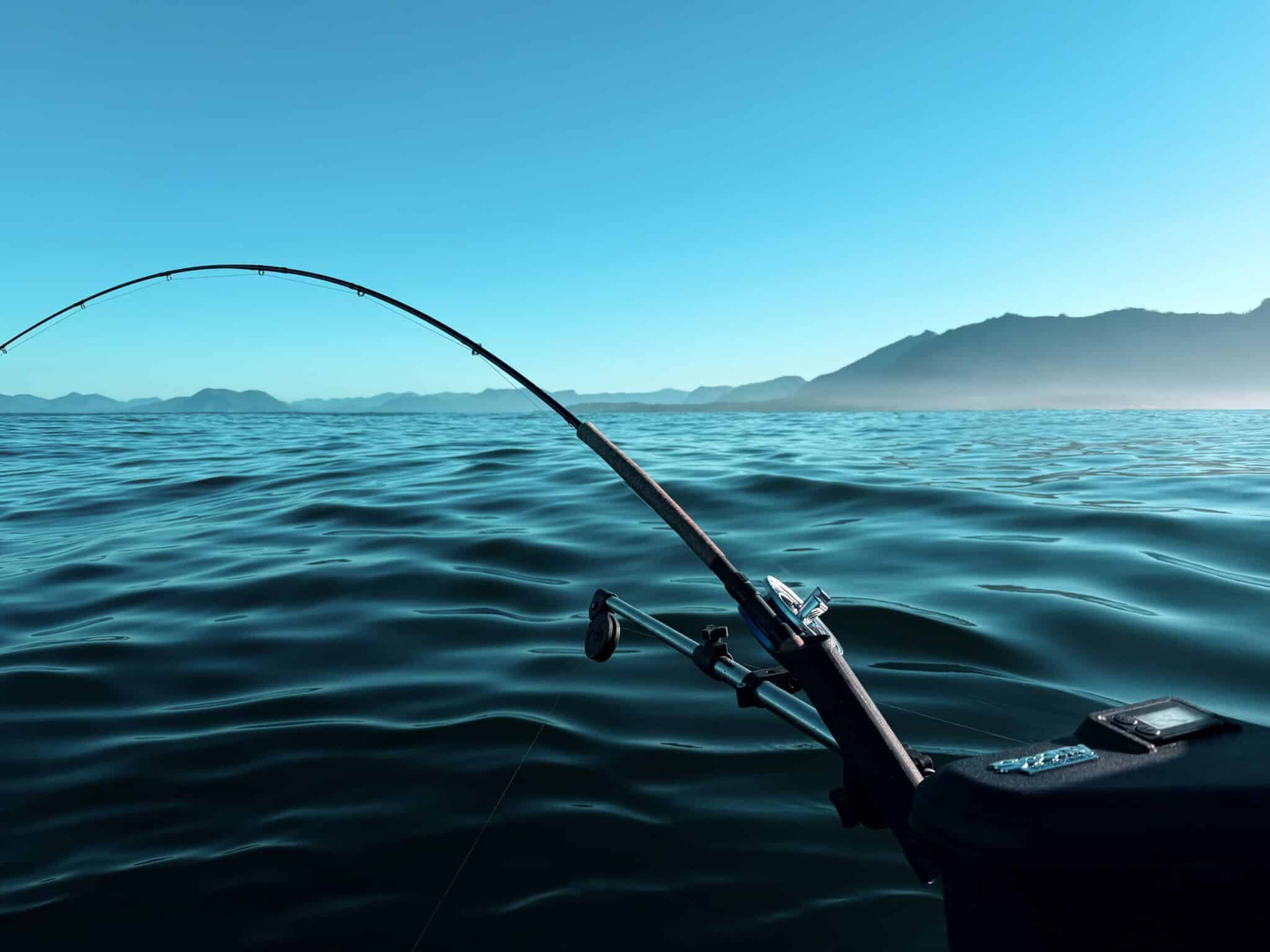
The legendary Salmon Highway—the 50-fathom (300′) edge—sits a mere 5 to 6 nautical miles from the mouth of Quatsino Sound. Millions of southbound salmon migrating from the open ocean are physically compressed against the shoreline by the massive geographical barrier of the Brooks Peninsula just to the south.
This underwater cliff wall triggers a massive, nutrient-rich annual upwelling. Cold, dense water from the deep ocean floor slams into the continental shelf and pushes upward, carrying astronomical amounts of plankton and nutrients into the shallows. This upwelling is so powerful that it creates a satellite-measurable phenomenon known to oceanographers as the “bulge.” In specific zones along this shelf, the ocean surface has actually been recorded up to 18 inches higher than the surrounding waters purely from the hydraulic force of the deep current pushing upward. This rich, cold water acts as a magnet for massive bait balls—herring, sand lance, squid, and sardines. Where there is feed, there are predators.
The Nearshore Hotspots
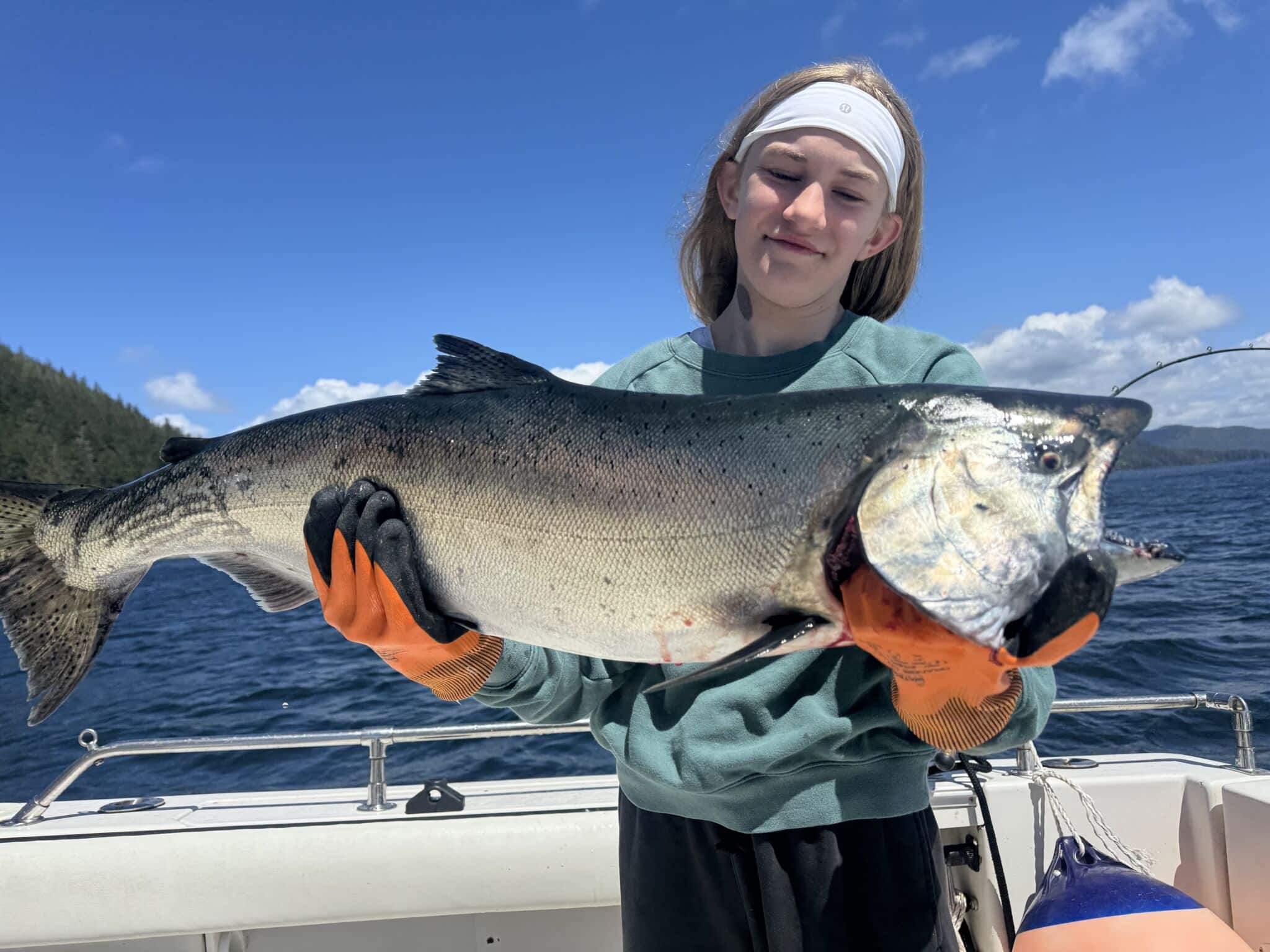
When the July blitz hits, you don’t always need to fish the deep blue highway. Incredible numbers of aggressive mid-to-high-teen Chinook and fat 6- to 8-pound coho pull into the rugged nearshore structures to gorge themselves. The absolute holy trinity of local structures includes:
- Lippy Point: A jagged, bait-holding point known for yielding massive, tackle-smashing springs right against the kelp lines.
- Kwakiutl Point: An underwater highway junction where incoming tides stack bait tightly against the rock faces.
- Lawn Point: A diverse structural playground featuring shallow reefs that give way to steep gravel drop-offs, perfect for transitioning from salmon trolling to dropping halibut jigs.
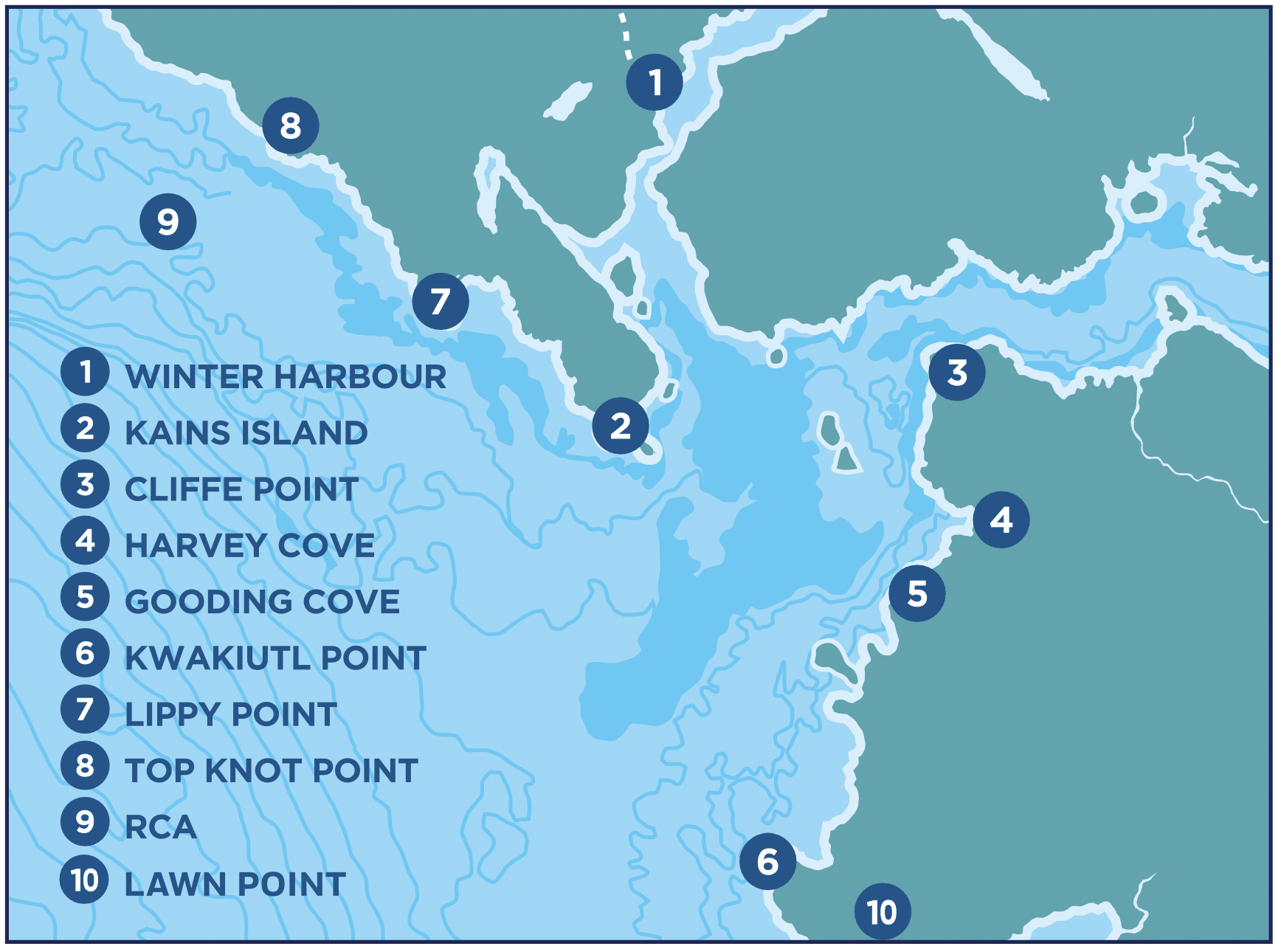
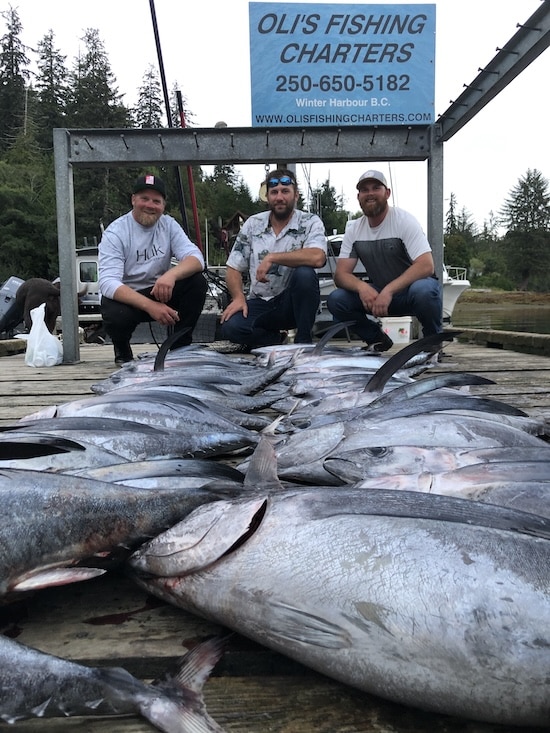
When the warm blue-water fingers move inward in late summer, pushing temperatures up to a blistering 18°C, the offshore canyons like the Kwakiutl Canyon become prime territory for albacore tuna. Because these deep underwater trenches cut so close to the coast, sport anglers can realistically target pelagic tuna without the extreme, long-range open ocean transits required elsewhere on the coast.
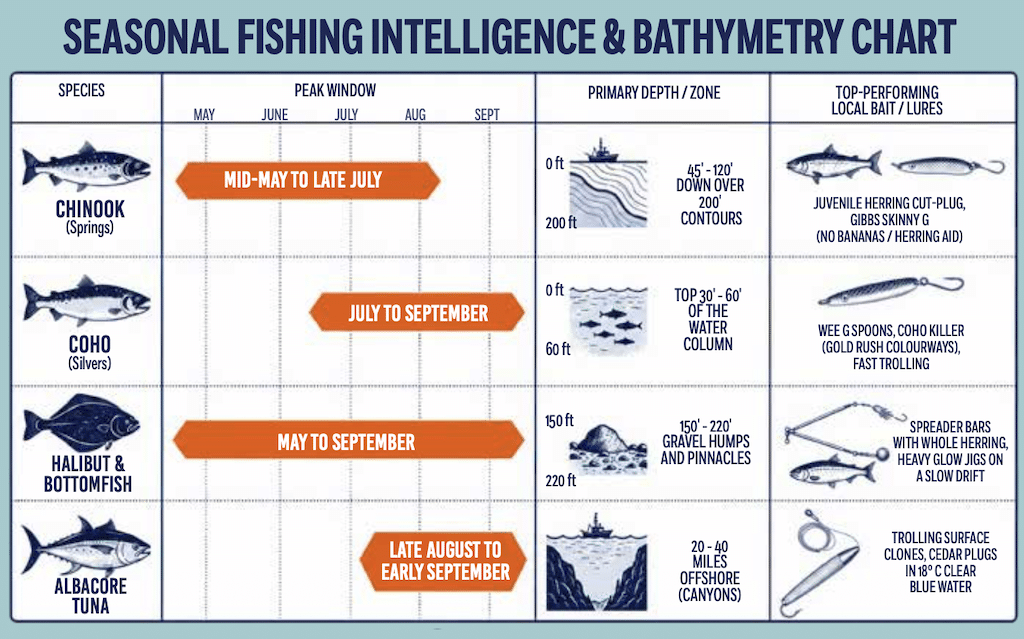
From mid-May to late July, target Chinook down 45′ to 120′ over 200′ contours using juvenile herring cut-plugs or Gibbs Skinny G spoons (No Bananas and Herring Aid patterns). For July to September Coho, troll fast through the top 30′ to 60′ of the water column with Wee G spoons or Coho Killers in Gold Rush finishes. When working bottomfish over 150′ to 220′ gravel humps, bounce heavy glow jigs or drift spreader bars pinned with whole herring.
Deep Respect for Local Conservation: The Derby
You cannot write an honest article about the community without talking about the sheer grit and volunteer spirit of the people who keep the fish returning. This isn’t a fishery maintained by detached government bureaucrats; it is kept alive on the backs of passionate volunteers.
Rebuilding the Ruins
In 1981, a local logger named Bill Dumont looked at the historical data and realized that industrial logging, mining, and aggressive international overfishing had decimated the wild Marble River Chinook returns from a historic high of 10,000 spawning fish down to a heartbreaking 500. He decided that those who extracted wealth from the North Island’s resources had a moral obligation to give back to the salmon. Western Forest Products stepped up to help build the infrastructure, and The Friends of the Marble River Society was born. Today, with more than 100 dedicated members, it stands as the largest volunteer-run enhancement group on northern Vancouver Island.
The human hearts of this operation belong to Debbie and Grant Anderson. In the early 1980s, Grant was working as a heavy mechanic at the remote Mahatta River logging camp. Debbie noticed salmon fry darting around in Monkey Creek, a tiny stream running directly behind their cabin. Working with DFO community advisors, they built a tiny, makeshift chum hatchery right in their backyard. When the logging camp eventually shuttered, their obsession with salmon didn’t fade. Debbie took over as the volunteer manager of the Marble River Hatchery in 1997 and has held the reins ever since, treating every single egg like her own child. You can read the full journey in our feature on Salmon Dedication: From Monkey Creek to the Marble River.
The Marble River itself is an absolute beast—a Class 6 whitewater monster affectionately nicknamed “The Amazon” due to its massive 56,000-hectare watershed that can flash and rise up to 15′ in a matter of hours during a heavy coastal storm. Operating a hatchery here is a 24/7/365 logistical nightmare. Yet, despite severe storms periodically wrecking walkways and fencing, these volunteers have released more than 14 million Chinook and 2 million coho fry into the system.
Every single fish raised here is 100% otolith-marked—a high-tech process where the water temperature is manipulated during incubation to leave a distinct, microscopic ring pattern on the fish’s ear bone. As Debbie brilliantly puts it, “It’s like having our own barcode on all of our salmon.”
The Power of the Crowd: $63,150
Because the federal government routinely fails to adequately fund these critical grass-roots facilities—a reality we explored in our report on Canada’s Nature Strategy and Salmon Cuts—the community has to take care of its own. Enter the annual Winter Harbour Fishing Derby.
Founded by local charter skipper Glenn Olson of Oli’s Fishing Charters in loving memory of his father, Brad Olson, who passed after a brave fight with pancreatic cancer, the event has grown into a massive annual pilgrimage. For the past 3 years, anglers from every corner of the province have descended on the inlet. You can view entry details and live updates on the official Oli’s Fishing Charters Derby Portal.
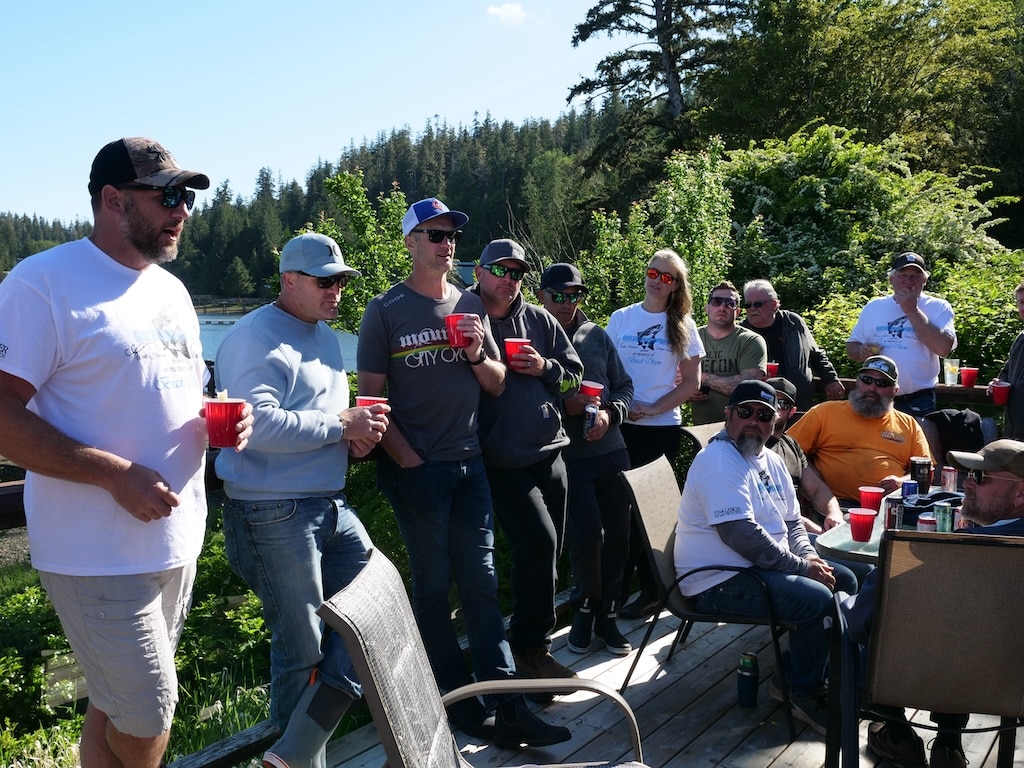
The most recent iteration just wrapped up, and the numbers are absolutely staggering: More than 150 hardcore anglers showed up, dug deep into their pockets, and raised an incredible $63,150 in a single weekend, with every penny donated directly to the Marble River Hatchery. This isn’t corporate virtue signalling; this is real money that buys heavy-duty electrical transformers, clears storm debris, and keeps the gravity-fed rearing channels flowing so that future generations can experience the magic of a wild screaming reel.
The Immersive Experience: Aboard Fair Fight Fishing Charters
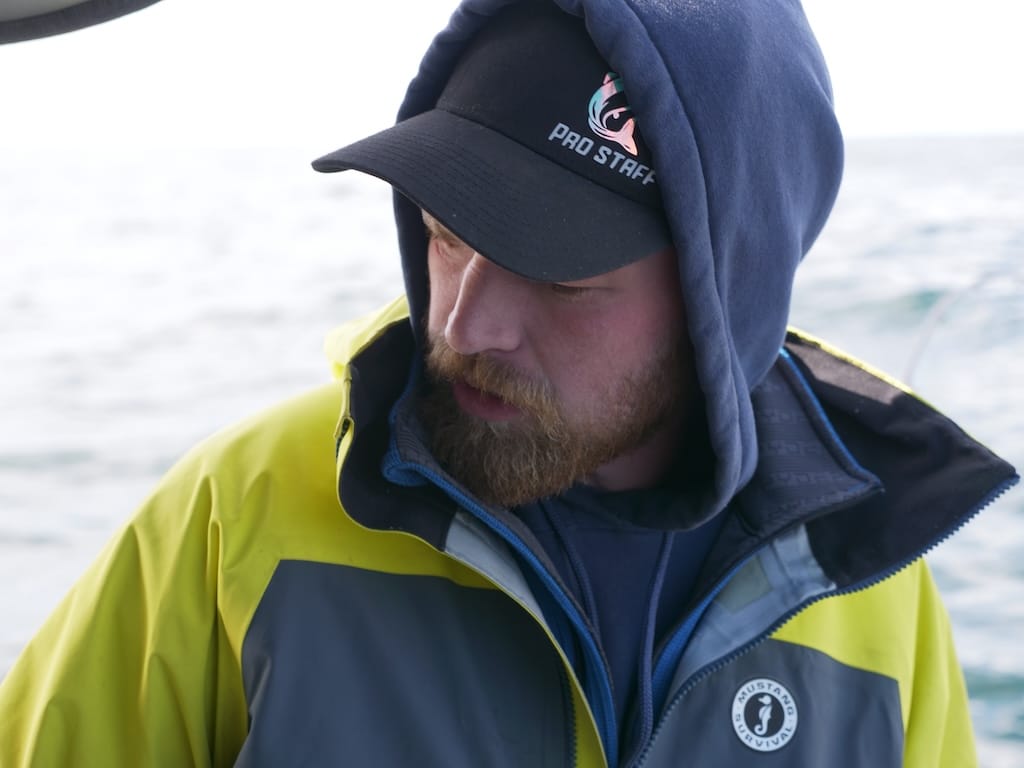
If you want to experience the best of winter harbour fishing with a skipper who embodies the next generation of West Coast guiding, you book a spot with Captain Matt Giasson of Fair Fight Fishing Charters.
The Master of the Hewescraft
At 26 years old, Matt might look young to an outsider, but don’t let the lack of grey hair fool you. He carries a deep, generational fishing legacy passed down directly from his father. Matt spent years cutting his teeth and refining his craft on the notoriously unforgiving, high-traffic waters of the island’s northeast side before establishing his elite operation out here on the wild west edge.
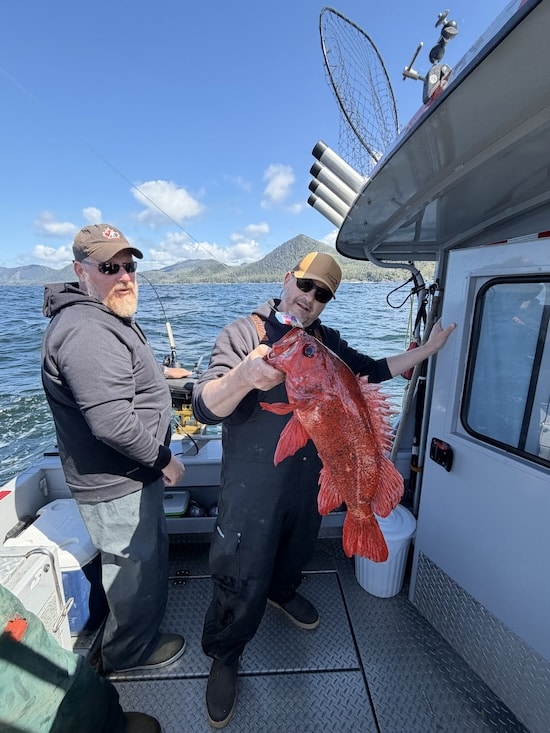
His vessel is a beast and the kind you’ll appreciate for these waters: a 26′ Hewescraft Pilothouse, built like an aluminum tank and meticulously outfitted to handle the heavy, rolling swells of the open Pacific outside Quatsino Sound. It is fully enclosed, completely heated, and bristling with electronics, premium downriggers, well-organized gear at the ready, and perfectly maintained rods. Matt runs a professional, pristine, and well-stocked boat, navigating the complex coastal bathymetry with the calm confidence of a seasoned highliner.
Matt is a pure predator on the water. He relishes the challenge of hunting on his own, reading the micro-currents, monitoring the specific water temperatures along the shelf, and calculating exactly where the fish are moving and where they will be an hour from now. When you fish with Matt, you are executing a calculated strategy, and there is nothing sweeter than finding yourself completely alone on a quiet pocket of structure, completely loaded up on heavy fish.
Wilderness Comfort
Matt has curated turnkey accommodations. You stay in a trailer camp designed to easily sleep a robust, full-sized fishing crew or family. The layout is incredibly spacious and well-appointed:
- Two bunk beds built for full-sized adults.
- A master bed for a solid night’s rest.
- A fold-out couch and a plush settee.
- Full modern amenities: Complete air conditioning for those rare hot summer days, excellent heating for crisp coastal mornings, a hot shower, a fully equipped kitchen (including refrigerator), and an endless supply of coffee to get your eyes open before first light.
There is an expansive covered deck where you can relax at the end of the day. And let’s talk about the food: Fair Fight has a private chef on site. This isn’t a rotation of soggy sandwiches and processed hot dogs. Every meal is scratch-made and executed to absolute perfection. Frankly, it is almost comical how much food is provided—you will find yourself completely stuffed, happily uncomfortable, and laughing around the table.
Once the day’s catch is cleared, they handle your fish with elite professionalism. They have a commercial-grade, onsite processing station where your salmon and halibut are meticulously filleted, portioned, vacuum-sealed, and given clean, crisp labels. They even provide transport coolers for those who need to ensure their hard-earned catch makes it back in perfect, restaurant-quality condition.
The Verdict: A Destination That Demands Respect
Winter Harbour is not a place for tourists who want a sanitized, predictable vacation. It is a destination for the true traveller, the passionate angler, and the outdoorsman who understands that the best things in life are found at the end of a long, dusty gravel road.
Winter Harbour thrives because of its unyielding spirit and deep respect for the resource. When you fish with an operator like Matt Giasson at Fair Fight Fishing Charters, buy your gear from Greg and Andrea at The Outpost, or drop cash into the raffle bucket for the Marble River Hatchery, you aren’t just taking from the ocean—you are actively participating in the survival of an iconic Canadian wilderness.
Pack your bags, secure your spare tire, and get up there. The edge of the world is waiting.
Always verify real-time boundary closures, permanent finfish reserves, and conditions of licence via the DFO BC Tidal Waters Sport Fishing Guide before dropping gear.
- The Outpost at Winter Harbour: Fuel dock, moorage, general store, camping, and cabin rentals (250-969-4333).
- Fair Fight Fishing Charters: Fully guided offshore and nearshore charters aboard a custom 26′ Hewescraft with Captain Matt Giasson.
- Oli’s Fishing Charters: Top-tier guided salmon and bottomfish charters operating directly out of Winter Harbour with skipper Glenn Olson.
- Winter Harbour Fishing Derby: Annual fundraising tournament organized by Oli’s Fishing Charters supporting the Marble River Hatchery.
MORE VANCOUVER ISLAND FISHING GUIDES
Expand your tactics and repertoire with our top-rated guides:
Words and photos by Joel Unickow, Publisher of Island Fisherman Magazine (unless otherwise credited). Dedicated to West Coast conservation, coastal communities, and salt-water angling on Vancouver Island. Explore more stories and subscribe at Island Fisherman Magazine.

Stay Ahead on BC Waters
Tactical rigging guides, regional run timing, DFO regulation updates, plus subscriber-only lodge deals and exclusive BC marine partner discounts. Delivered straight to your inbox.
"*" indicates required fields