
Learning how to catch a Tyee salmon is unlike any other angling pursuit on the Pacific Coast—it is a living masterclass in patience, human power, and century-old sportsmanship. Long before high-horsepower outboards and electronic downriggers dominated West Coast waters, First Nations rowers and early sport anglers lined the tide rips of Campbell River to pursue massive Chinook salmon using wooden oars and basic hand-operated tackle. Having celebrated its historic centenary (1924–2024), the Tyee Club of British Columbia carries over a hundred years of conservation, tradition, and rich angling heritage into its second century.
🏆 2026 SEASON UPDATE: FIRST TYEE REGISTERED!
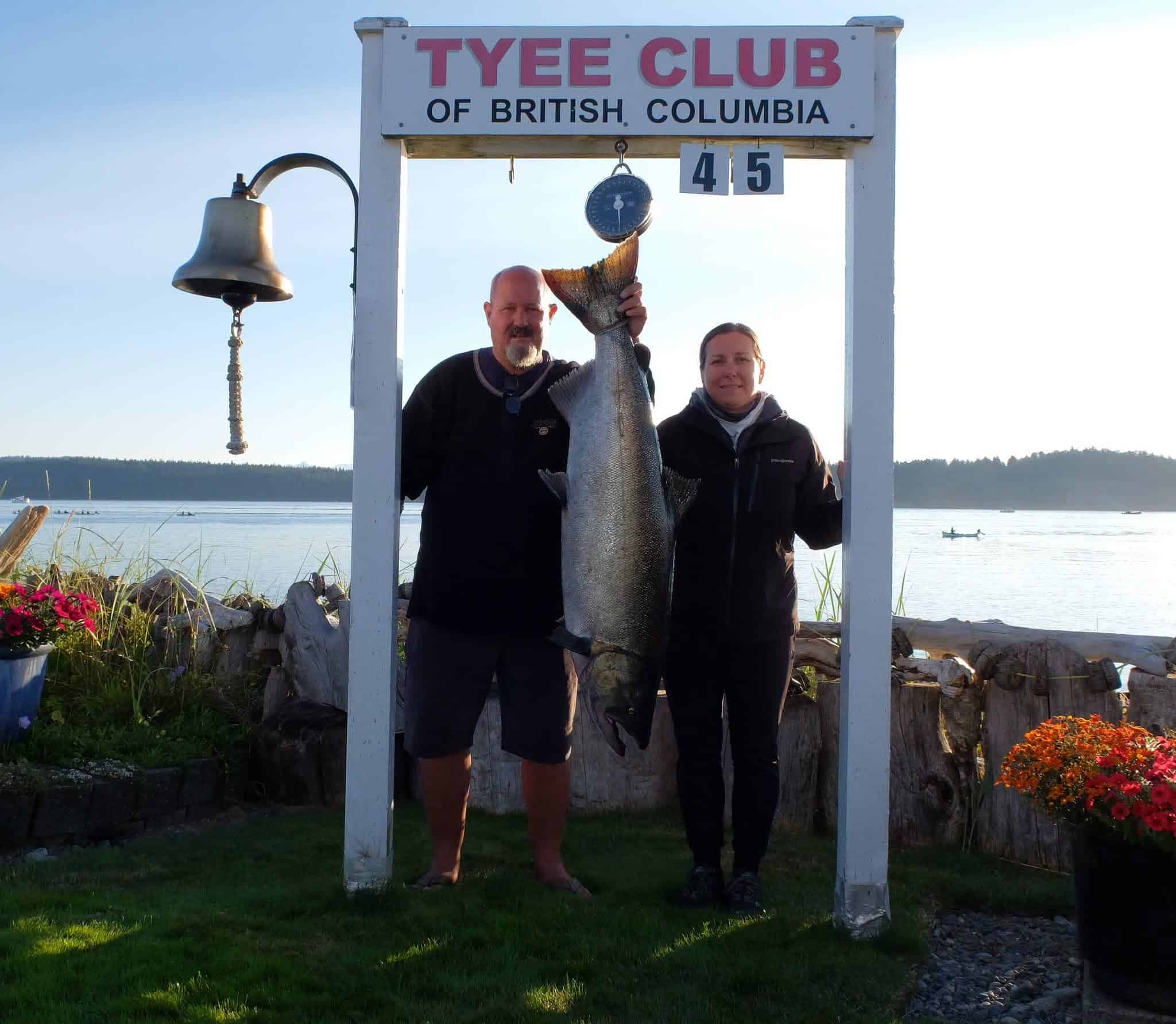
The 2026 season in the famous Tyee Pool is officially off to a historic start! At 6:30 AM on August 3, 2026, new member April Davis registered the very first official Tyee of the season—a magnificent 45 lb 4 oz Chinook caught on a wooden plug while being rowed by veteran guide Greg Askey. Congratulations to April on ringing the clubhouse bell and becoming the Tyee Club of BC’s newest member!
What is a Tyee Salmon?
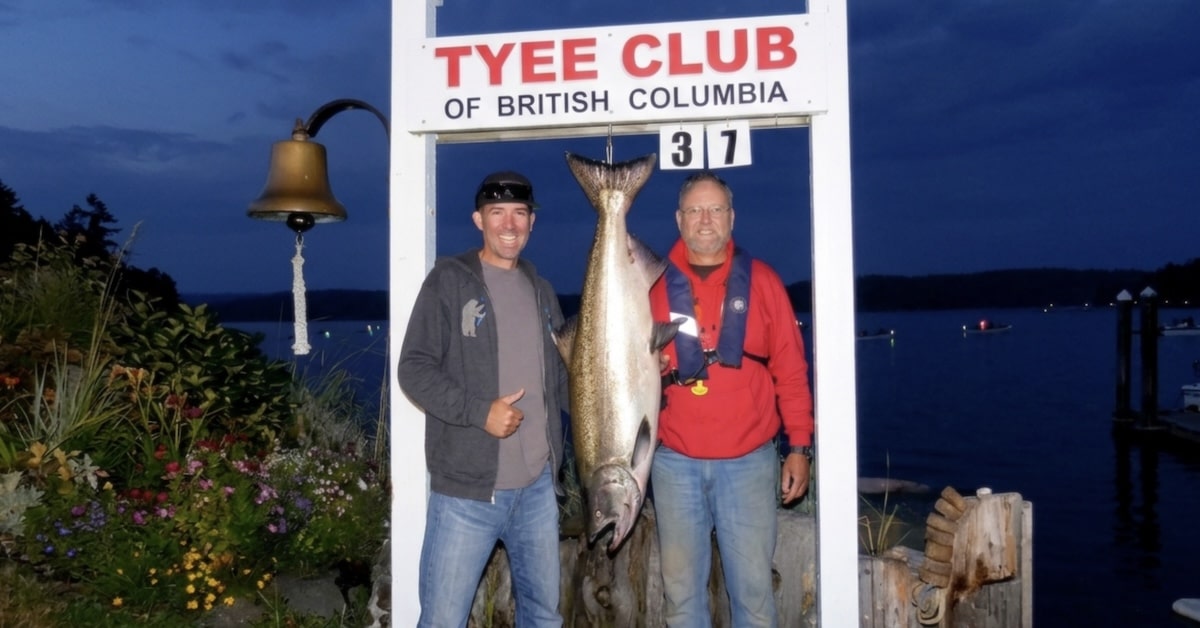
In West Coast angling lore, a “Tyee”—derived from the local First Nations word for “Chief”—is a mature Chinook (King) salmon weighing 30 pounds or greater. While large Chinook swim throughout coastal waters, earning official entry into the Tyee Club catch register requires landing one under strict, traditional fair-chase regulations in the legendary waters off Campbell River.
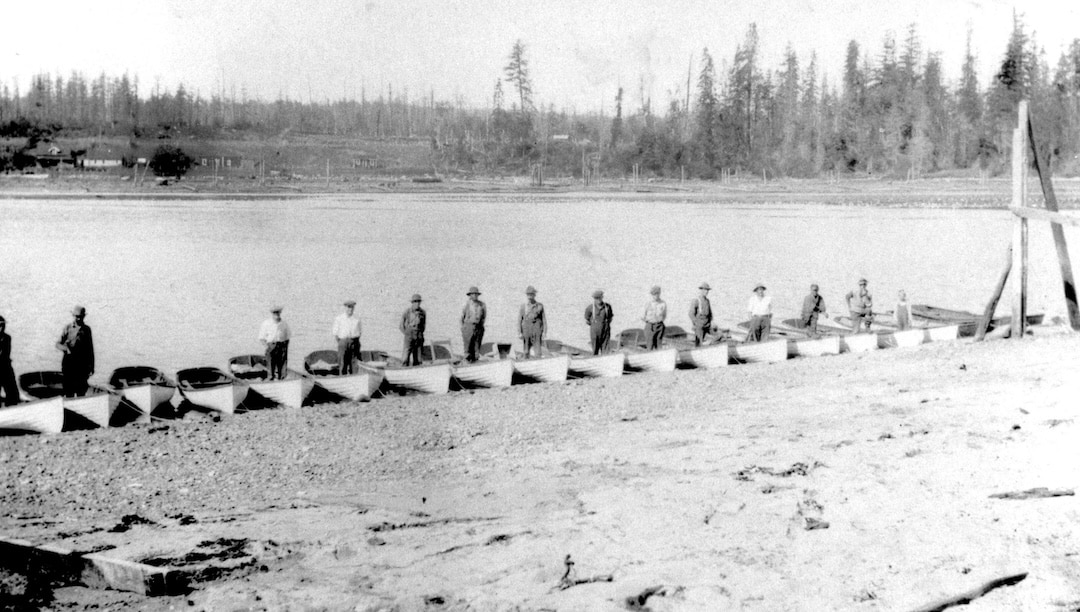
First Nations fishermen harvested these heavy fish for centuries using specialized skills and hand-crafted wooden gear. By the late 19th century, visiting sport fishers began pursuing these powerful Chinook with early hook-and-line tackle on rudimentary rods. Following World War I, a small band of regulars gathered annually at the mouth of the Campbell River. Recognizing early on that motor-driven craft compromised the sporting spirit of the pool, founders gathered at the Willows Hotel in August 1924 to establish a formal society. The club received its Certificate of Incorporation under the BC Societies Act shortly after its 1926 annual meeting.
⚠️ REGULATORY NOTE: TYEE POOL MOTOR RESTRICTIONS
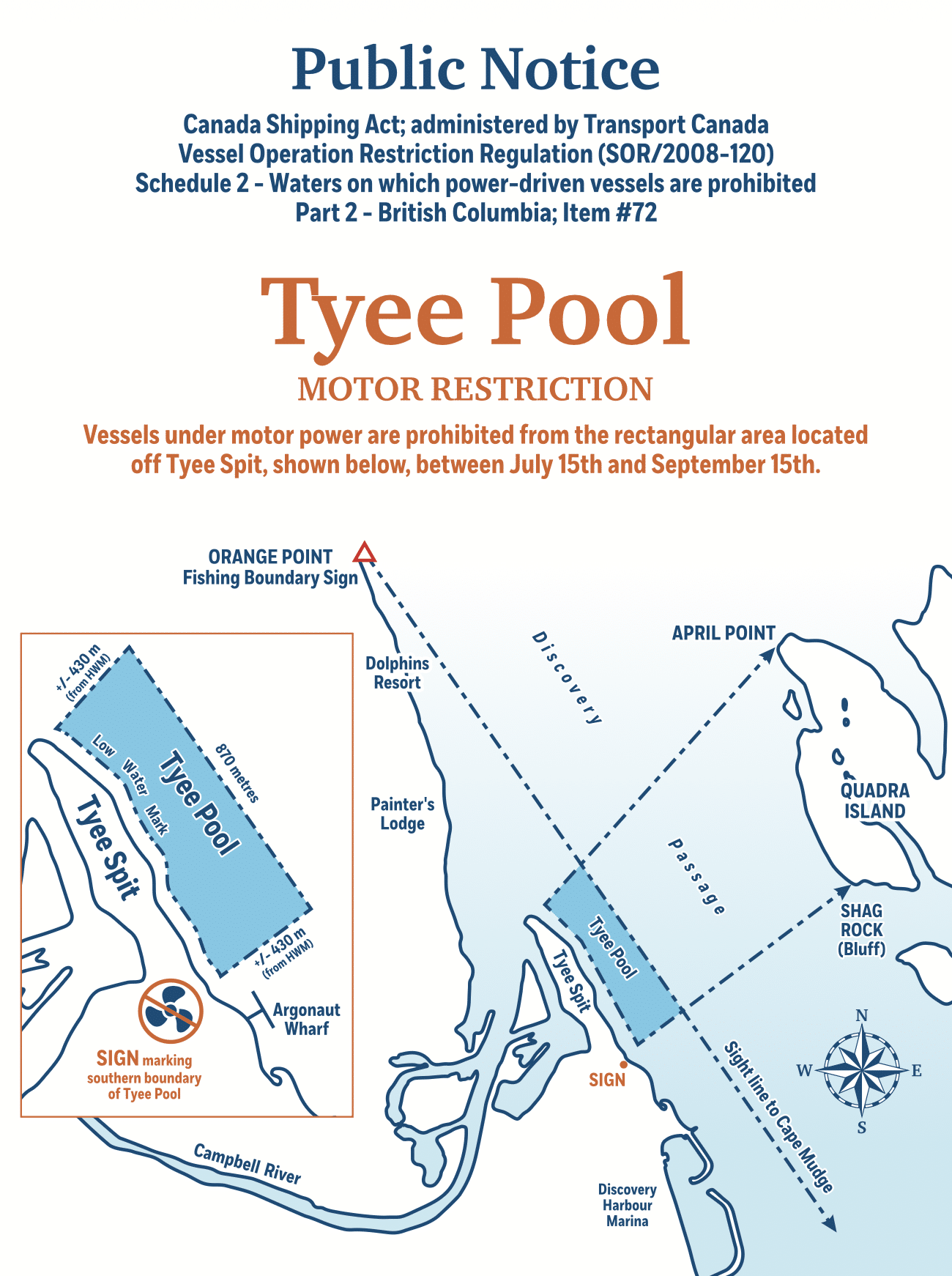
Under the Canada Shipping Act (Vessel Operation Restriction Regulations SOR/2008-120 Schedule 2, Part 2, Item #72), power-driven vessels are strictly prohibited from operating under motor power within the designated rectangular Tyee Pool area off Tyee Spit between July 15th and September 15th. Outboard motors must be shut off and tilted while angling. Verify current boundaries via DFO BC Notice FN0674-Recreational – Salmon.
Official Rules & Regulations of the Tyee Club of BC
To preserve the traditional spirit described in early yearbooks—“All to the end that our brave Tyee may have a fair fight”—an angler must fish strictly within the club’s bylaws to earn membership and official recognition:
A. GENERAL
- To be eligible for membership in The Tyee Club of British Columbia and for any of the Tyee Club’s pins or awards, an angler must fish and act in the spirit of the traditional methods of the Tyee Club, in accordance with these Rules and Regulations, and in accordance with the current Transport Canada and Department of Fisheries and Oceans Regulations.
- A qualifying Tyee is a Chinook salmon registered in accordance with these Rules and Regulations and weighing at least 30 lbs. No more than two qualifying Tyee may be retained in one day. Season limits are those of the Department of Fisheries and Oceans.
- The Tyee Club fishing season begins each year on July 15 and ends on September 15, except as may be modified by regulations issued by the Department of Fisheries and Oceans.
- Qualifying Tyee must be landed in the waters of Discovery Passage between Seymour Narrows and a line extending between Cape Mudge and the Big Rock on the Vancouver Island shore.
- The Directors may require members to review and acknowledge these Rules and Regulations in a prescribed form and at a prescribed time.
B. ROWING REQUIREMENT
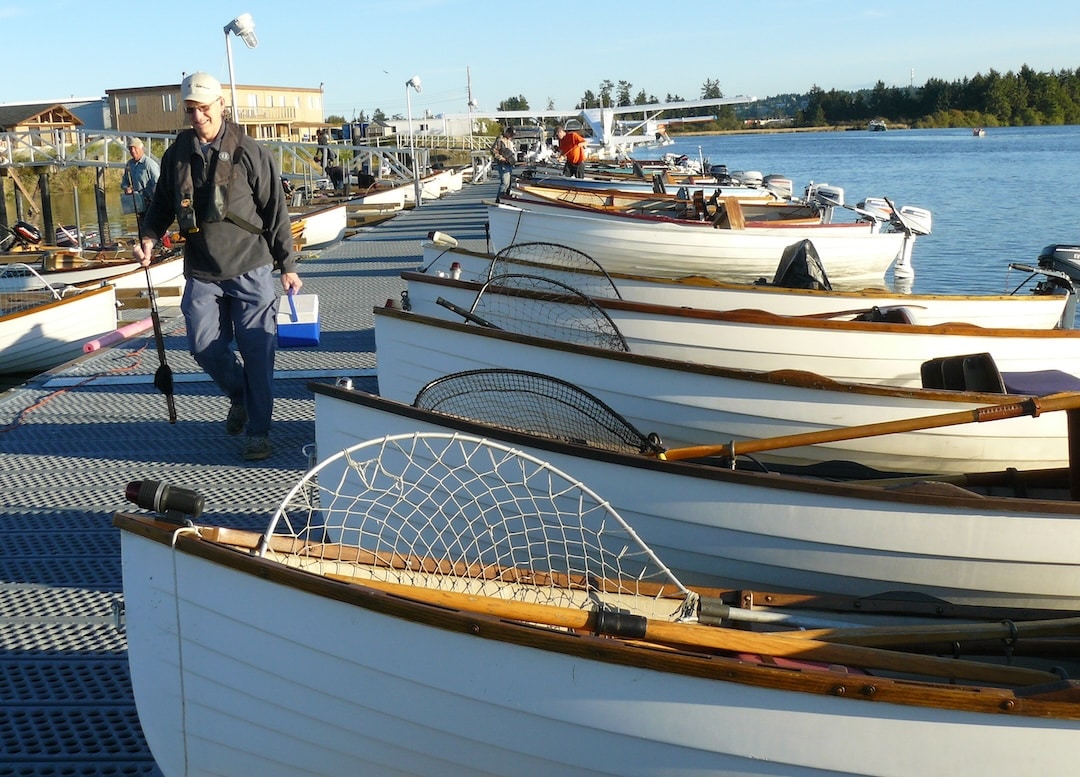
- A Tyee qualifying for Club recognition may be landed only while trolling from a boat that is being rowed or paddled. No motor power may be used while fishing or landing a fish.
- Trolling is defined as the method of angling by which the lure is drawn behind a boat which is moving in relation to the water.
- Outboard motors may be used only for transportation to and from the fishing grounds and must be tilted while fishing to avoid line entanglement. Motors must not be used in the area designated by the Canada Shipping Act.
C. APPROVED TACKLE
- The word “tackle” shall be defined as consisting of rod, reel, line, weight, leader, and lure.
- The rod shall have a minimum length of 6′ and a maximum of 9′.
- The reel must be a hand-operated type. Electric or spring wound automatic reels are not permitted. Reels with slipping or clutch mechanisms, while acceptable, are not considered single action reels for the purposes of the Gavin Chisholm Trophy. It is suggested that the reel has a minimum capacity of 250 yards of line.
- The Tyee Club line test requires that the line breaks before lifting the weight in the Official Testing Device. The weight in the Official Testing Device weighs 26¼ lbs, and it is located at The Tyee Club House. It should be remembered that most synthetic lines are much stronger than advertised. Line labelled 20 lbs will normally pass the line test, but all rowers and anglers are reminded that it is their responsibility to ensure their line will qualify. The Tyee Club urges every angler or rower to have their line tested by the Weighmaster prior to fishing, although such testing is not required.
- The use of a leader is optional. When used, it shall be 6′ or less in length. The line may be doubled for a length of three feet or less at its attachment to the leader.
- The lure may be any type of artificial lure that has one single barbless hook only and its basic use is for trolling. Lures designed for jigging, spinning, still fishing, or attraction by electronic or sonic means shall be excluded. Any lure about which there is doubt as to the acceptability should be referred to the Tackle Committee.
- The maximum amount of weight permitted is 6 oz.
- Use of natural bait is not permitted.
- Use of any oils, natural attractants, or artificial attractants immediately prior to or during angling for the purposes of improving chances of a strike is not permitted.
- Use of devices, electronic or otherwise, that provide information that improves the current or future chance of a strike are not permitted. This includes, but is not limited to chart plotters, depth sounders, GPS, cameras, cell phones, watches, and drones.
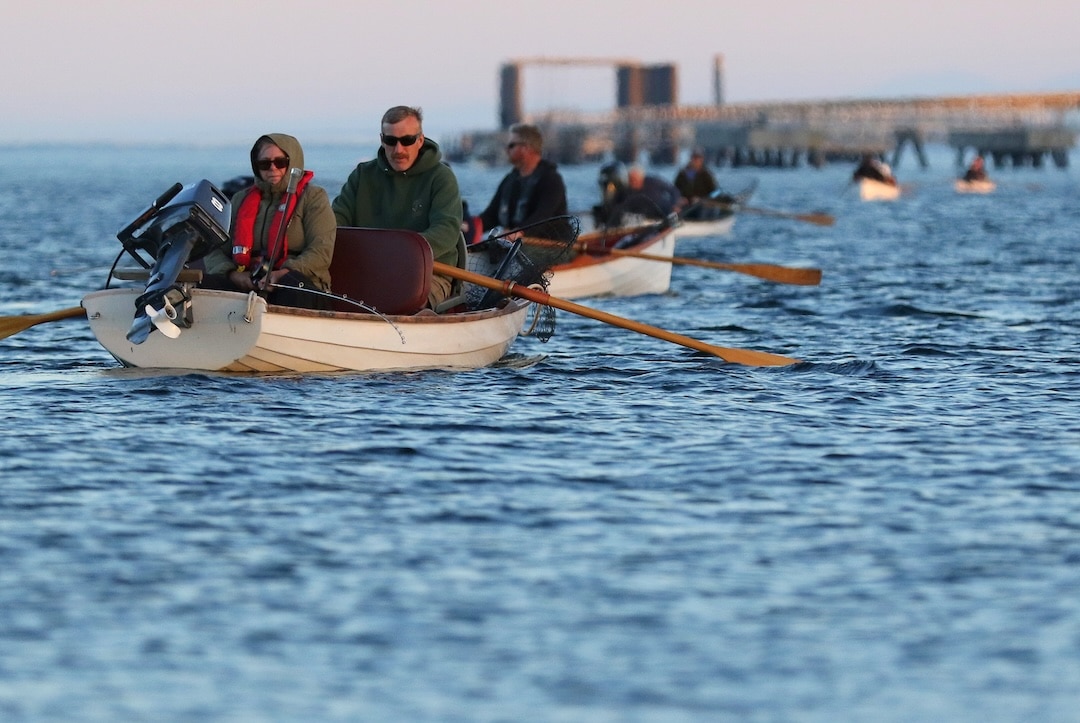
Holding Chinook do not feed actively in the estuary, so strikes are triggered by irritation. Rowers stroke in rhythmic pulses, allowing wooden plugs to rise, side-dart, and drop naturally in the tide rips. When a 40-pounder strikes on a single-action reel, the angler must control runs using light palm pressure on the spool rim—an art celebrated since 1968 through Dr. Gavin Chisholm’s annual trophy.
The Tyee Pool & Campbell River Special Management Zone
The heart of this fishery centers around the Tyee Pool off Tyee Spit. Large Chinook returning to their native Quinsam River hatchery system hold in these shallow waters late in the summer prior to spawning. In the late 1990s, heavy pressure from powerboats using non-traditional gear forced early seasonal closures and created an existential crisis for rowboat traditionalists.
In response, the Campbell River Special Management Zone (CRSMZ) was established in 2000 along the waterfront. Under CRSMZ license conditions, all anglers (powered or rowed) must fish with tackle that largely mirrors Tyee Club standards. Because scientific otolith analysis confirms the vast majority of these late-summer holding fish originate from the local Quinsam Hatchery, this specific management zone is granted exemptions from the broader 80 cm maximum length restriction through August, maintaining sustainable opportunities for all user groups.
Weigh-Ins, Ship’s Bells, and Club Pins
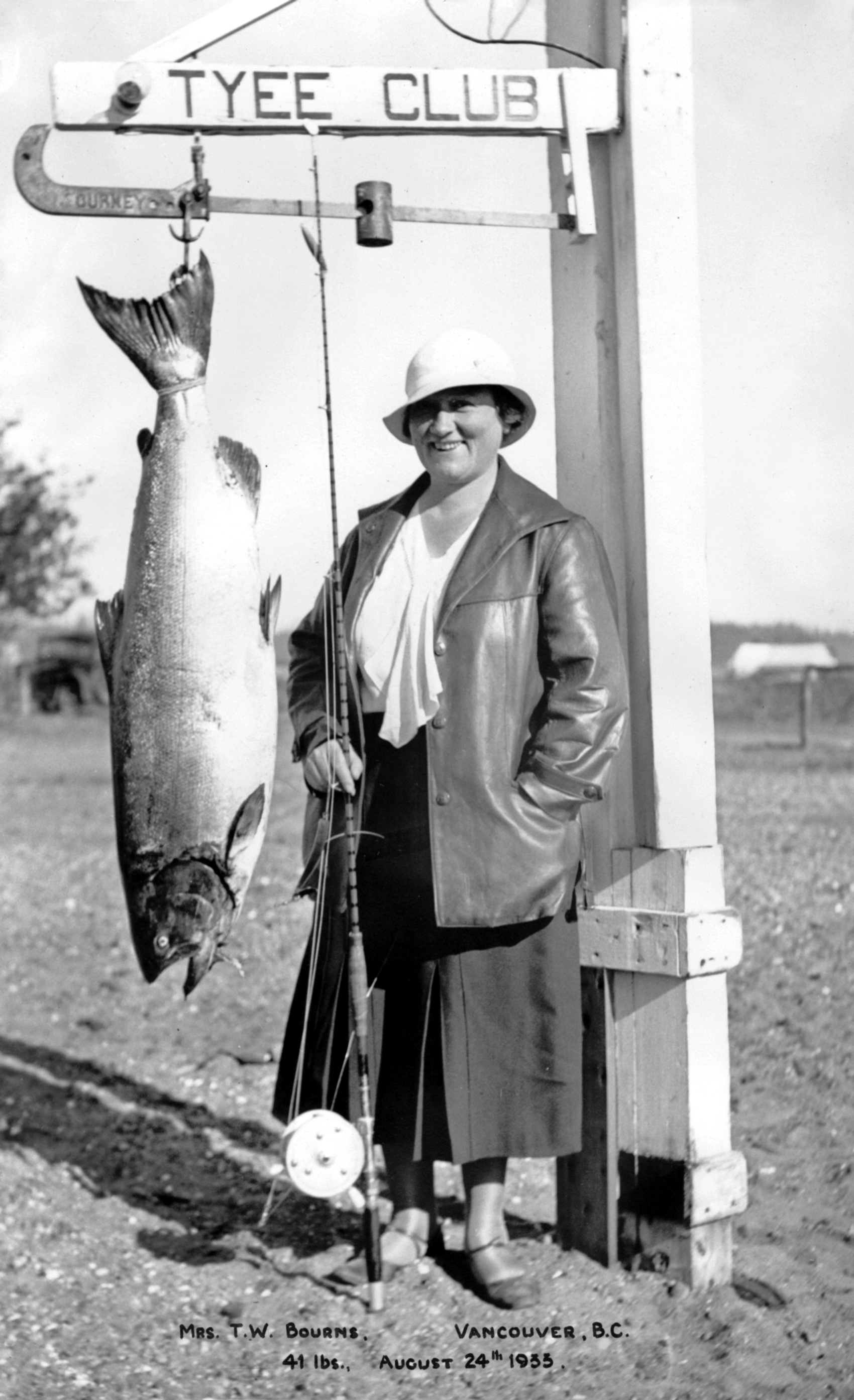
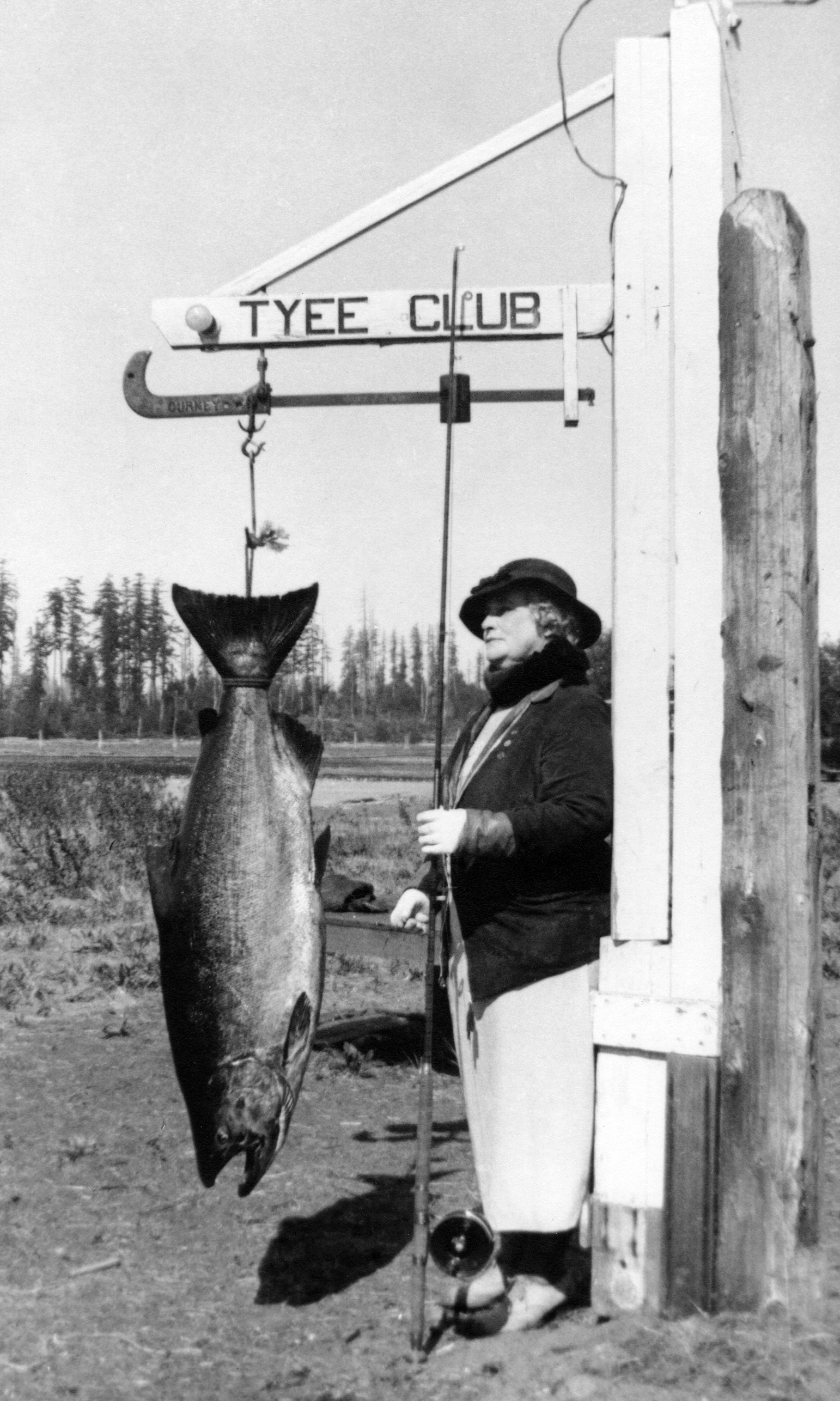
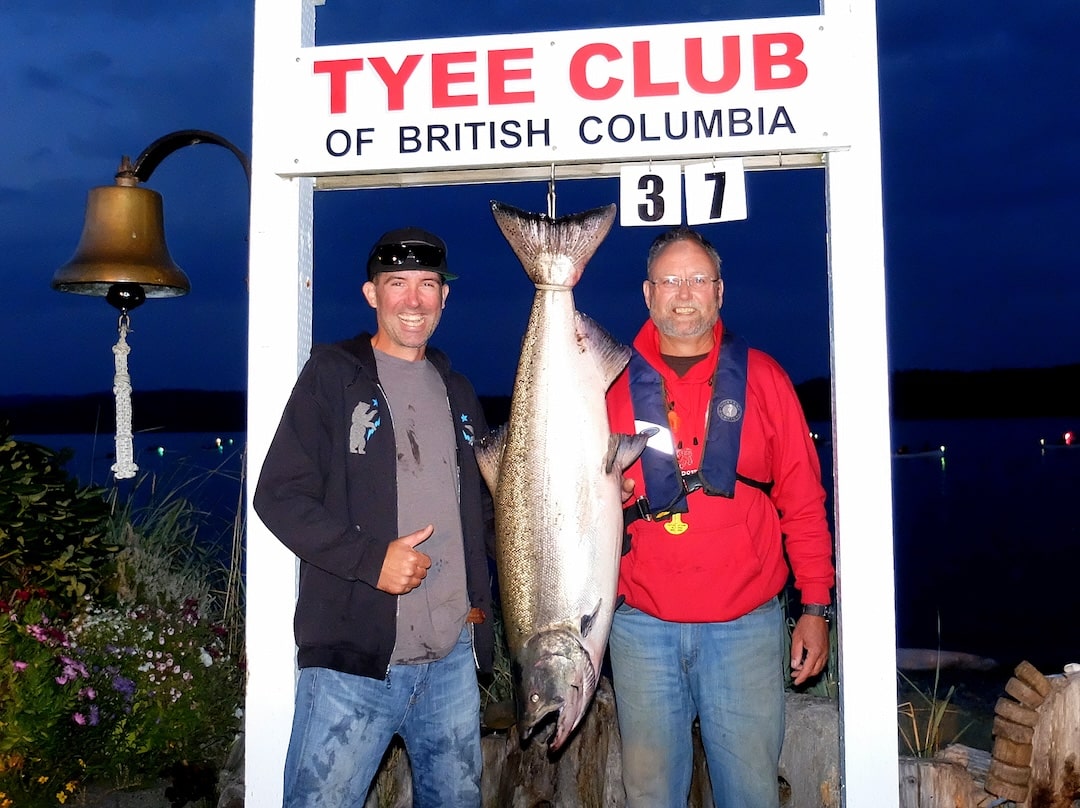
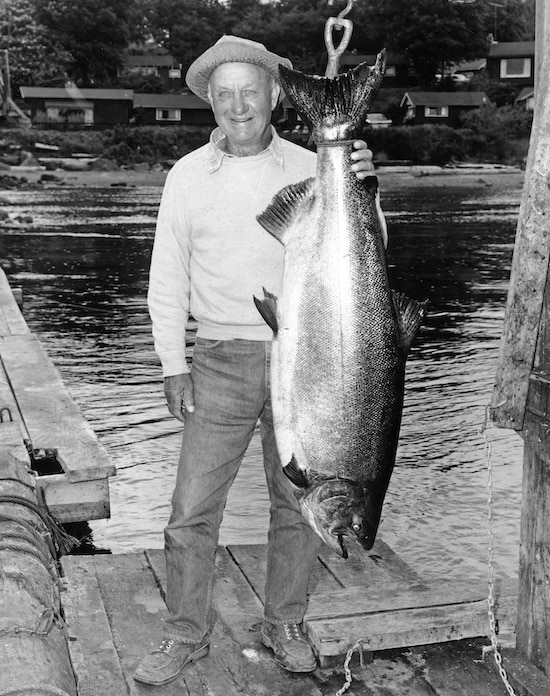
Landing a 30-plus-pound Chinook on light tackle from a rowboat is only half the journey; the final test occurs at the historic weigh-in scale on Tyee Spit. Every contender is inspected by the weighmaster, who tests the tackle and line strength before hanging the fish. Catch details—including angler, rower, time, location, lure, and fish condition—are recorded in historical ledgers kept continuously since 1924 (though 1924–1932 ledgers were lost in a flood, a modern project is currently digitizing all surviving logs for permanence).
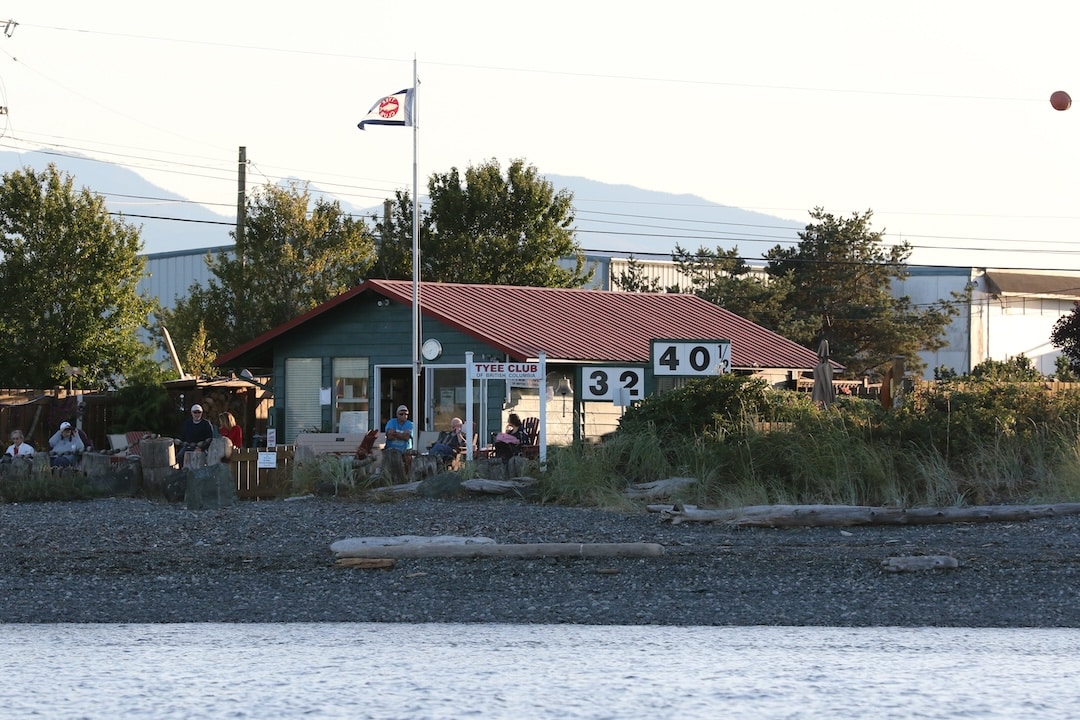
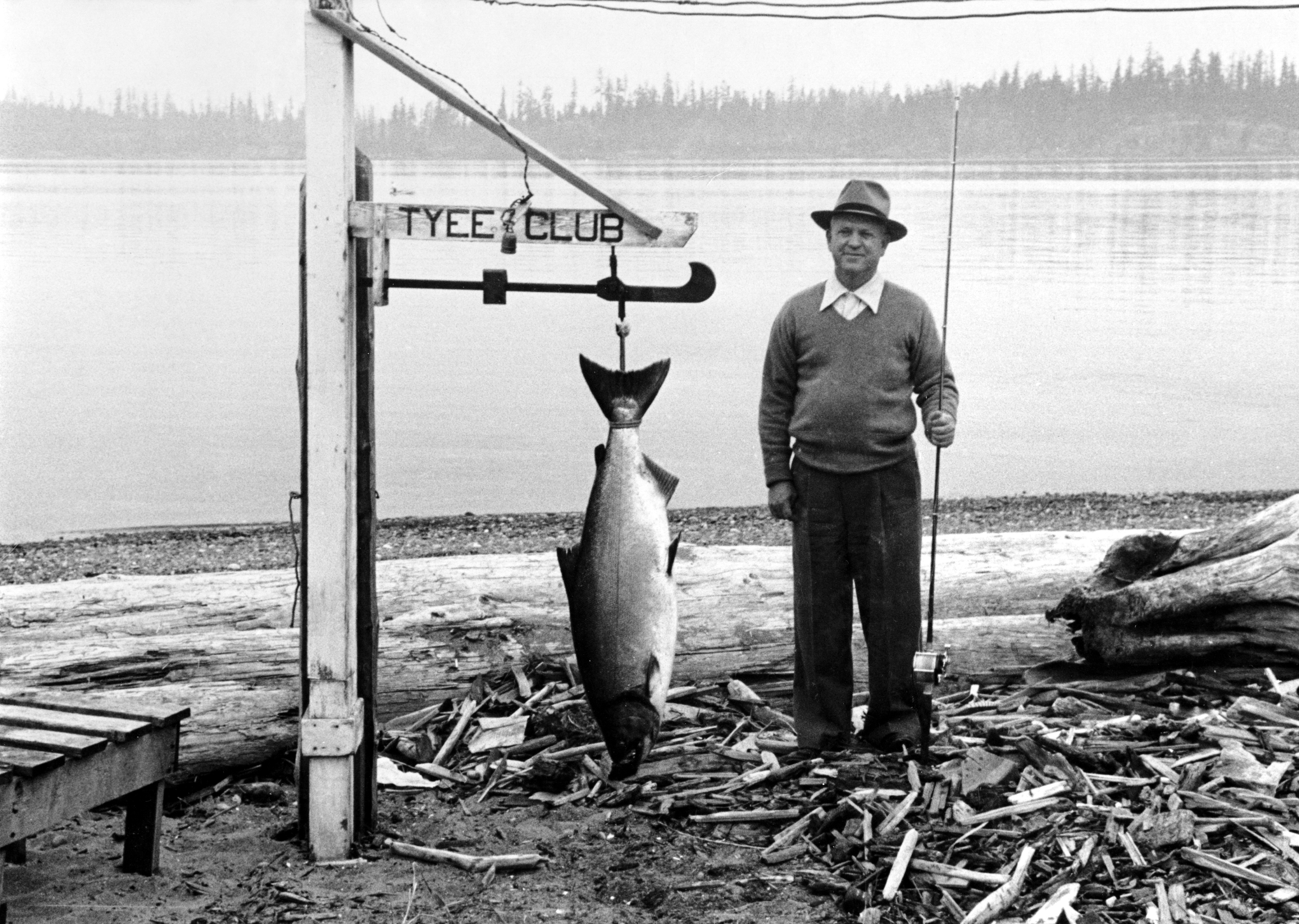
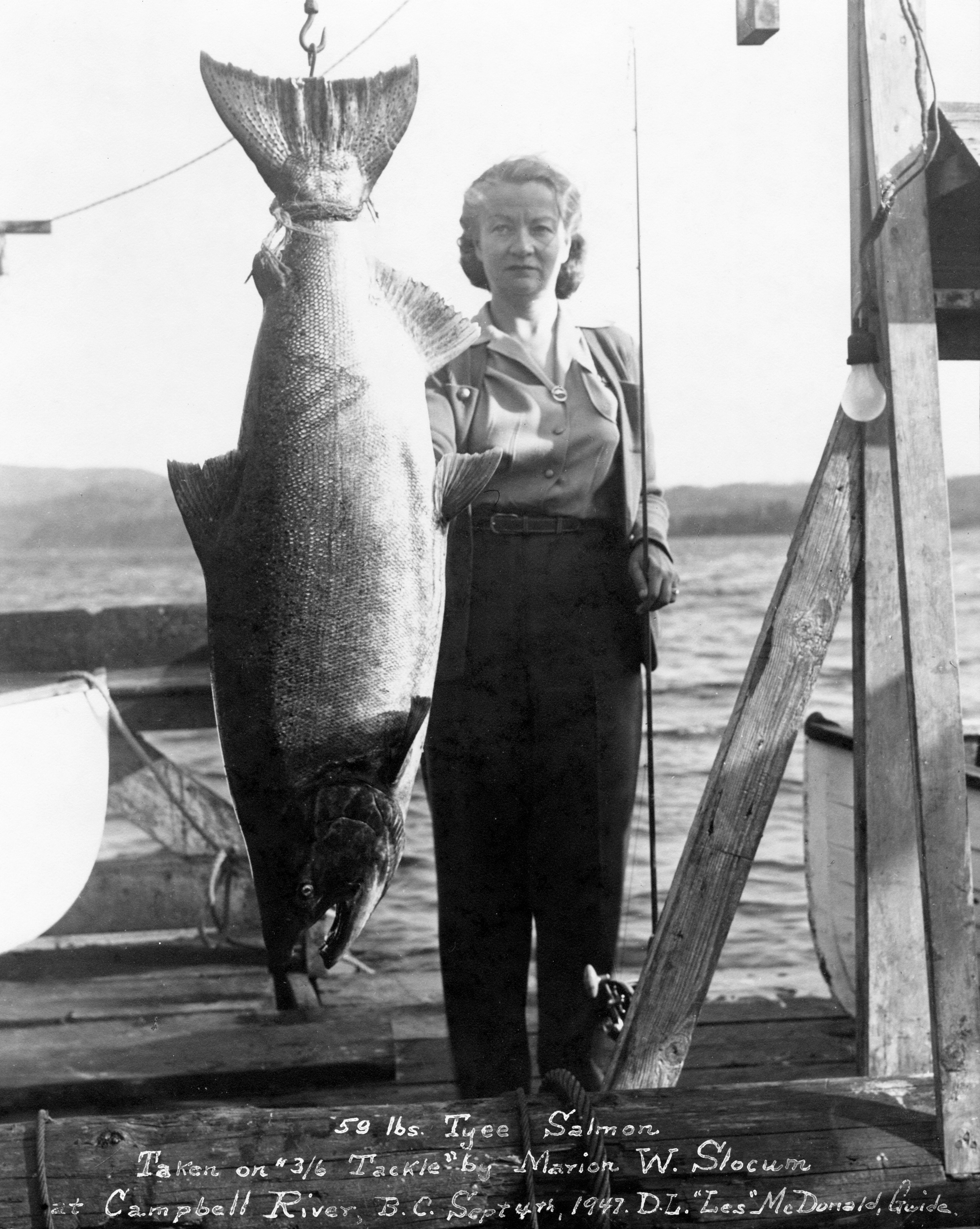
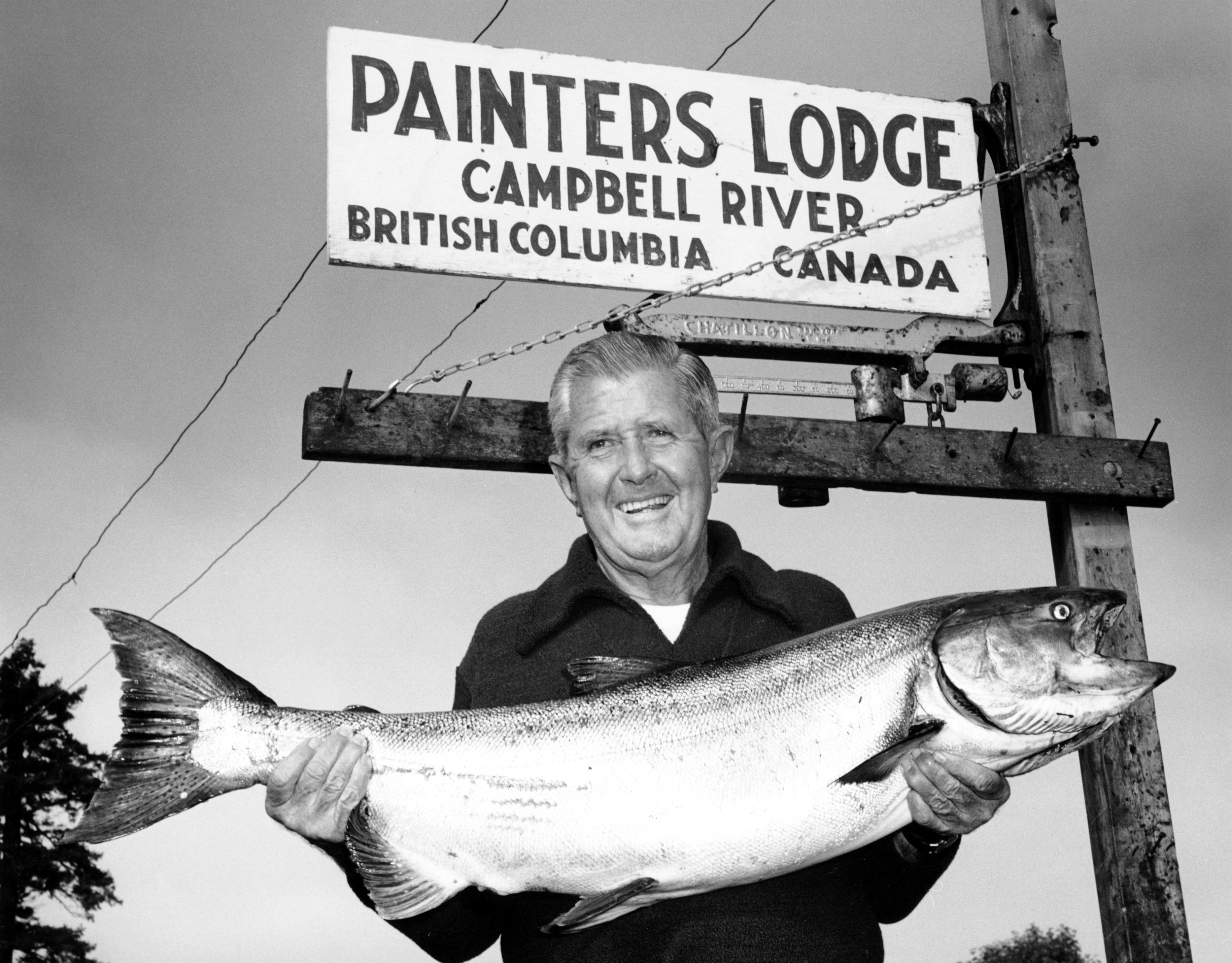
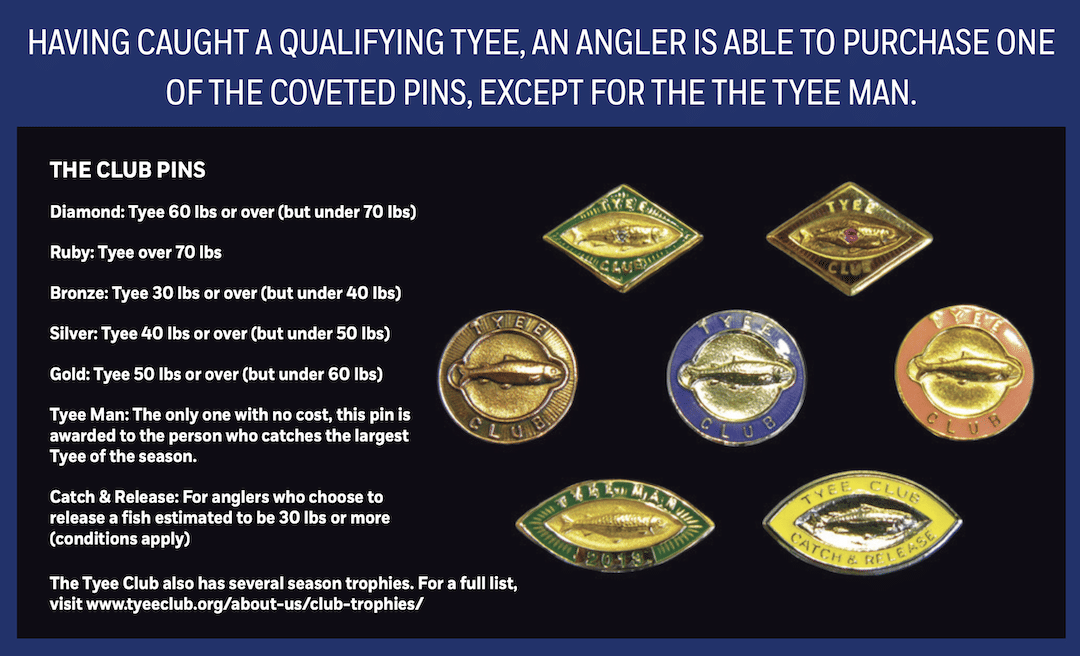
When the scale needle clears 30 pounds, cheers erupt and the successful angler rings the heavy brass ship’s bell mounted outside the clubhouse—one strike for every ten pounds of fish weight. Registration grants the angler the right to purchase official club pins:
- Bronze Pin: 30 to 39.5 lbs
- Silver Pin: 40 to 49.5 lbs
- Gold Pin: 50 to 59.5 lbs
- Diamond Pin: 60 to 69.5 lbs (e.g., Mike and Richard Gage’s 61.5 lb Tyee in 2013)
- Ruby Pin: 70+ lbs (Achieved twice in club history, led by Walter Shutts’s 71 lb record in 1968. Another 70+ lb fish was famously disqualified when post-catch inspection revealed the rod was too short!)
- Tyee Man Pin: Awarded free of charge to the angler landing the largest Tyee of the season.
- Catch & Release Pin: Awarded to anglers who safely measure and release an estimated Tyee.
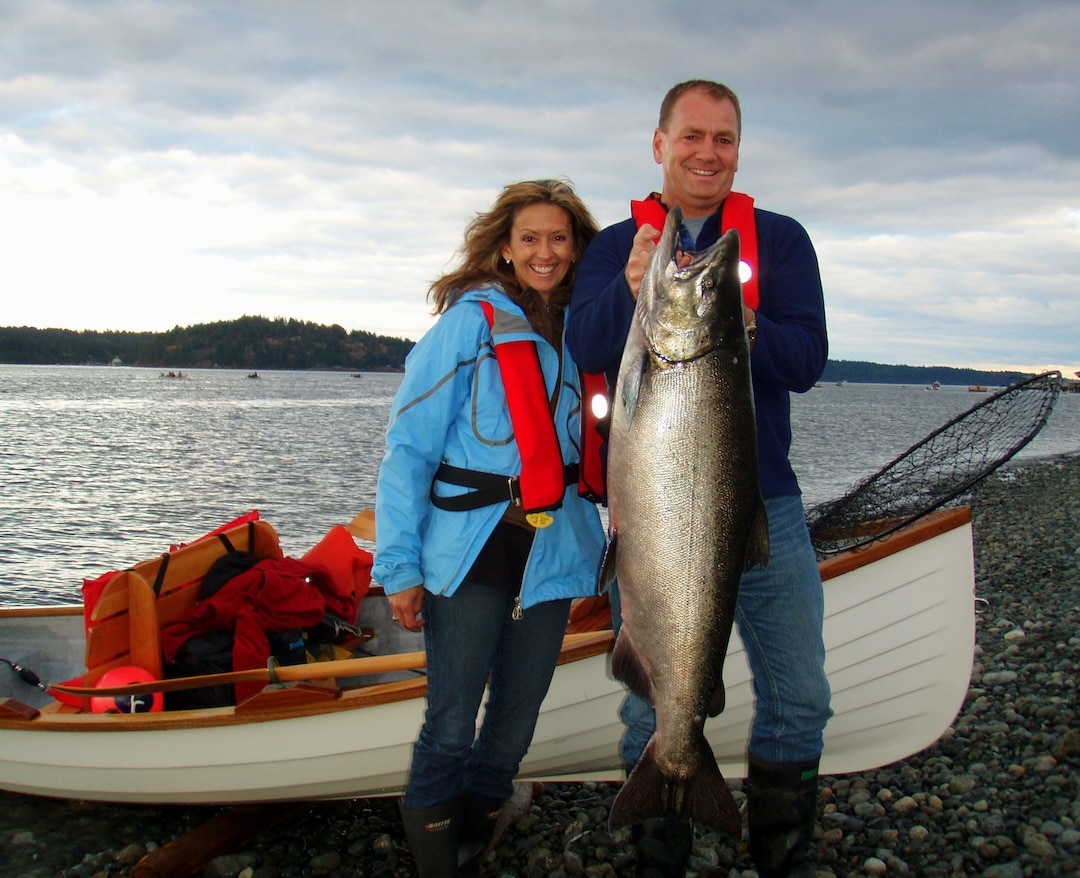
While early decades saw international travelers dominate the register, modern participants are overwhelmingly Vancouver Island locals, including multi-generational family rowing teams. Facing modern challenges like changing ocean survival and increased seal and sea lion predation along shoreline shallows, the rush of playing a wild Chinook on single-action tackle in a rowboat remains unmatched. The Tyee Club continues into its second century alive, well, and deeply rooted in coastal heritage.
🐟 MORE VANCOUVER ISLAND Resources
Deepen your West Coast knowledge with these essential tactical guides and local reports:
About Island Fisherman Magazine
Words by local renowned fishing guide, Jeremy Maynard with historical photos courtesy of Peter Wipper and the Campbell River Museum. This feature appeared in Island Fisherman magazine. Explore more and never miss another issue by subscribing to Island Fisherman magazine.