

Fishing for salmon using plugs with weights or downriggers and with bucktails on the surface has been a staple of the BC coast and beyond for decades. Combining the two can be a deadly and exciting way to target salmon and trout.
The traditional shape and face shape of the salmon plug were originally conceived to generate erratic movement, but due to the often-sharp angle of the face, they could also be classified as divers, a general term for a hard lure that is cast and retrieved. Due to the diving nature, and depending on the amount of line played out, rod position, and the speed of the vessel trolling, the depth of the plug can be controlled to search large areas of relatively shallow water very efficiently. The erratic movement and vibration created by the plug draw fish in from distances and elicit a strike by mimicking a wounded, panicked prey trying to escape. This is a fantastic technique when working tight along edges of a shallow dropoff where a slight miscalculation of depth could easily hang up a downrigger weight—an expensive and stressful mistake!
Trolling Plugs: Gear and Rigging
There are no rod and reel requirements for this technique; however, there are setups more suitable than others. I personally like to use at least a 9′ trolling rod, as this allows me more height variance than a shorter setup and means more variation in depth with more line out. A line counter reel is a nice thing to have but not necessary; a free alternative is to mark the main line every 10′ with a permanent marker or something similar. For trout and coho, a main line of 15-lb test monofilament or braid and leader of 6- to 10-lb test monofilament or fluorocarbon (depending on conditions) are sufficient.

(L) Abu Garcia MaxToro DLC – great for freshwater trolling
(R) Okuma Cold Water Line Counter reel – great for ocean trolling
Both reels have a line counter
Rod holder style and placement are absolutely critical for smooth operation. Placing your rods in holders on the rear corners of the boat gives the most leeway when doing the tight, precise turns sometimes required when following sudden depth changes. Placing the rods too far forward will cause them to foul on the outboard engine, cleats, lights, or anything else on the gunwales. A quick-release style, such as the Scotty Orca, is ideal because it keeps your rod secure while allowing adjustments and the ability to quickly pick up the rod when a fish is on.
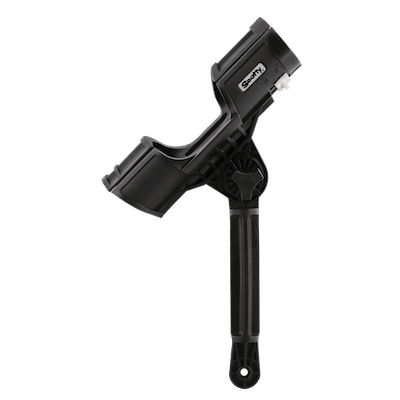
Scotty 405 Orca Rod Holder closed
Targeting Trout or Salmon with Plugs
The traditional shape and face shape of the salmon plug were originally conceived to generate erratic movement, but due to the often-sharp angle of the face, they could also be classified as divers.
A variety of plug sizes, styles, colours, and shapes is always a good idea to have on hand to vary the presentation. When targeting large cutthroat and rainbow trout in lakes, I personally prefer 2″ to 4″ plugs painted to imitate juvenile trout and small kokanee. Orange and white to imitate crayfish and bright pink as an attractor can also be good bets, especially early in the morning when there isn’t as much light and the fish are active.
In the salt, 3″ to 5″ offerings in tones such as chrome, white, blues, greens, and hot pink are a go-to when fishing in shallow water with good clarity and light.

Trolling Technique

Start by selecting an area to target where fish might be holding or feeding, such as kelp beds, back eddies, points, and dropoffs. It’s important to have your gear out and fishing before entering these areas, as doing so while in the hot spot will inevitably mean being unprepared for when a fish hits. Play out the line you plan to have farthest back to reduce the chance of tangles and put the rod in the holder before letting out the second line. I generally like to have the farthest line back on the deeper side of the boat to reduce the chance of striking ground or snagging, as it’s possible to have plugs dive 15′ or more when trolled quickly. I usually start off with one plug 100′ and one 65′ behind the boat with both rod tips close to the water to maximize diving depth unless I see fish on the surface, in which case I’ll shorten the lines and bring the rod tips up.

Keep an eye on the tips while setting up the spread. You should see a rhythmic movement that indicates action and no sharp stuttering. That would mean the plug has fouled or is coming out of the water, which can happen if there’s sizable wind chop. A troll speed of 2.5 to 4 kt covers most situations, although altering speed and zigzagging is always a good idea to vary presentation and create more erratic movement. Troll as tight to structure as possible without snagging or endangering the boat and yourself, keeping in mind that lines will not track the path of the boat, which means you’ll have to delay the turn in the same way as towing a large trailer around a sharp corner. If a large fish is hooked, it’s a good idea to turn towards deeper water with the boat in gear while bringing in the other line(s) to avoid tangles or hitting an obstacle in all the excitement.
Tight lines!
This article appeared in Island Fisherman magazine, never miss another issue—Subscribe today!