


If you’ve fished with me for halibut or sablefish in recent years, you know I’ve been using an electric Tanacom 750, as my back has been giving me a fair amount of trouble. It got me back on a rod, even if only the last 10’–20′ was on the manual setting.
This March, at the Pacific Salmon Foundation dinner in Victoria, I had a chance to touch the Penn Fathom 50 that I’d been hearing about (it was a prize to bid on). My first impression wasn’t great—I didn’t see the point of a battery rather than a wire (tether) to plug it into the downrigger port, and it didn’t look like it had much in the way of “gadgety” features. Then Gordon Hill from Pure Fishing, who manages Penn (along with several other brands regionally), rang me up and convinced me to try one for myself. I wanted to go out for sablefish anyway, so why not?

Penn Fathom Electric Reel
Curious about what everyone else thought about electric reels, I decided to survey our readers. The survey findings helped me confirm the main criteria for what people prioritize, especially since 14% of respondents were planning on buying an electric reel and another 40% were seriously thinking about it.
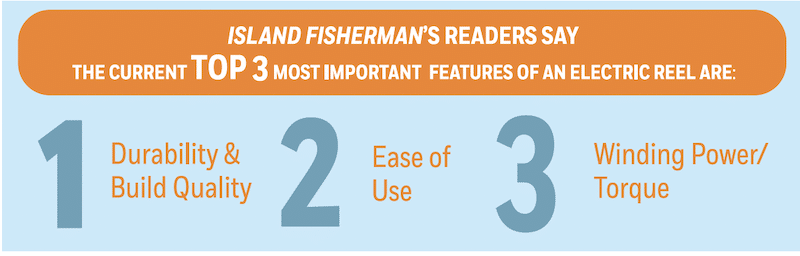
Durability and Build Quality
There’s no question in my mind the Penn Fathom’s full metal body (aluminum) will long outlast my Tanacom—just feeling the difference in your hands is like comparing a piece of military equipment to a toy. I feel much more confident transporting it and not as worried about dropping it on the pavement.
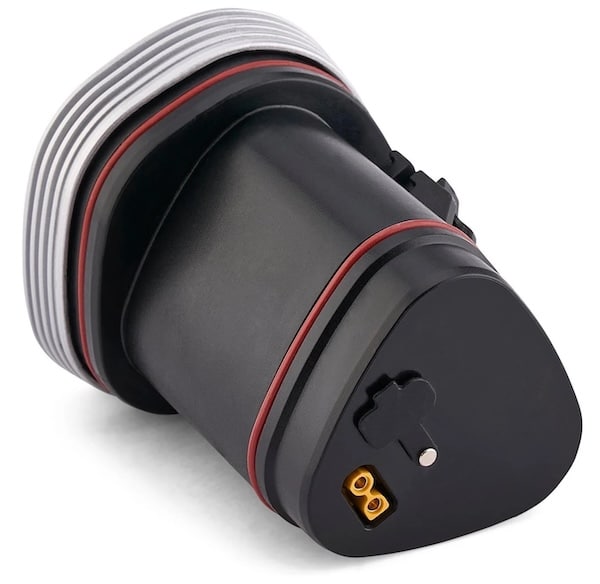
It also has an IPX6 sealed motor and battery compartment. An IPX6 rating means protection against water projected as powerful jets from any direction. To achieve this rating, testing is done by spraying with water at a flow rate of 100 litres per minute from a distance of 2.5 to 3 metres for a minimum of three minutes. This means I don’t have to worry about leaving my rod in the rocket launcher in heavy rain, and I can hose it off on high to get all the salt off with confidence, even with the battery in.
Bottom line? The Penn Fathom 50 is a tank.
Ease of Use
Setup
Once your reel is spooled and attached to your rod, there’s not much else you need to do. First, I set the line diameter so the reel could count depth most accurately. I spooled it with almost 1700′ of 80-lb braid, which, depending on the brand, is between 0.405 mm and 0.48 mm. Mine was 0.44 mm, so I picked 0.40 mm (the closest) on the menu. And yes, I put a top shot of 60-lb fluorocarbon on (as I do with all my level-wind reels) in case I hooked bottom.
Next, I decided to turn on the rod tip alarm at 20′, so it would start beeping to alert my buddies that I may need a gaffer and will bring a fish aboard (make room!). This is when I take the rod out of the holder and get ready to manually reel.

Getting ready to gaff a sablefish
I like to take over by manual reeling so I can see if it’s a legal fish and ensure it doesn’t surface and thrash, which can often result in lost fish. Once I put the spreader bar in the water, I “zeroed” the counter at about 10′ or so (by holding the left button for 3 seconds), and it was ready to fish, knowing that the reel would stop at my custom depth. There is also a menu option to reverse the colours on the display for dark conditions and a couple other features, like a hibernate mode and changing units from feet to metres.

PENN Fathom display
I was pleasantly surprised by the minimalist menu. There’s no need for any auto-jigging for bottom fishing, and I never used it or spent the time to figure it out on my Tanacom. The boat’s movement at the surface provides all the action your bait needs, just like with any manual reel.

“Welcome aboard, Mr. Sablefish!”
External Features
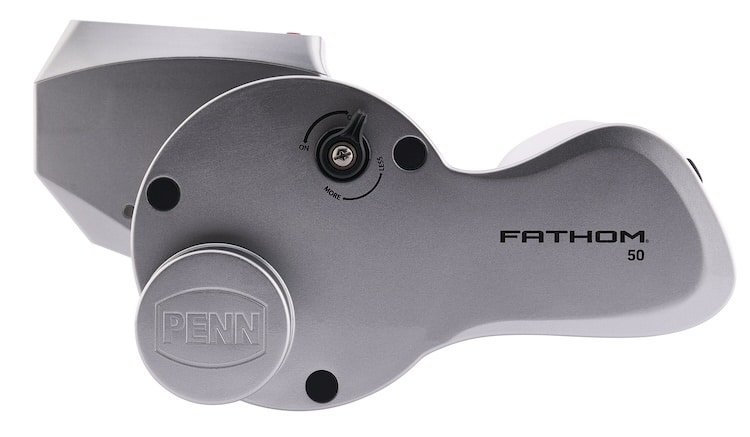
First, a lever drag is way better than a star drag, in my opinion. I find it so much more precise and easy to adjust from free spool to strike and everything in between. In addition to that, there is a pull-to-turn knob with presets for stepping your drag up or down.
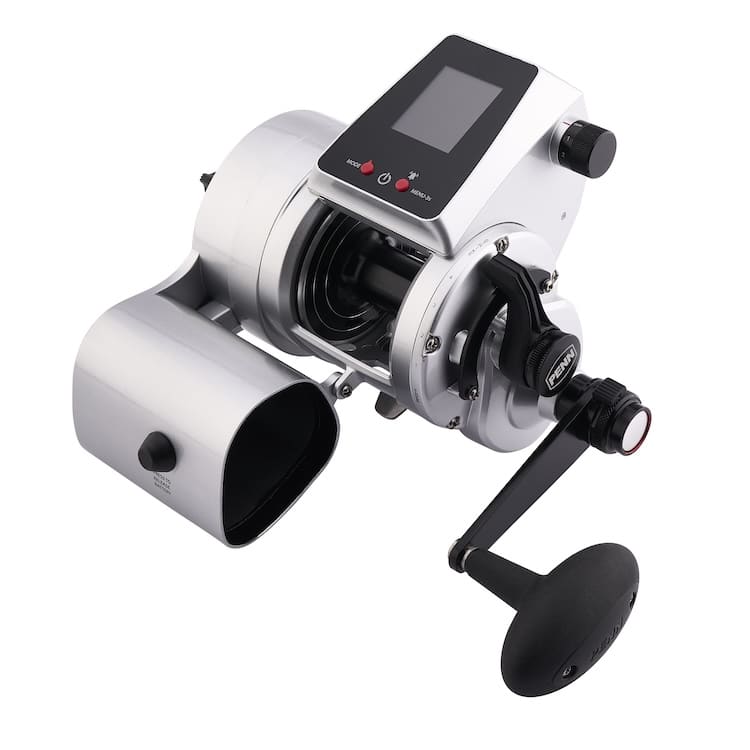
The variable speed dial is easily located on the top right of the reel and shows settings from Off (0) to Max (10). It’s easy to grip with cold/wet fingers or with gloves, too. This is what you use to automatically reel from the depths, but engaging the manual handle is dead simple for when you need it (like me, in the last 10′)—engage it by pressing the button in the middle of the handle. The handle also has an automatic kickback system so that you won’t bruise your knuckles.
On the left-hand side of the reel is a spool tension knob that acts like a brake so that when you drop it, you won’t overrun your reel and wind up with a bird’s nest mess. I love this feature—no thumbing the spool or worrying about what happens to the spool when the bait hits bottom.
Winding Power/Torque
The 12V brushless motor supplies 40 lb of winding power. Since this force can equal or exceed the maximum drag of 40 lb, the motor is able to retrieve the line under any amount of fighting pressure it is physically designed to handle. Also, the 1.9:1 gear ratio and recovery rate of about 16″ per handle turn are great for our waters.
Battery
Was I wrong about the 5Ah lithium-ion battery when I first looked at this reel? Yes, I was. I fished to our limit with plenty of bait checks and still had a bar left on the power meter. It was also refreshing to not have a power cord to trip over. I could easily move the rod around the boat and hand it off. I do pack the optional electric cord with me just in case, but I haven’t needed it yet.
The verdict? Love it! It meets our reader’s biggest concerns, and it works great for me. Tim Milne used these reels for hauling in the tuna shown in the November/December issue and was wondering why he didn’t go this route earlier. This reel is worthy of our Gear of the Year Award!


Black cod bounty!
Is there a product YOU’D like us to review? Reach out to our editorial department here.
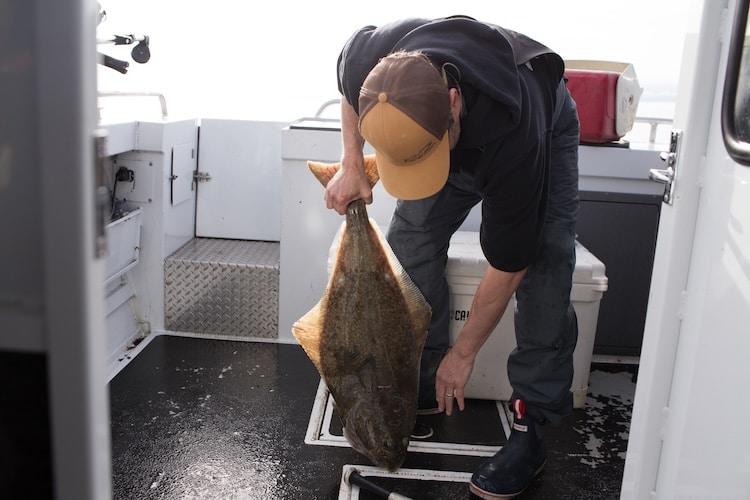
Bonus halibut caught on PENN Fathom
This article appeared in Island Fisherman magazine, never miss another issue—Subscribe today!