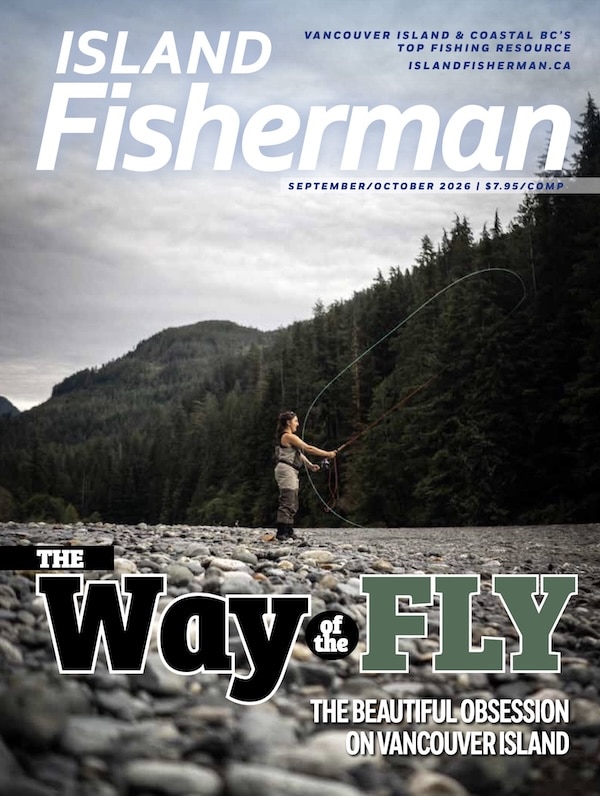


Every March, like clockwork, a specific brand of madness takes hold of the fly-fishing community in British Columbia, making it the absolute perfect season for a technical Vision Stillmaniac review. While the rest of the world is waiting for cherry blossoms, a small, dedicated group of us are loading up trucks and heading for the damp, shrouded basins of the Upper Sunshine Coast.

Basecamp reality: Jon boats lined up along the gravel shore, ready to tackle the deep basins of Khartoum Lake.
This isn’t just a weekend getaway; it’s an annual pilgrimage to “Cutthroat Camp,” a gathering led by a man who has become something of a legend in these parts: Pat Demeester. Pat guides for all kinds of trout in the area, even by helicopter.
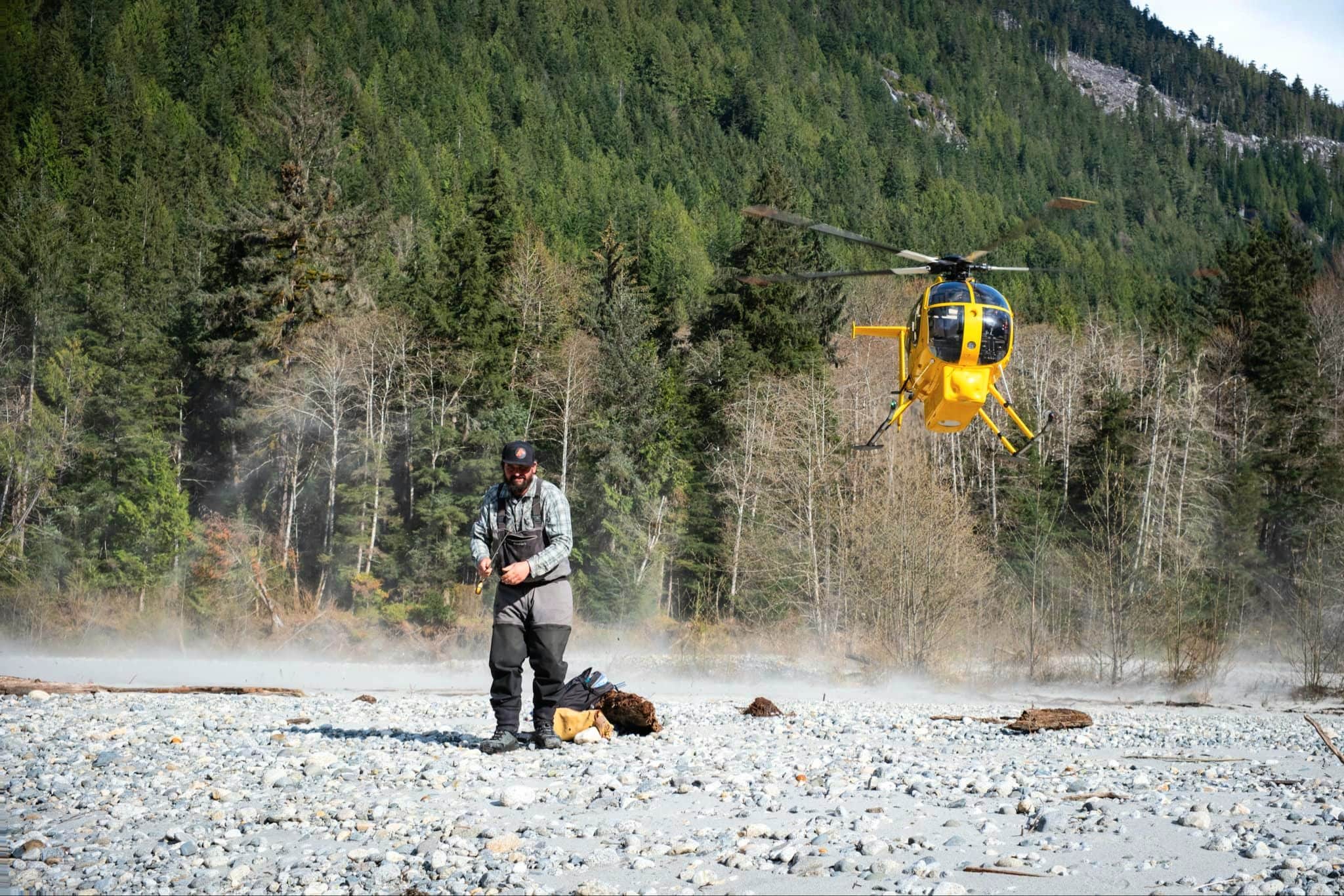
True backcountry access: Pat “Patches” Demeester prepping gear on a mist-shrouded gravel bar deep within the Upper Sunshine Coast corridor.
To call Pat a guide is a bit like calling a grizzly bear a furry mammal—it doesn’t quite capture the scale of the thing. Pat is a verified biodiversity hero, a man whose life is so intertwined with the health of his local watersheds that he basically speaks fluent Oncorhynchus clarkii.
Of course, no trek into the corridor is complete without a mandatory pit stop for anyone serious about Powell River fly fishing at Powell River Outdoors (PRO). It’s the non-negotiable headquarters for grabbing maps, snagging the latest local knowledge updates that might actually save your weekend, and stocking up on the specific cutthroat trout flies Pat’s favourites are currently chewing on. Besides, between picking up the coolest t-shirts in the corridor and having a good laugh with Sam Sansalone and Darcy Gaudet, it’s the high-energy boost you need before the damp cedar and misty silence take over.

Sam Sansalone and Darcy Gaudet, Powell River Outdoors (PRO) Understanding the Coastal Cutthroat Trout BC obsession
The Upper Sunshine Coast is more than just a scenic backdrop for these trips; it is hallowed ground for targeting wild coastal cutthroat trout bc strains. These aren’t your average trout, and anglers looking for westslope cutthroat trout will need to head east over the Rockies—the Sunshine Coast belongs entirely to their hard-fighting coastal cousins.
The specific strain found in the Powell River corridor represents a unique genetic lineage that has adapted to these deep, glacial labyrinths over millennia. Within the BC fly fishing community, we treat these fish with a mix of reverence and obsession. They are the silver ghosts of the rainforest, apex predators that bridge the gap between the alpine lakes and the salt of the Salish Sea.
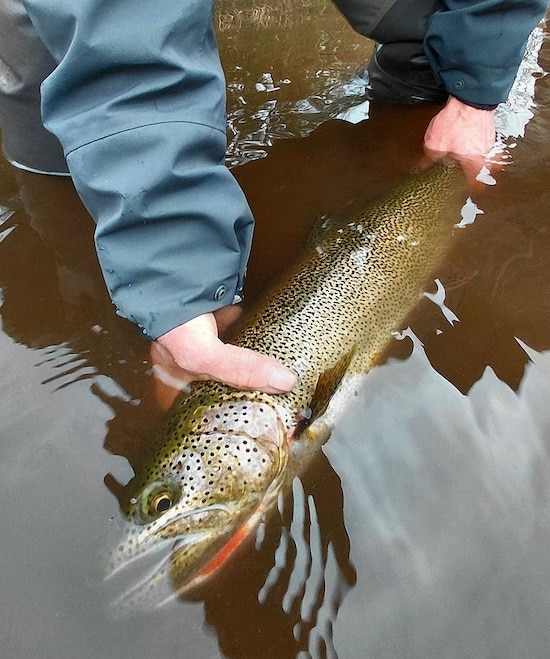
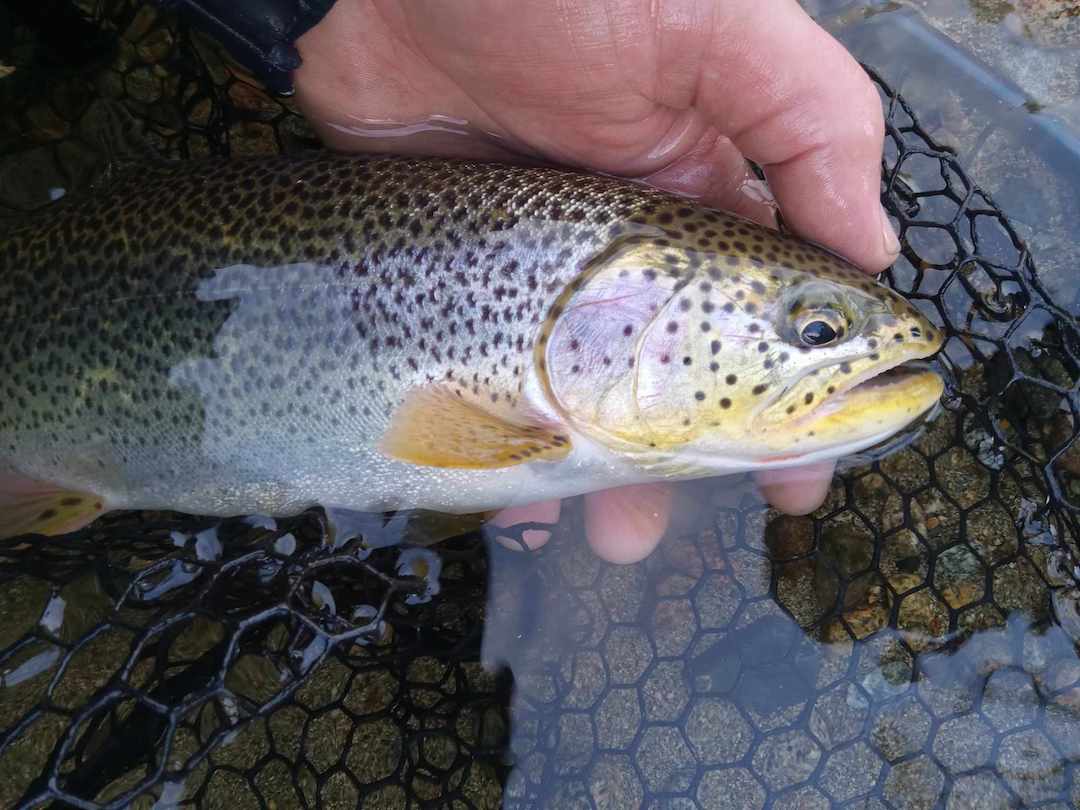
The silver ghost of the rainforest: A spectacular, wild Powell River coastal cutthroat displaying its unmistakable vivid orange throat slash.
Understanding these fish is a masterclass in local ecology. In the bone-chilling March waters, which typically hover between 4°C and 6°C, the cutthroat aren’t interested in dainty hatches. They are looking for protein-dense meals to kickstart their metabolism before the spring spawn. We’re talking about hunting big fish in 20-foot depths, which means swinging large flies—Game Changers, sculpin patterns, and cutthroat trout fry imitations that have the mass of a wet sock.
When water temperatures hover around 4°C to 6°C, target deep lake drop-offs. Don’t waste time skimming the surface; count your sinking lines down to the 20-foot mark and use heavy, articulated sculpin patterns to trigger aggressive predatory strikes.
Deciphering the Regulations for Powell River Fly Fishing
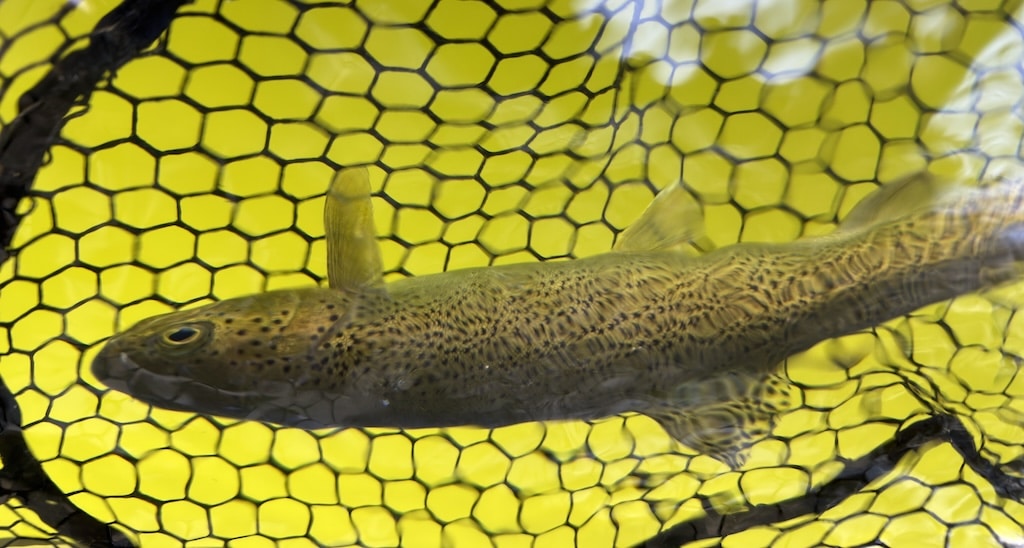
Keeping the fish fully submerged ensures the absolute highest survival rate upon release.
When planning an adventure around Powell River fly fishing, checking the regional cutthroat trout bc regulations is the first thing any smart angler does. Because these local ecosystems are so fragile and precious, the rules are strict, and staying compliant is essential.

The breathtaking, glassy expanses of the Upper Sunshine Coast backcountry—critical habitat for landlocked coastal cutthroat.
Deepen Your Coastal Cutthroat Knowledge
Powell River offers an incredible dual fishery for both landlocked lake giants and hard-fighting ocean cruisers. Master both tactics with our comprehensive regional guides:
The Gear Audit: Building a BC Fly Fishing Arsenal for Deep Water
Now, any self-respecting angler knows that a trip of this magnitude requires a serious audit of the gear locker. And let’s be honest, as a BC boy, I will find any excuse to tell my wife I need a “new arsenal” for a specific scenario. “You can’t go into the Powell River basins with a standard five-weight and hope for the best, hon!” I needed a setup that could dredge the 20-foot contours from the seat of my Marlon SP12 without blowing out my poor old shoulder by noon.

Teamwork in the backcountry: Towing a secondary boat down the lake to maximize our fishing time on the deep water drop-offs. If you plan to make the trek yourself, check out the official access maps on the Sites & Trails BC Khartoum Lake Resource Page.
I had been lurking in some of the more technical fly forums—the kind where guys talk about competition tapers and sink rates with the intensity of rocket scientists. The name Vision kept popping up. People were raving about their Stillwater-specific gear, claiming it was a total gamechanger for deep-water tactics. My interest was piqued for a few reasons:
- West Coast Uniqueness: I wanted something completely different than the massive mainstream brands that everyone and their dog carries on the West Coast.
- Expert Local Support: I knew that the crew at Nile Creek Fly Shop were the local authorities on the brand, meaning I had local support and expert knowledge right in my backyard.
- The Tariff Factor: There was also the 2026 elephant in the room: the economy. With the 25% reciprocal tariffs on US-made tackle pushing flagship American rods into the stratosphere—sometimes north of two thousand bucks—the idea of a European “star” system that avoided those duties while offering world-class tech was too good to pass up.
So, I pulled the trigger on a full Vision Stillmaniac² setup to see how it performs under pressure for this Vision Stillmaniac review.
The Finnish Powerhouse: A Global Stillwater Influence
Before we dive into the nuts and bolts of the performance, it’s worth looking at why a company from Finland is suddenly the talk of coastal BC. Vision isn’t some fly-by-night operation; they are a deeply respected Finnish powerhouse that has been quietly influencing the global competition scene for years.
It is really no wonder they named the line “Stillmaniac.” In Europe, stillwater fishing isn’t a relaxing Sunday hobby; it’s a high-stakes, tactical sport conducted from drifting boats on massive, wind-swept reservoirs. It requires a level of focus that borders on the clinical. When you realize Vision has developed a specific rod, reel, and line for every conceivable scenario—from mid-column midge hanging to dredging the dark depths—you realize the name isn’t just marketing. It’s a diagnosis.
Vision took that competition DNA and baked it into their commercial products. They’ve spent years working with top-tier Finnish and UK competition teams to refine their tapers and reel mechanics. While some brands try to be everything to everyone, the Stillmaniac series feels like it was designed by people who spend their lives staring at sonar screens and counting down their sink rates with the precision of a NASA launch.
They are respected globally not for their marketing budgets, but for their factual, performance-driven engineering. This is gear designed to fight the fish and the elements, not the angler. It’s for the person who understands that “enough gear” is a moving target and that having a specialized tool for every misty morning isn’t excessive—it’s just being prepared.
Product Review: The Vision Stillmaniac Setup
Setup Specifications Matrix
| Gear Component | Model / Variant | Key Feature | Primary Application |
|---|---|---|---|
| Fly Rod | Vision Stillmaniac² 10′ #6 (SKU: VSM4106) | Unsanded ribbed blank & 40-70 cm marks | Deep lake dredging & long-range casting |
| Fly Reel | Vision XLV Stillmaniac Cassette (#6-7) | Quick-change lightweight polycarbonate spools | Rapid depth adjustments (SloMo to Sink 7) |
| Fly Line | Stillmaniac S7 Integrated Stealth | Welded steel tippet ring & low-stretch Comp Core | Instant hooksets in 20′ depths |
1. The Rod: Stillmaniac 10′ #6 (VSM4106)
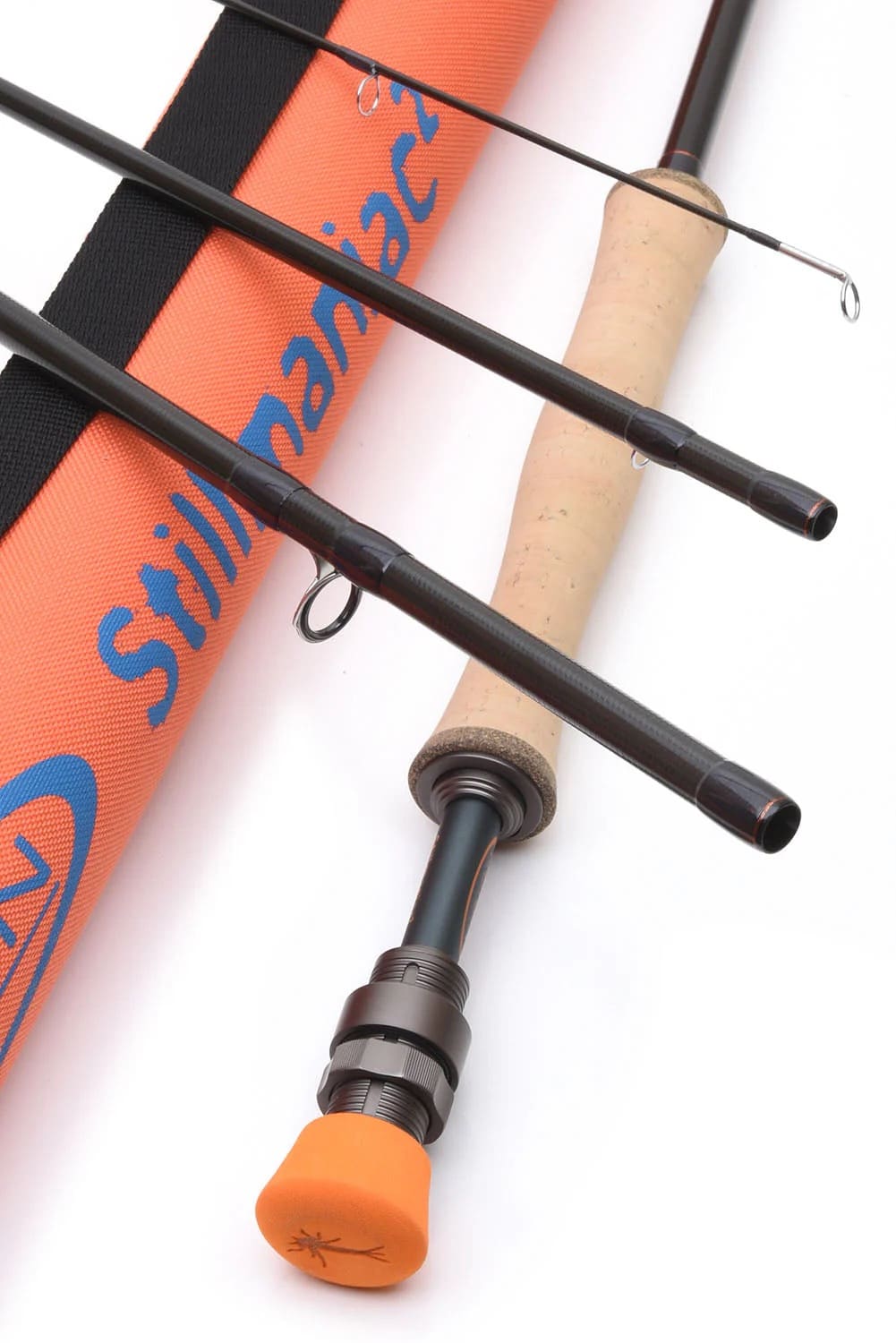
The 4-piece Vision Stillmaniac setup alongside its signature protective travel tube.
When you first pull the Stillmaniac² out of the bright orange tube, the first thing you notice is the length. At 10 feet, this isn’t your daddy’s trout rod. In a small boat like the Marlon SP12, a standard 9-foot rod is actually a liability because your angle of attack is too low to easily lift a heavy sinking line out of the water for a recast. This rod acts like a high-leverage crane, allowing you to lift 40 feet of submerged line and fire it back out with minimal effort. To view availability or purchase online, head over to the official Vision Stillmaniac Fly Rod Product Page.
The most striking technical feature is the unsanded, ribbed blank. Most rods are painted and polished until they are glossy, but when a wet sinking line touches a glossy rod, surface tension makes it stick, which kills your casting distance. The Stillmaniac² blank is left raw, allowing the line to shoot through the guides with almost zero friction. It’s a “Formula 1” finish that feels incredibly purposeful.
Another touch I absolutely loved is the measurement markings directly on the blank. There are permanent marks from 40 cm to 70 cm, which means when I’ve got a trophy cutthroat boat-side, I can get a stress-free measurement without ever taking the fish out of the water.
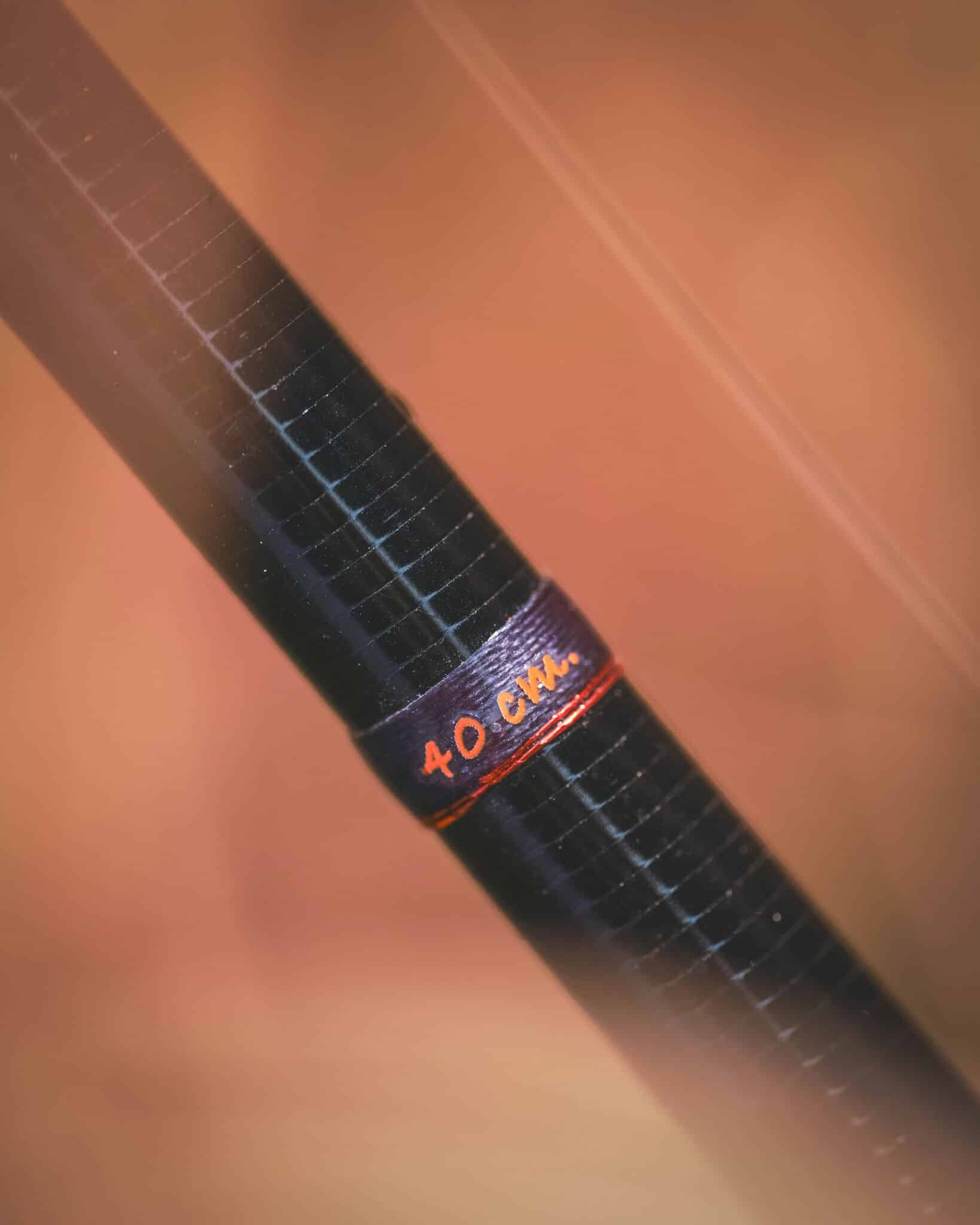
Up close with the permanent 40 cm thread wrapping for fast, low-stress, in-the-water fish measurements.
Whether you’re standing in waders, sitting in a belly boat, or leaning over the gunwale of a jon boat, it makes for a much more ethical release. The action is fast and crisp, recovering instantly after a long cast, yet the tip is forgiving enough to handle the violent, head-shaking shock of a deep-water take without snapping your leader.
2. The Reel: XLV Stillmaniac Cassette
The reel pairing for this setup is the XLV Stillmaniac Cassette, and for a guy who likes to change tactics on the fly, this thing is a masterpiece. The Technical Cassette system is built for speed and variety. For conditions where the fish might be at 25 feet one hour and 10 feet the next, I can swap between my SloMo, Sink 3, and Sink 7 spools in under 15 seconds. You just loosen the orange locking ring, swap the lightweight polycarbonate cassette, tighten the ring, and you’re back in the game. You can review structural details directly on the Vision XLV Stillmaniac Cassette Reel Product Page.
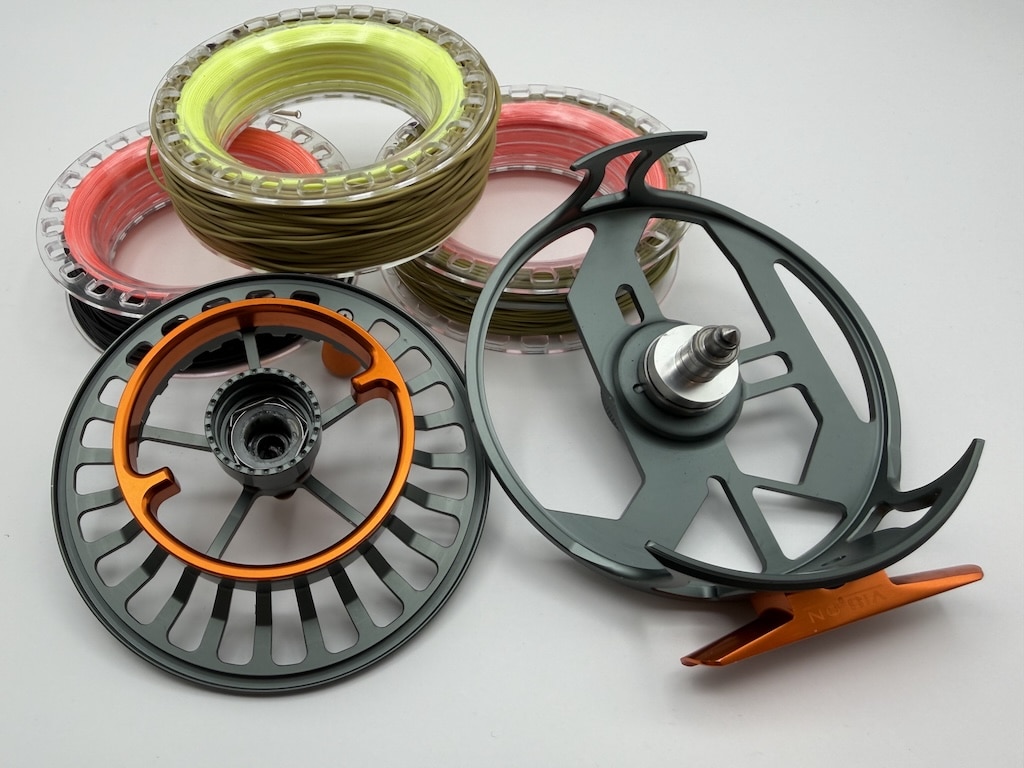
The modular architecture of the Vision XLV Stillmaniac Cassette system, showing the stormy blue frame separated from the clear polycarbonate cassettes.
Each cassette has locking teeth for the spool with one blank tooth, which lines up with the screw on the handle. I read a great tip—use a Sharpie to put a couple of dots on that spot so you can quickly find it. It works like a charm!
The reel itself is stunning to look at—machined, large-arbor, and incredibly smooth. But it’s the practical details that win you over. The cassettes are clear and have a flat area where you can write the line weight with a Sharpie, so you never forget what’s on the reel. The drag is a sealed disc system that is surprisingly powerful for such a lightweight reel, and the oversized EVA foam handle is a godsend when your fingers are numb and you need a secure grip. It’s a smooth, dreamy piece of machinery that balances the 10-foot rod perfectly, moving the weight back into your hand where it belongs.

Ready for the deep basins: The assembled XLV Stillmaniac reel alongside a big sculpin fly pattern, with spare line weights queued up in the background.
3. The Line: Stillmaniac S7 Integrated Stealth
While North American titans like SA and RIO are the usual go-to’s, the Vision Stillmaniac S7 line is the choice for the angler who wants a technical advantage the fish literally can’t see. The standout feature of Vision’s line is the industry-first integrated steel tippet ring. Most lines use a bulky welded loop that can crack or, worse, catch in your tip-top guide during a figure-eight retrieve. Vision’s tiny steel ring is welded directly into the tip, allowing for streamlined leader changes that slide through the guides like butter. They also print the line weight right behind the tippet ring. To check custom grain weights and casting line dynamics, see the Vision Stillmaniac Fly Line Product Page.


The S7 uses a low-stretch “Comp Core,” which provides an electric connection to your chosen cutthroat trout flies. When you’re dredging 20 feet down, a standard line can feel like a rubber band, but with this core, you feel every tick of a sculpin on the rocks or a cutthroat nipping the tail of your fly. It’s also a “long game” line, coming in at 108 feet compared to the standard 90 feet, with a 42.7-foot head that carries enough energy to “hit the horizon” without the cast collapsing at the end.
Field Performance: From the Deep Basins to the Beach
During our recent trip to the area, this gear performed exactly as advertised. But the beauty of a 10-foot six-weight system is that it isn’t just a lake rod. Back on the Coast, I’ve found this setup to be an absolute killer for beach framework situations targeting wild coastal cutthroat trout bc populations. The extra length allows you to easily mend line over coastal kelp beds and provides the water clearance needed when you’re wading waist-deep in the salt.
It’s a versatile beast that excels at powell river fly fishing tactics, managing everything from trolling deep drop-offs in a pontoon to punching through a stiff Pacific headwind on the beach. I can’t wait to try it for bass and the incoming pink salmon in the fall.
Ultimately, the reason you want this gear—and the core takeaway of this deep dive Vision Stillmaniac review—is because it’s a beautifully integrated, cohesive ecosystem. Vision designed the rod, the reel, and the line to work as a single unit, specifically for the strict demands of technical stillwater angling. For this guy, who wants to fish with intelligence and a bit of flair—while keeping the deck of his Marlon stripped and clean—there simply isn’t a better way to spend a misty morning.
When the inevitable “Do you really need another rod?” question comes, I just sigh deeply and tell my wife that in a world of chaos, the only thing you can truly control is the line speed of a perfectly balanced Vision rig. It’s not a purchase; it’s a wellness retreat that fits right in a rod tube.
📖 Featured inside Island Fisherman Magazine
This comprehensive field-test review originally appeared inside the pages of Island Fisherman Magazine. Never miss an issue filled with raw, local tactical insights, deep gear diagnostics, and premium maps designed for the West Coast outdoor community.