

Salmon Beach Fishing: Staging Cycles
Salmon go through two staging cycles when they have reached the beaches near the estuary of their natal streams. Earlier in the season, they are voracious. They attack anything that represents nourishment to “calorie up;” they can gain a pound per week at this stage. This is a happy time for the beach angler, as these salmon will gobble up your best and worst lure or fly, if you can get it near enough to them.
While the salmon are cruising on the beaches in the second half of the salmon season, their bodies start to change as they prepare to move to their spawning streams. During the physical transformation, males develop a hook at the tip of their jaw (called a “kype”) with huge abnormal teeth. As a result, their heads and bodies become strangely shaped and coloured. They are getting ready for battles with competing males during the spawn. At this point, they develop what is often known as “lockjaw”—they no longer prioritize food. Amongst a school of salmon, you will find fish in different stages.
Salmon will change colour from bright silver to dark brown, then finally black. Others will turn a bright red colour with a green head, like coho and sockeye.
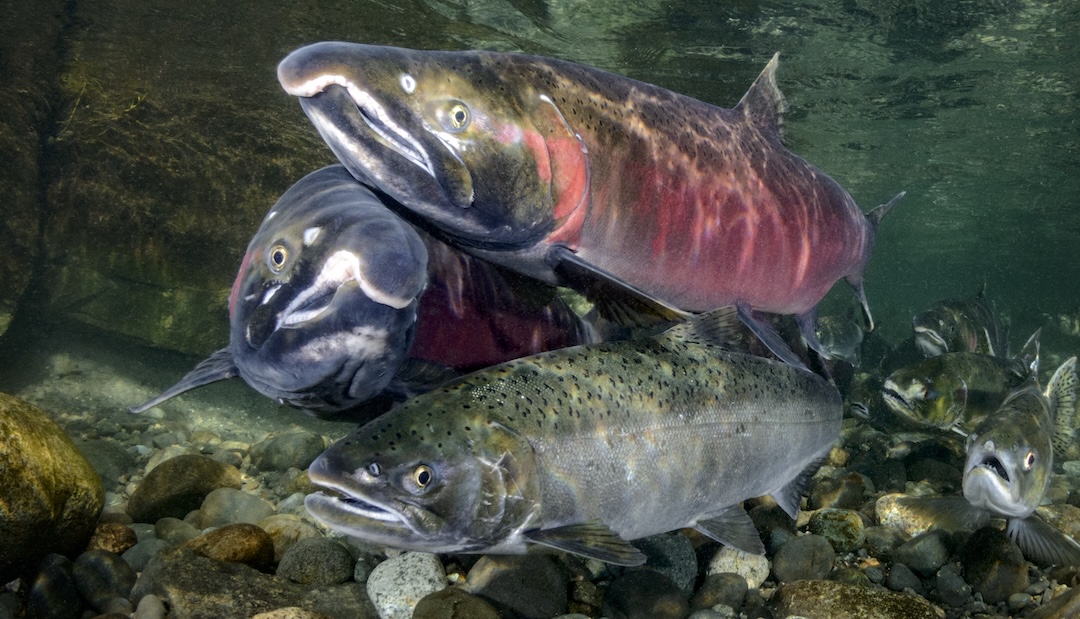
Dramatic kype display on the top two male Coho Salmon. “Coho Salmon Trio” Photo: Eiko Jones Photography
Above all, there will be physical deformity. Salmons’ digestive systems essentially shut down. Later in this staging period, they are hesitant to bite once they reach their home streams— nevertheless, many strike out of instinct rather than hunger.
Spinners for Aggressive Salmon Strikes
Even though a salmon won’t chase a meal in its late stage, it will attack another fish or anything else that gets them angry. During this time, spinning lures are most effective. Salmon don’t like the flutter of the blade, the repeating revolving flash, and the vibration (or noise) they make. If it is in their zone, they will do everything possible to attack it. Thus, a lot of my late-season success has been with spinners.
The Instinctive Strike
Even though salmon won’t consume at the late stage of their lives, they will instinctively strike at their favourite prey as they always have.
One year, an angler on the beach next to me caught a lot of salmon on his spinner while my spinner failed to catch anything. I introduced myself and asked if I could see what he was using. I found it … unusual. He had a long shank hook running through a pink plastic squid hoochie. He surprised me by offering me one to try, and I began to have success again. Since then, I have always stocked my tackle collection with various spinners with pink hoochies, which has extended my fishing season.
Casting Spinners
Spinning lures are hard to cast over a long distance, especially when strong winds are blowing. As the spinner soars through the air, the spinning blade rotates and catches air resistance, thus slowing down the lure. I have found that spinners weighing half an ounce will produce the best distances.
Casting techniques are different from other lure presentations. As the season moves on, salmon start to school together in numbers in their later stage of life.
The spinner should land directly on top of the school and then be allowed to drop and flutter for a few seconds— chances are good you’ll get a strike. Be prepared to reel in slack and raise your rod’s tip. Try these suggestions if you are finding that, after a few seconds of the lure fluttering down the water column, you have no results:
1. Quickly lift the rod tip
2. Retrieve the fishing lure a few feet
3. Let it drop again
You’ll often get a strike after that!

Hunter Higginbotham with Chinook caught Columbia River estuary with a Yakima Bait Squid Spinner
Buying VS. Building Squid Spinners
In making my own setup, I found it challenging to stop the hoochie from sliding down my hook’s shank. My solution was to tie it to the hook’s eye or glue it on. If only the squid and weight was built into the lure.
Olympic Tackle from Portland introduced me to a squid spinning lure early in 2015.
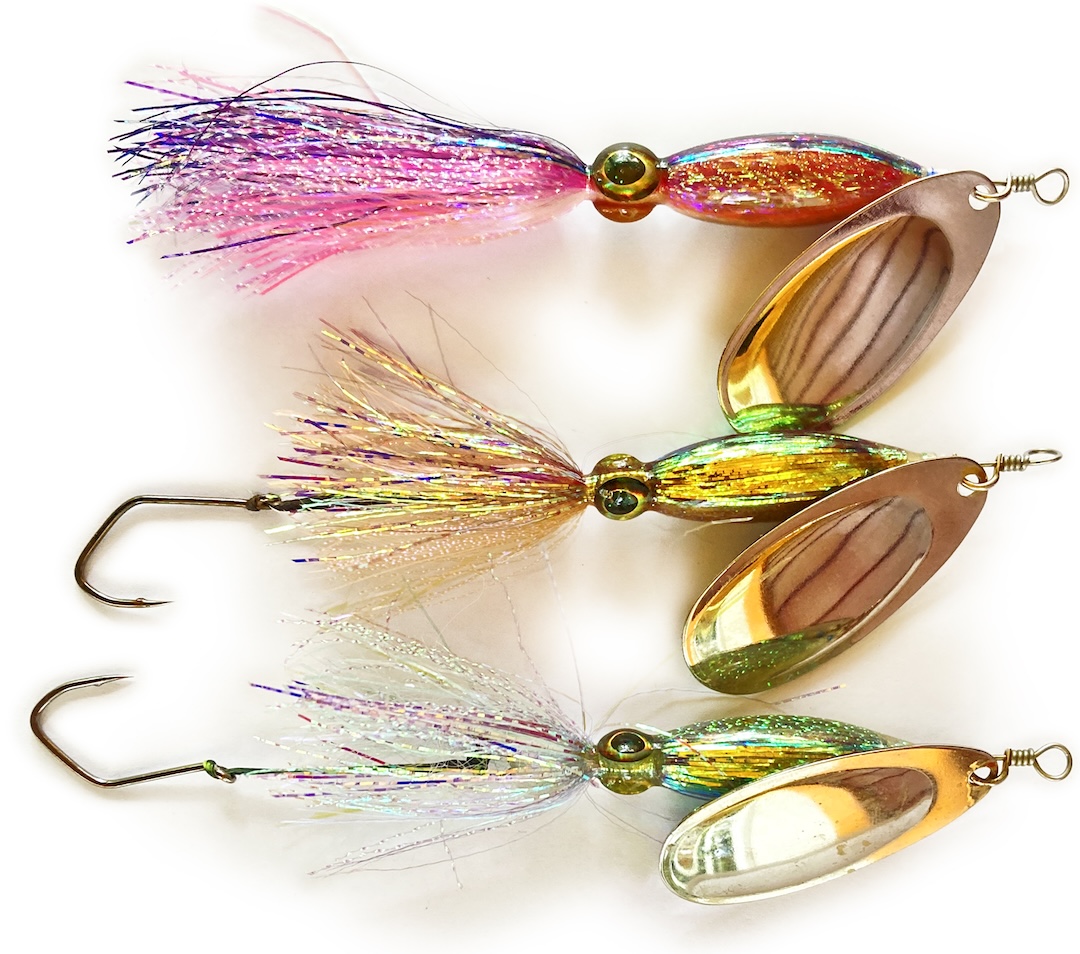
Olympic Tackle Squid Spinners
In the lure’s body is embedded the squid and its weight. They weighed from ¼ oz to ¾ oz. It realistically represented a squid and was finished with a hard finish that resists teeth abrasion. Even at the slowest retrieval speed, the clevis and blade allow easy, slow spinning. When the rod tip is raised high, the spinner will stay within two feet of the surface without retrieving it quickly. The blade appeared to pulse during its spin around the lure’s body. Squid do this as they move forward, so it’s a great mimic.

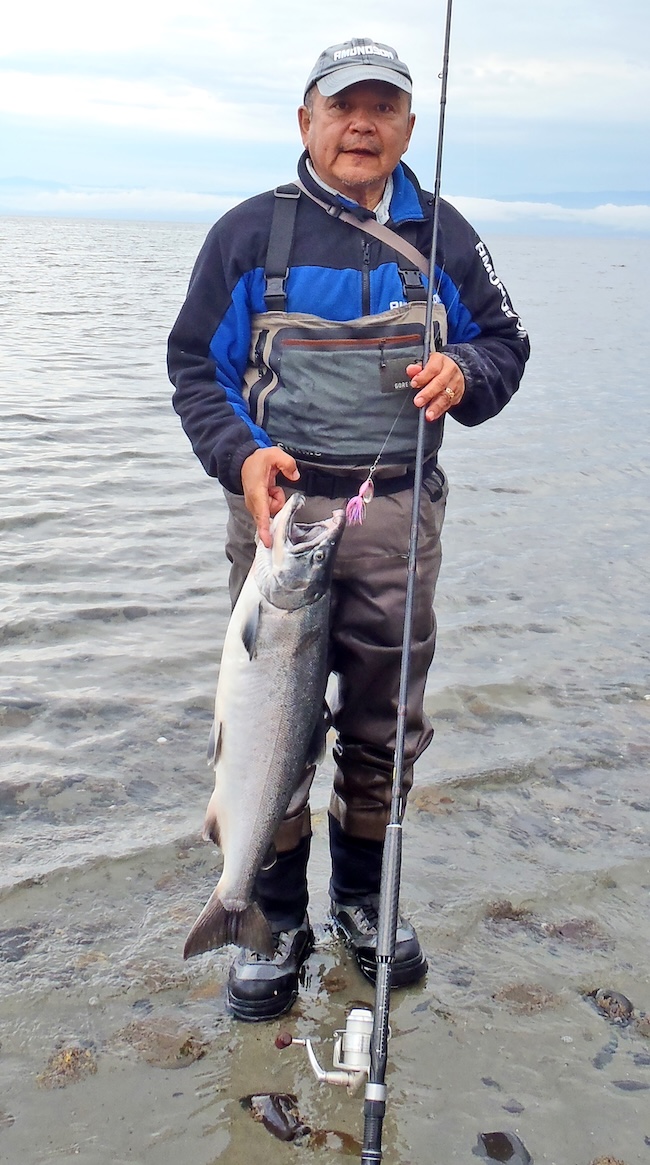
Gil d’Oliveira (author) with Huge Coho buck
Yakima Bait Company also sent me Hildebrandt Colorado blade squid spinners, and we had huge success with coho and Chinook (hooks changed out). Because they are lighter in weight, targeting schooling salmon close to shore produced the best results. If you’re in a boat, pontoon, or float tube, then its “game on” to everything!
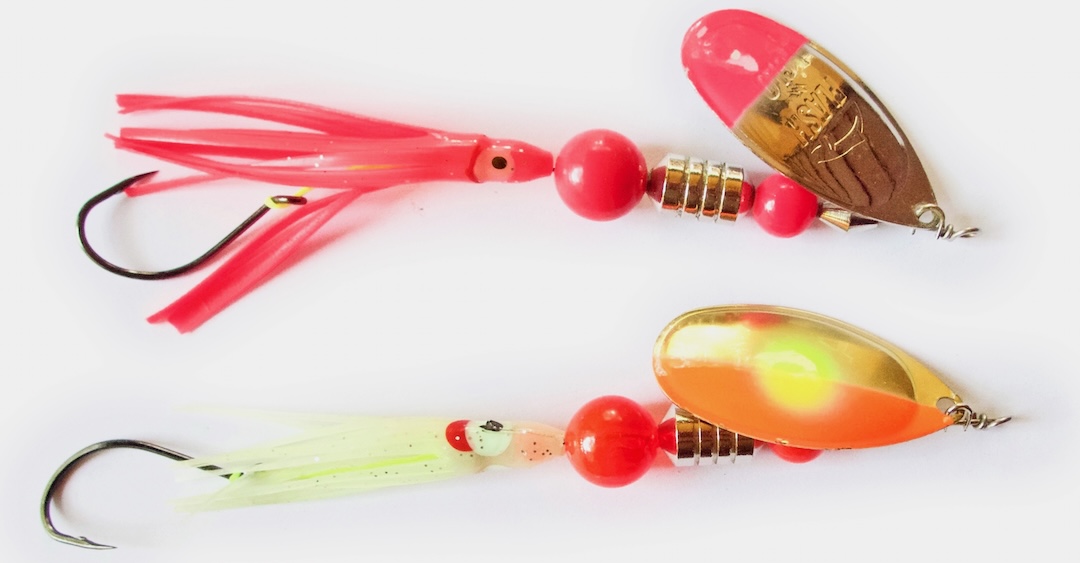
Yakima Bait Squid Spinners modified with single hook
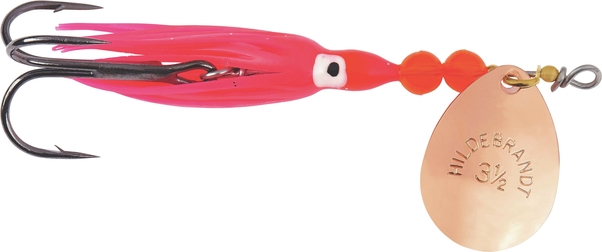
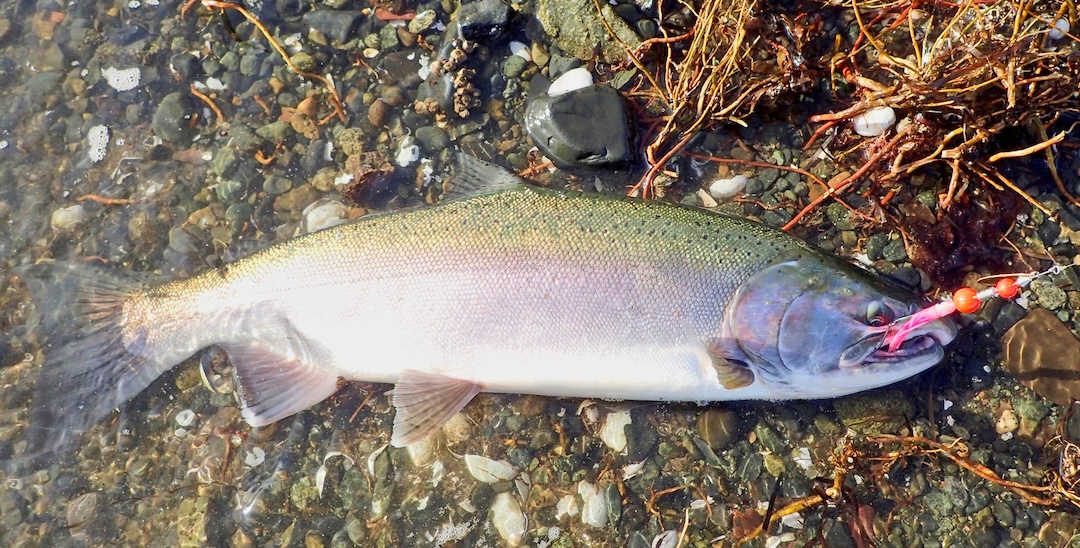
Coho on a Hildebrandt squid spinner
These days, if you visit your local tackle shop, you’ll be able to put together your own squid spinners—just be creative!
We’ve also spotted more on the market, like the Angling Addict Fishing Co Spinners..

Angling Addict Fishing Co Spinners
Squid Spinners for Freshwater Salmon Fishing
Various anglers have used squid spinners successfully, including salmon in freshwater, and for species like walleye and bass. There’s no such thing as a freshwater squid (or cephalopod) that I am aware of, so there must be something about how the lure works that fish can’t resist. Cephalopods are adapted for saltwater. Their bodies lack the necessary biological mechanisms (like specialized “salt pumps” that some other animals have) to effectively regulate the salt concentration in their cells when in freshwater. In freshwater, the osmotic pressure would cause water to constantly move into their cells, and they would lose essential salts, eventually leading to death.
Squid Spinning For Salmon: Rod, Reel, & Line
If you are wondering, my beach casting gear setup involves a 13′ Amundson Kudos Strategy X float rod KSP13M2 medium line wt. 10–17 lb, lure wt. 1/4-1 oz and a Runner X Spinning Reel RUX 3000 reel. For the ocean, I’m a bit unconventional. I set it up with 8 lb. mono main line and I use a heavier pound leader. I use 12 lb fluorocarbon to resist the abrasion the power salmon will place on it during the fight. Fishing on the sandy beaches on the East Coast of Vancouver Island each beach location success will vary in favour on high tides or low tide.
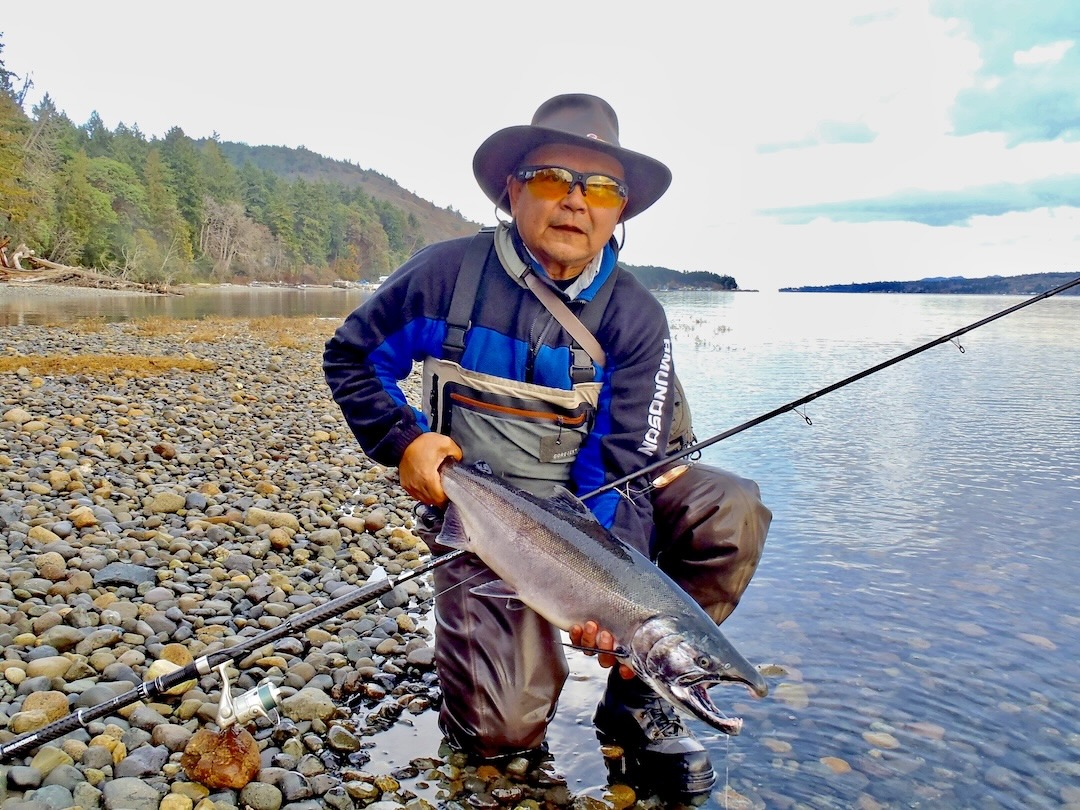
East Coast Vancouver Island beach rewards-Gil d’Oliveira Coho salmon fishing on the beaches of Vancouver Island BC
It’s very hard to find a 13′ casting rod these days on the west coast, but a medium action fast rod, rated 10-17 lb or 12-20 lb that can cast 3/8 to 1 oz lures will serve you well. The longer the rod better (in my opinion) as it allows the angler to keep more of the line out of the waves, debris, that are a common deterrent to beach fishing. but a 10′ 6” or 11′ is common on the beach. You’ll want the fast action for sensitivity for light bites, and a medium rod will give you decent backbone if you are coho fishing and hook up a Chinook. A 3000-class spinning reel will give you lots of line to play with.
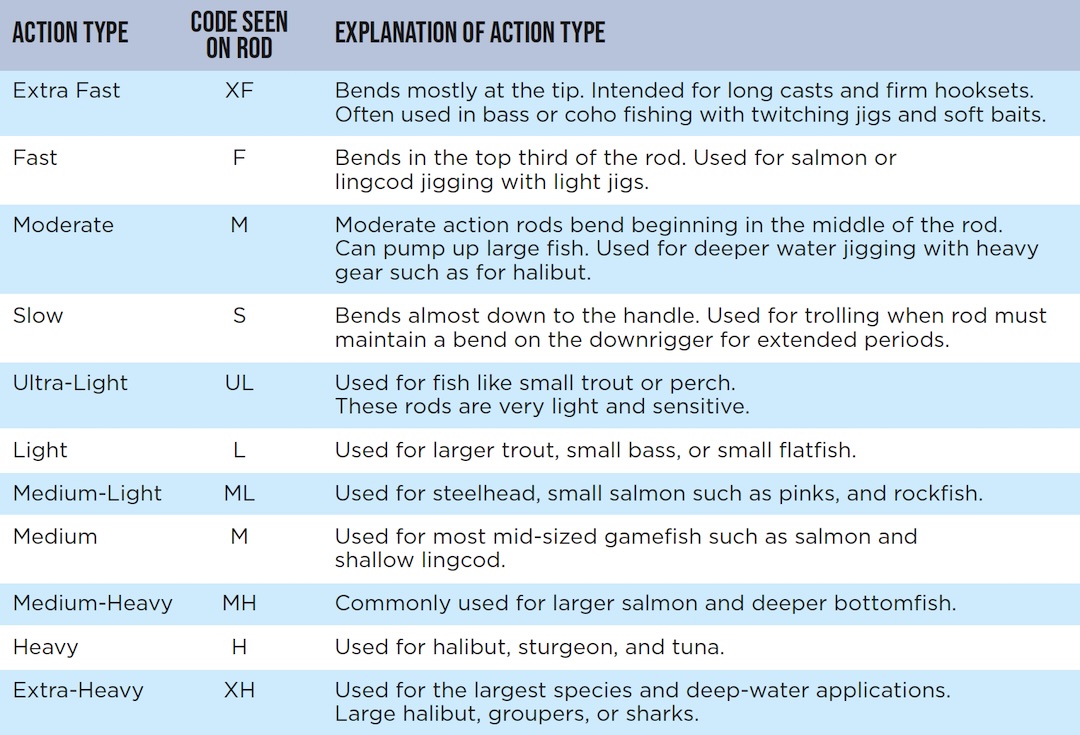
Fishing Rod Action (Chart: Island Fisherman)
Squid spinners work very well in for salmon in rivers as well. A good rod choice with medium-light power and moderate-fast action, or close would be advisable. Depending on the river you are fishing, if there is enough room, grab around a 9′ 6” or 10′ 6” so you can lift your lure above rocks and submerged branches by raising your rod tip to avoid snags and losing your precious squid spinner.
I can’t suggest enough exploring squid spinning lures for salmon beach fishing and for rivers. Start looking and gearing up now—just don’t tell your buddy!
This article appeared in Island Fisherman magazine, never miss another issue—Subscribe today!