

The clock is ticking on the future of our fishery.
The Department of Fisheries and Oceans (DFO) consultation period for the Salmon Allocation Policy (SAP) review closes on January 23, 2026. As we wrote, this is arguably the most critical policy review for the public fishery in decades, and the outcome will determine who gets access to salmon in British Columbia for generations to come.
If you have already sent your letter to the DFO (feedback regarding the Salmon Allocation Policy to be sent by email to [email protected] no later than January 23, 2026), that’s terrific news. If not, there is a great resource at the bottom of this article.
We know many of you have strong feelings about this, and we want to help amplify your voice.
Call For Opinion
Island Fisherman Magazine is calling for opinion pieces, open letters, and commentary from our readers. We want to publish your thoughts to help educate all Canadians what this means.
Whether you are a guide, a lodge owner, a recreational angler, or a business owner in a coastal town, we want to hear from you.
How to Participate
We are looking for short opinion pieces (200–500 words).
-
Write your piece. (Feel free to send us your comments from your letter to the DFO as well).
-
Submit it using the form below.
-
We will select and publish submissions on islandfishermanmagazine.com to inspire others to take action before the January 23 deadline. For disclaimers on Opinion articles click here.
Why This Matters: The Threat to Our Coast
For those searching for information on the Salmon Allocation Process or SAP, here is what is at stake.
The current Salmon Allocation Policy (established in 1999) operates on a clear principle of priority:
-
Conservation is the primary objective.
-
First Nations have priority for Food, Social, and Ceremonial (FSC) purposes.
-
Recreational Anglers have priority over the commercial sector for Chinook and coho.
-
Commercial Fisheries follow.
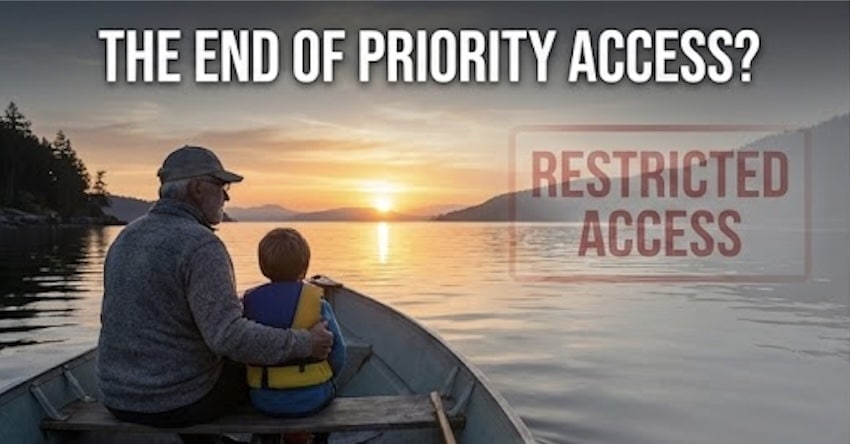
The Danger of “Fixed Shares” There is pressure within the current review to strip the recreational sector of this priority status or to implement fixed-share quotas (hard caps).
What does this do to Vancouver Island and Coastal BC?
-
It ignores reality: The sport fishing industry operates on opportunity and expectation, not tonnage. We release millions of fish; we don’t catch them to sell by the pound. A fixed percentage share doesn’t work for a public fishery.
-
It kills economic certainty: If the recreational sector is capped by a strict quota, the DFO could close fisheries mid-season even when fish are abundant. This uncertainty is poison for lodges, guides, and tourism operators who rely on bookings months in advance.
-
It devastates communities: Coastal towns on Vancouver Island rely on the “sport fishing dollar.” When anglers can’t access the water, hotels, restaurants, gas stations, and tackle shops all suffer.
- It diminishes salmon enhancement and environmental efforts: Driven by the sport fishing community, the salmon stamp on tidal licences, derbies, and more, stewardship will greatly suffer.
Struggling with What to write for your letter to the DFO?
If you aren’t sure where to start, visit FishingRights.ca. The website FishingRights.ca was created by the Sport Fishing Institute of British Columbia (SFI).
They launched the site to inform the public about the Salmon Allocation Policy review and to encourage recreational anglers to submit feedback to the Canadian government (DFO) to protect their access to salmon fishing.