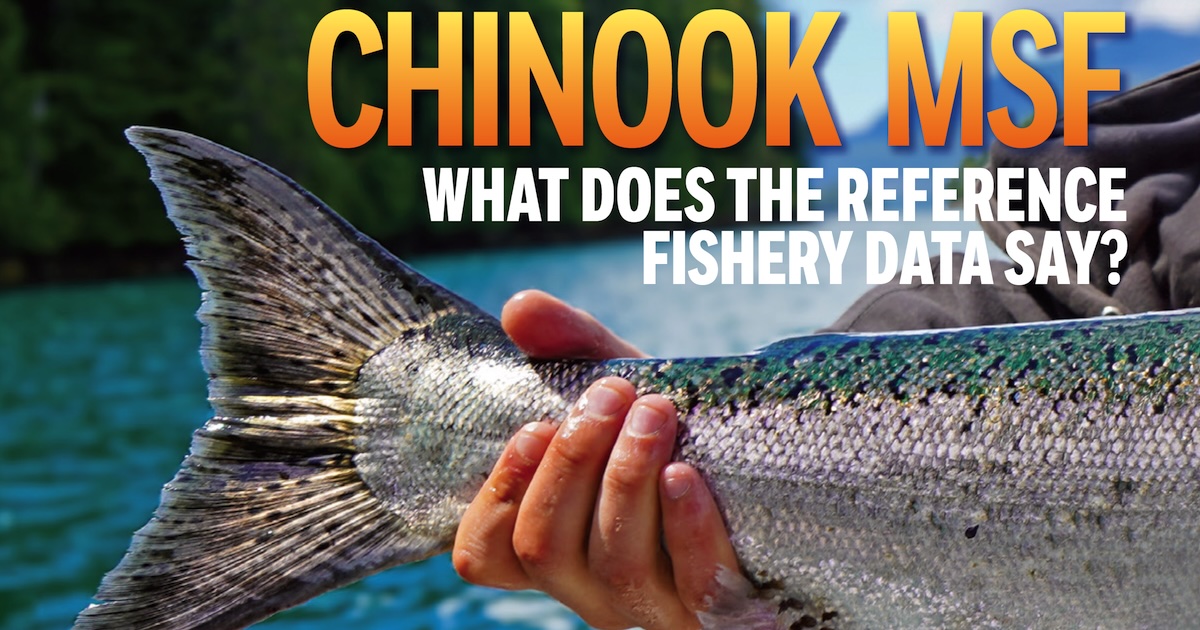
A mid-summer Conuma River Hatchery Chinook caught in Nootka Sound (Photo: Luke MacLaurin)
If you participate in the southern BC recreational fishery, you may have heard about something called “reference fisheries” and might wonder what they are. This article will attempt to explain them.
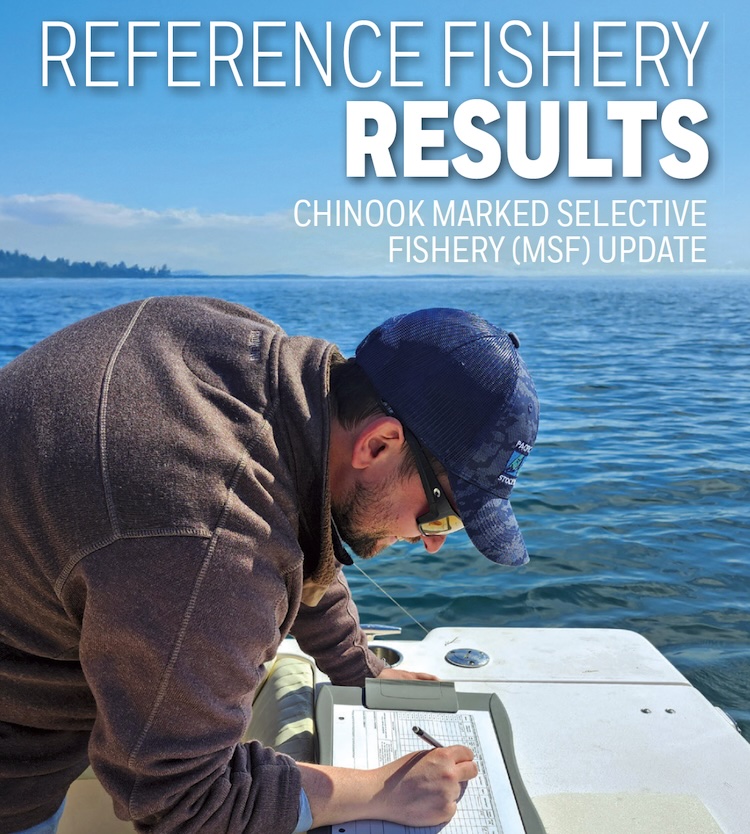
Tomas Filipovic, DFO sampler (Photo: Jason Assonitis)
Background: Chinook Stocks of Concern
Most readers are no doubt all too familiar with the management regime that began in 2019, which introduced Chinook non-retention in the recreational fishery across most of the southern BC coast beginning April 1. Depending on the location, this measure lasts for 3½ to 5 months and is intended to conserve Chinook stocks of concern—particularly stream-type Chinook from the middle and upper Fraser River watershed.
Fraser Stream-Type Chinook
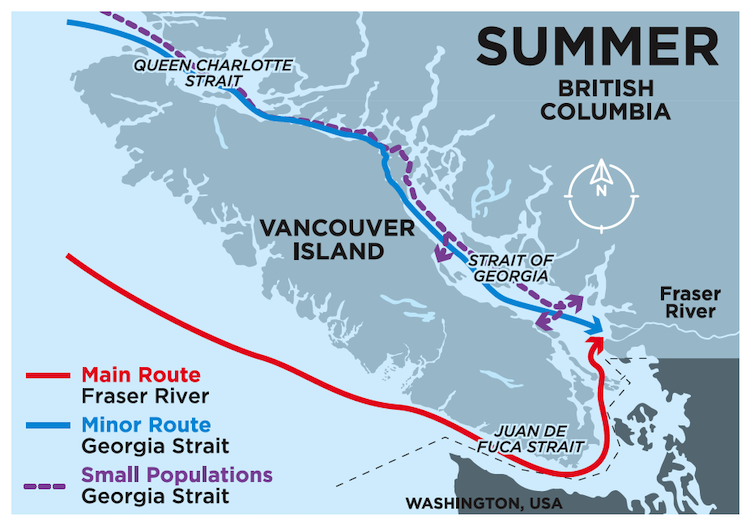
This stock aggregate has individual river stocks that feature two run-timing phases for entry into freshwater (spring and summer) and two dominant ages of maturity (4- and 5-year-olds). Compared to the more common, so-called ocean-type Chinook, stream-type fish have an extended freshwater life history and are open ocean migrants, spending the marine phase of their lives well offshore.
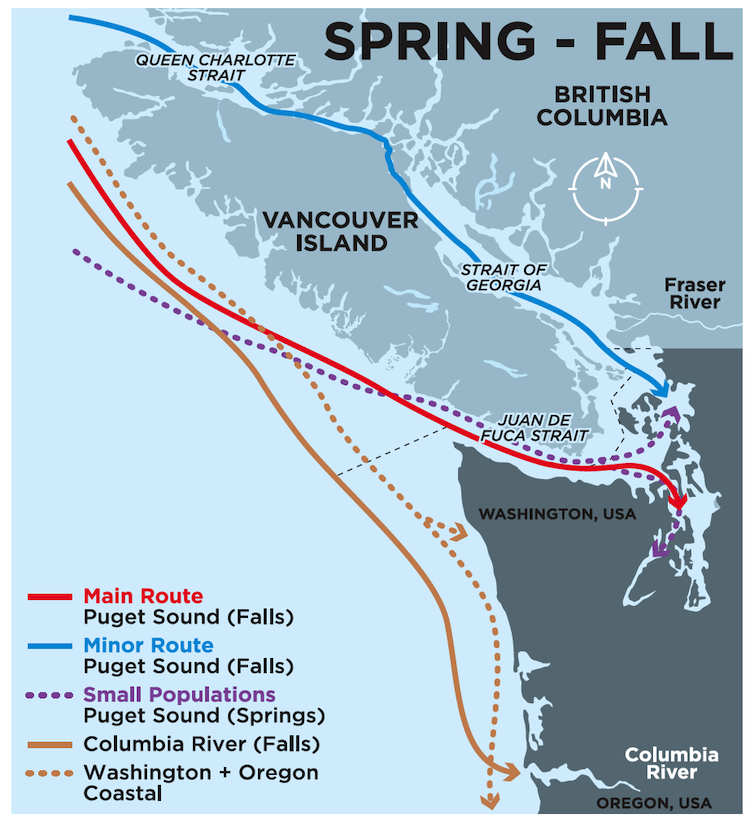
Although stream-type Chinook predominantly return to the Fraser through Juan de Fuca Strait, a smaller percentage migrate through Johnston Strait and the Strait of Georgia and are potentially encountered in fisheries there. About the only place in southern BC where they aren’t encountered is along and inside the surfline on the west coast of Vancouver Island, which is why Chinook retention at full limits remains in effect there during the time of concern.

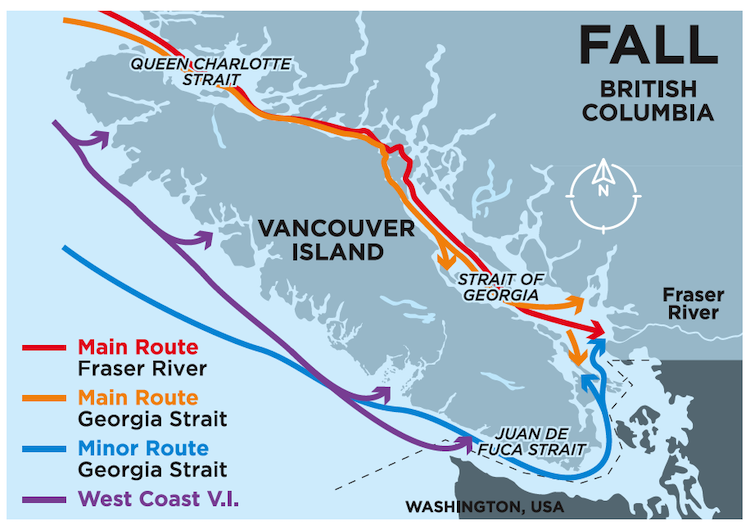
Fraser Stream-Type Chinook Data
Our understanding of Fraser stream-type Chinook distribution comes from two sources of data, the first being coded wire tags (CWT).
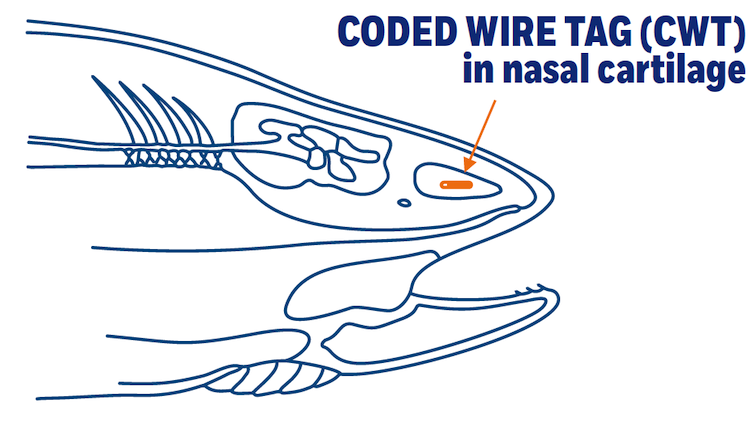
Unfortunately, there’s been minimal tagging of this stock aggregate, with the age-4 spring-run fish from the Thompson watershed the only individual stock with a long time series of tags applied. There was an age-5 spring-run stock in the upper Fraser (Dome Creek) that had tags applied, but it fell victim to budget cutbacks 20 years ago. The other source of data on the distribution of these fish comes from the thousands of bio-samples from Chinook of all kinds that are collected by volunteer participants in the Avid Angler program over the past dozen years.
Data-Supported Chinook Retention
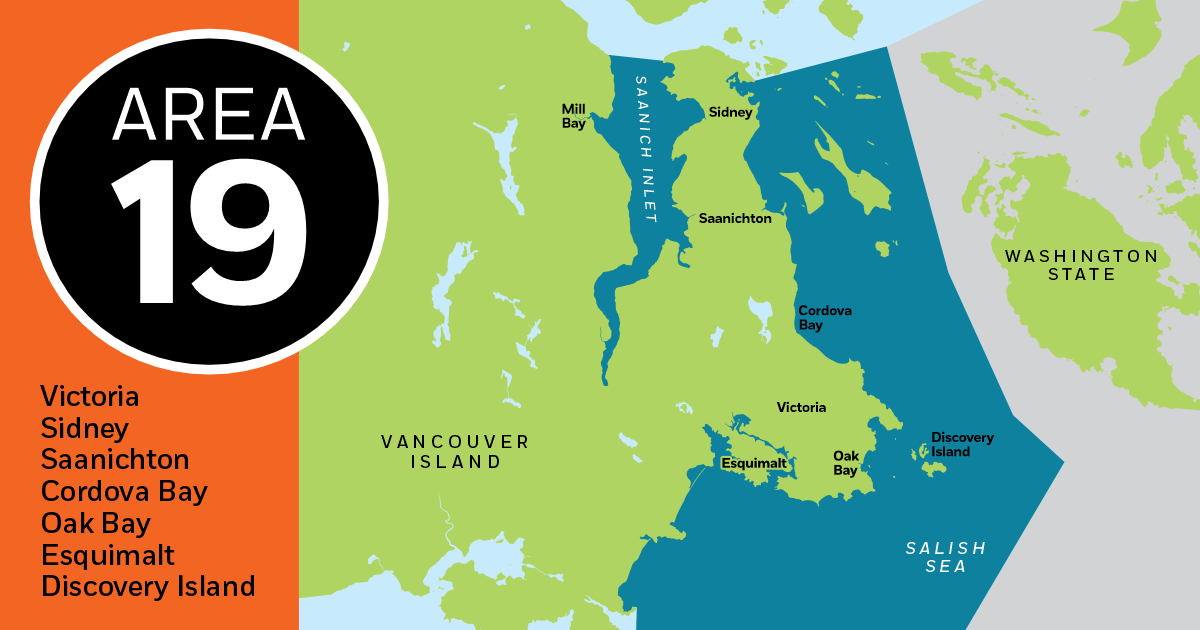
Following the imposition of widespread Chinook non-retention around southern BC in 2019, a small group of participants in the Sport Fishing Advisory Board (SFAB) began working with DFO staff to review all the known data in an attempt to craft proposals for limited time and area Chinook retention opportunities where the stocks of concern were not, or almost never, shown to be present. It was a significant undertaking, but out of that process, a number of proposals were put forward. Some were approved by DFO and a number were not, but the first of what the SFAB called “data-supported” Chinook retention opportunities came into effect in 2021, with a few more to follow in subsequent years. In the beginning, these were mostly along the mainland shore and up inlets away from the usual migration route of stream-type Chinook, with more recent opportunities now in effect around parts of southern Vancouver Island. Some are pure mark-selective (MSF), which are hatchery-origin-only retention, and some are hybrid-MSF with retention of unmarked fish up to 80 cm fork length allowed.
Test Fishery vs. Reference Fishery
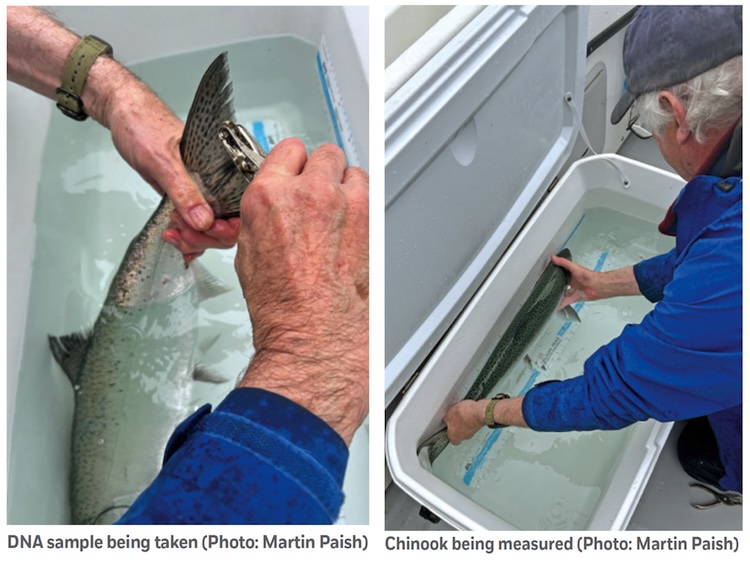
Some years ago, as part of its recreational fishery monitoring program, Washington State implemented what it calls “test fishery” charters whereby guides or highly experienced anglers are retained to go fishing and accurately record their results, which are then compared with data developed by other means like the creel survey, effort counts, logbook data from guides or lodges, and so on. DFO thought this idea had enough merit to try it in Canada, but here the term “test fishery” is usually associated with species that are especially important to the commercial fishery, such as sockeye, pink, and chum salmon. To avoid confusion, the term “reference fishery” was adopted for this recreational fishery monitoring initiative, and they began in 2023, with expanded projects (both in frequency and areas) in 2024 and again in 2025. No Chinook are retained in these projects—after capture, the fish is promptly placed in a holding tank, a small disc of tail fin tissue is removed to enable genetic analysis (both river of origin and potential for hatchery origin), length and presence or absence of the adipose fin are recorded, and any injuries are noted before being released.
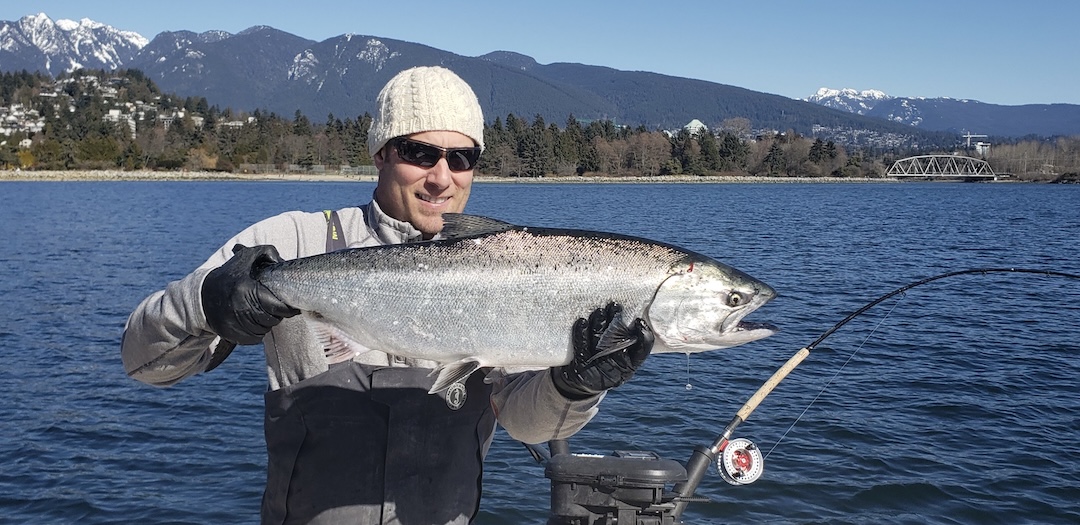
Jason Assonitis, Owner/Operator Bon Chovy Fishing Charters, with a hatchery winter Chinook in March at the Mouth of the Capilano River
Results of the Reference Fishery
For the most part, the reference fisheries have only been conducted in the time- and area-limited Chinook retention opportunities around southern BC when Chinook non-retention is otherwise in effect. There are two exceptions to this: in Nootka Sound and in Howe Sound.

Nootka Sound
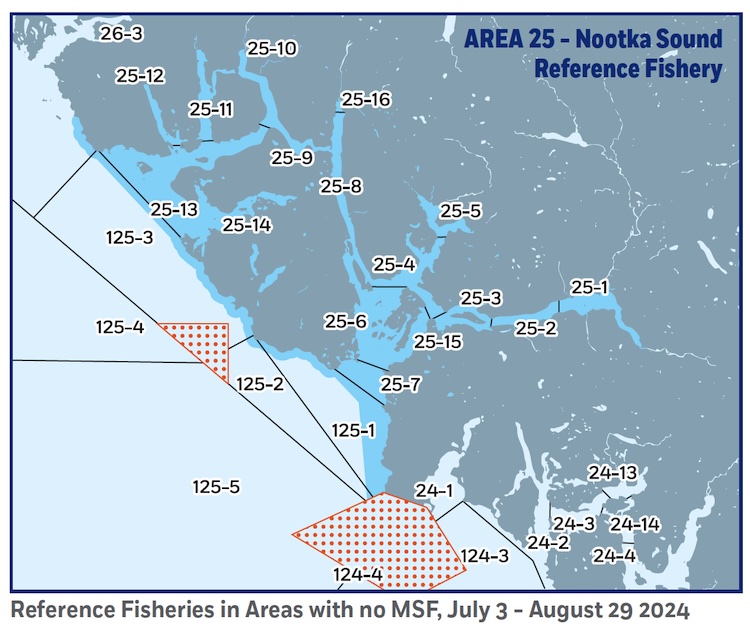
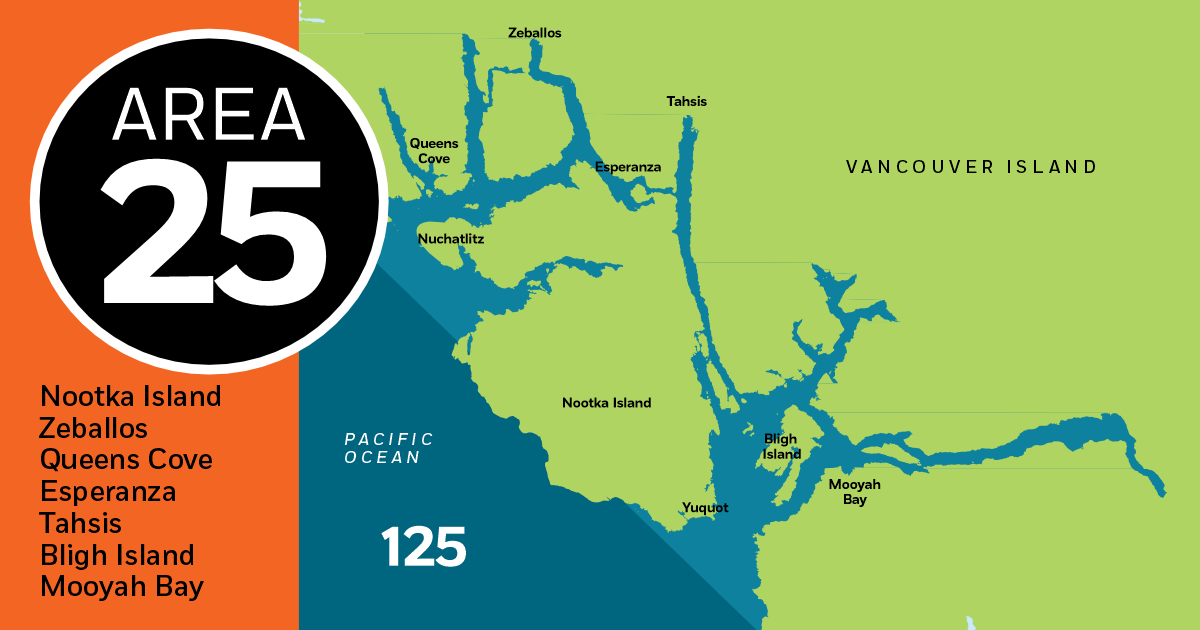
The Nootka Sound reference fishery that began in 2024 is an outlier from the rest because, as mentioned previously, the Fraser stocks of concern are not present inside the surfline. For reasons of its own, DFO decided to pilot Chinook mass marking (adipose fin-clipping 100% of production, not just those with a CWT applied) at the Conuma River Hatchery, beginning with production from the 2019 brood year. This has continued every year since, meaning that by 2024 a full suite of returning year classes were present in the fishery there, with the presence of marked Chinook enabling a real-time understanding of the hatchery vs. wild contribution to the fishery in that area. Any reference fishery results described here do not include those from the Nootka Sound project.
Howe Sound
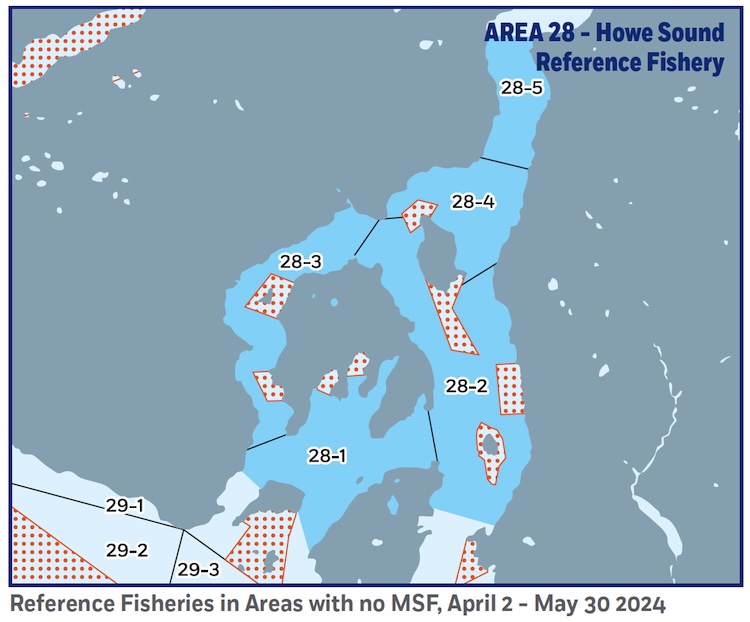
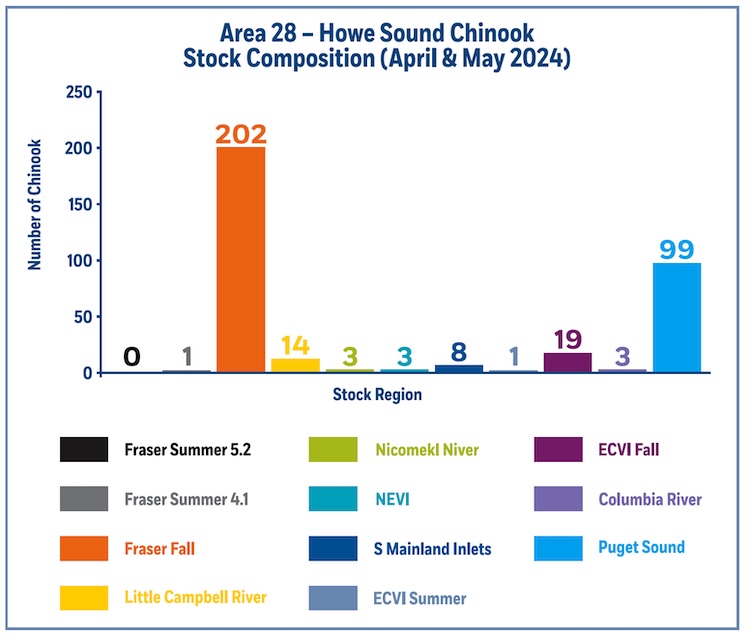
With five months of Chinook non-retention, the Vancouver area has been especially hard hit by the management regime in place since 2019. All the available historic data showed that the stocks of concern are not present in Howe Sound in April and May, and the 2024 reference fishery results there confirmed this. The number of fish encountered was high, with 356 legal-sized fish sampled. The stock composition analysis showed this total was dominated by two stock aggregates: Puget Sound (99 fish) and Fraser fall-run Chinook (202 fish). This latter stock grouping consists almost entirely of two individual river stocks, the Harrison and the Chilliwack. The former is all wild production, but the latter is significantly enhanced and made up 69% of the Fraser fall stock group sampled.
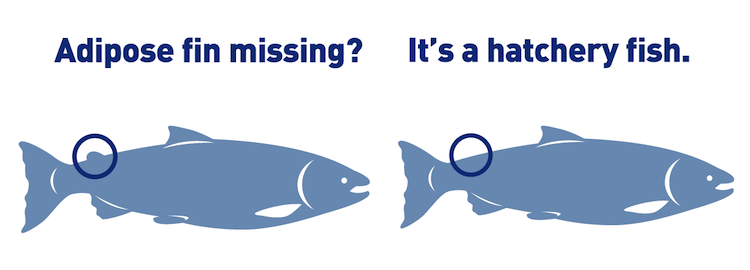
Although the observed mark rate on legal-sized fish in this reference fishery was 39% in 2024, this is nowhere close to the actual hatchery origin share of the total, because at present only those fish bearing a CWT are adipose fin-clipped at the Chilliwack hatchery.
Parentage Based Tagging (PBT)
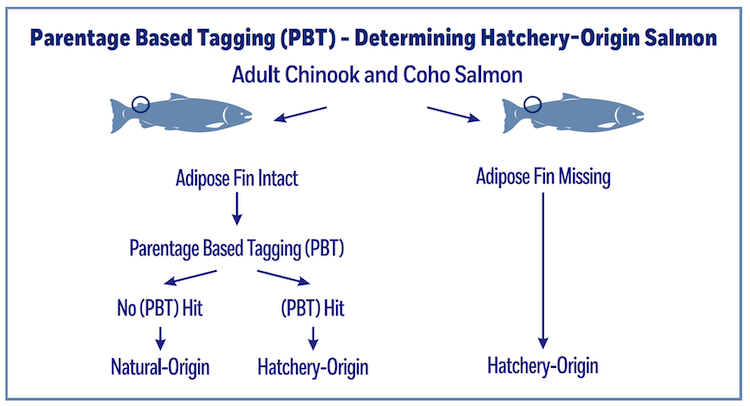
Because all Chinook and coho salmon used as broodstock at Canadian hatcheries have a tissue sample taken (known as parentage-based tagging or PBT), by comparing the fishery-derived bio-samples with the known PBT data bank, it would be easy to calculate what the actual share of hatchery-origin fish is in this fishery or in those elsewhere.
If Canada had by now made the decision, similar to that in Washington state, to mass mark all hatchery Chinook stocks intended to support fisheries, then beyond doubt the mark rate in the Howe Sound spring fishery would certainly be in the 55 – 70%+ range found in the early-season fishery around southern Vancouver Island where the catch is dominated by fish from Puget Sound. Mark rates at this level are desirable for MSF management because it lowers the encounter rate of unmarked, genuinely wild Chinook and minimizes the incidental release mortality on them.
Data Supports Increased Retention
The results from both years confirm that in those times and areas the reference fisheries were conducted, the encounter rate of Fraser stream- type Chinook is extremely low, with stock composition dominated by three stock aggregates: east coast Vancouver Island (ECVI) fall run, Fraser fall run, and Puget Sound. In 2023, of the 298 legal-sized fish sampled and for which river of origin was determined, four were stream-type stocks of concern; however, all were unmarked (with an adipose fin) and were caught in areas with pure MSF management in effect and would not have been legal for retention. In 2024, 1,047 legal-sized Chinook were sampled, and for which river of origin was determined, of which six were Fraser stream-type stocks of concern, but once again, all were unmarked and encountered in places with pure MSF management in effect and would not have been legal for retention.
Encountering 10 Fraser stream-type Chinook out of 1,345 legal-sized fish sampled in the reference fisheries is unquestionably a very low rate; however, the wider impact on the stocks of concern has to factor in an expansion factor to account for the full fishery and an allowance for any release mortality (FRIM, or fisheries-related incidental mortality)—expect to hear a lot about this in the near future. Even so, detailed data from the reference fisheries in conjunction with the longer Avid Angler data set supports a compelling case to allow for additional time- and area-specific Chinook retention opportunities around southern BC, where non-retention is presently in effect.
This article appeared in Island Fisherman magazine, never miss another issue—Subscribe today!
Visit the Store
$34.99
$34.99
Featured Catch
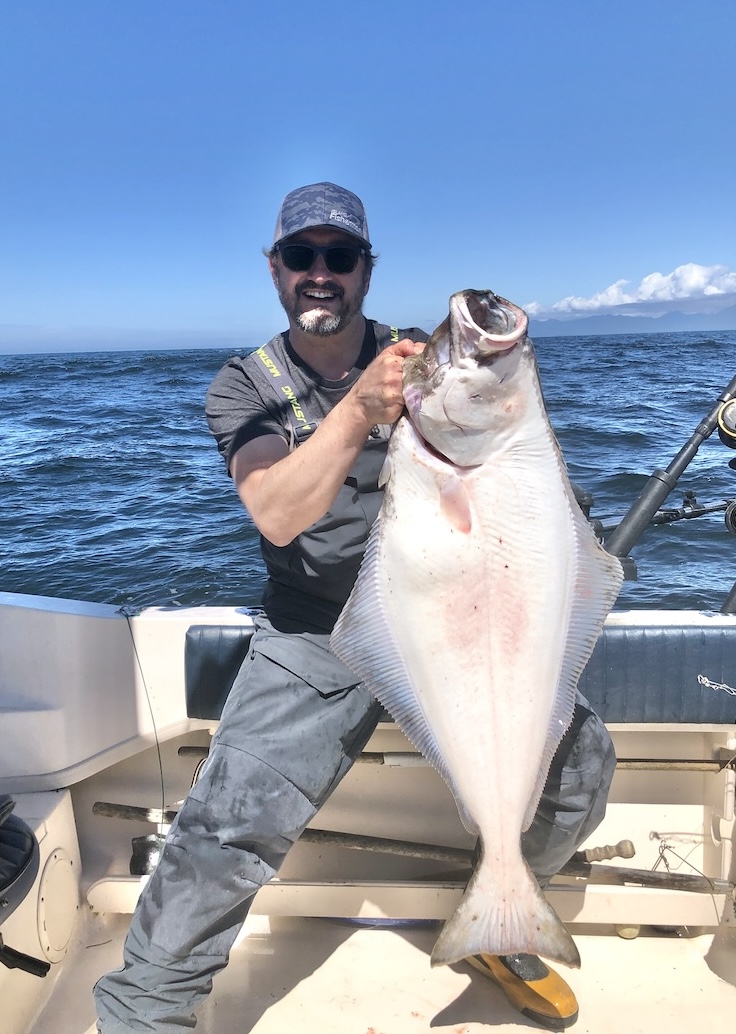
Joel Unickow halibut (Photo: Rob Frawley Lucky Strike Sportfishing Tofino)