
The $29,000 Reel: How Chinook Enhancement is Powering Coastal Conservation
The Strategic Importance of Hatcheries in 2026
Hatcheries have evolved into high-tech centres for genomic preservation and population stabilization. In April 2026, Fisheries and Oceans Canada (DFO) expanded the Pacific Salmon Strategy Initiative, securing significant funding to support these facilities. A major portion of this is dedicated to “Mass Marking,” which allows for “Mark Selective Fisheries”—enabling anglers to retain hatchery fish while releasing wild stocks to ensure long-term species resilience.
Hatcheries act as a vital buffer against the “recruitment gap” caused by extreme climate events. By providing a controlled environment during the most vulnerable life stages—from egg incubation to smoltification—these facilities significantly increase freshwater survival rates. This “head start” is essential during years of habitat degradation, ensuring that a robust cohort of Chinook reaches the North Pacific annually.
Expert Analysis: Hatchery Mechanics
To truly appreciate the role of these facilities, one must understand the biological journey from broodstock capture to final release.
A Model of Excellence: The Oyster River Enhancement Society (ORES)
While federal initiatives provide the framework, groups like the Oyster River Enhancement Society (ORES) provide the critical “boots on the ground”. Founded in 1983 after decades of logging decimated local stocks, ORES has become a gold standard for community-led Chinook enhancement. Operating in Bear Creek Nature Park, this volunteer-run organization manages complex side channels and incubation buildings that provide sanctuary for Chinook, coho, pink, and chum salmon.

The ORES success story is one of persistent modernization. By 2026, the society has integrated upgraded solar-powered systems and automated monitoring to ensure their off-grid facility remains operational. Their work has led to consistent annual returns of 30,000 to 50,000 spawning salmon, a feat that would be impossible without their dedicated volunteer base.
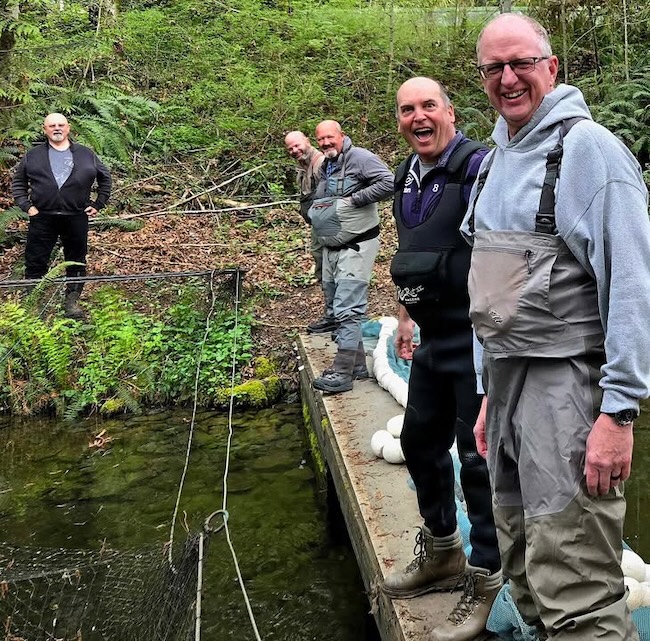
Volunteers preparing to seine coho fry for release (Photo: ORES)
Islander Reels: A Record-Breaking Bid for Conservation
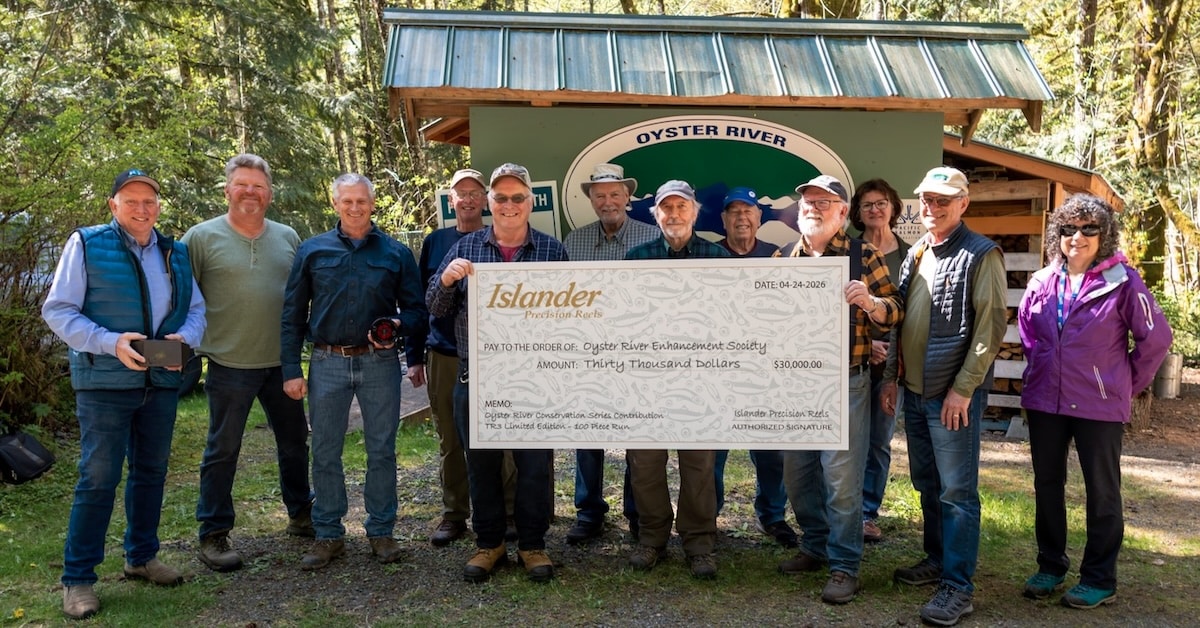
Islander Reels, based in Saanich, has long integrated corporate responsibility into their business model. Their commitment to Chinook enhancement reached new heights in April 2026 through a limited-edition collaboration with renowned First Nations artist Roy Henry Vickers. Featuring custom-etched artwork on a 100-reel run of the TR3, this “Oyster River Edition” retail for $1,799.95 CAD, with $300 from every sale donated directly to ORES. It wasn’t long after they were sold out.
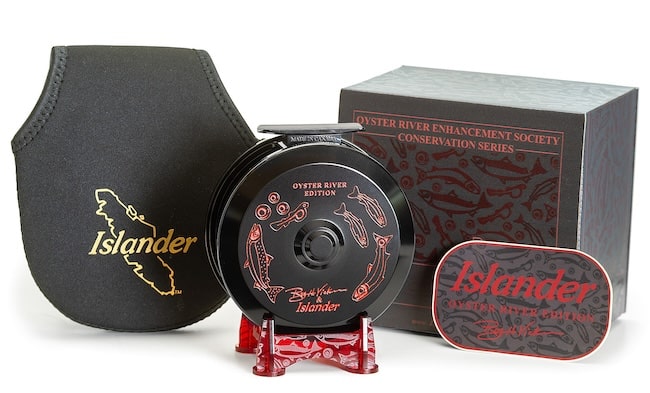
The true headline, however, came from the 2026 Campbell River Salmon Foundation (CRSF) Gala Fundraiser. Serial #001 of the Roy Henry Vickers limited-edition run was offered at live auction to benefit ORES. In a testament to the community’s support for conservation, the winning bid for the single reel reached an astounding $29,000. This record-breaking contribution demonstrates the deep-seated value Island anglers place on the restoration of salmon habitat on the Oyster River. A whopping total of $59,000 raised!
Taylor Westendorp, Communications Manager of Islander Precision Reels said, “This was bigger than a reel for us. We’re lucky to be in a position to give back, and seeing nearly $60,000 go to the Oyster River between the 100 piece reel run and the gala says a lot about what this community can do when it comes together to support salmon enhancement.”
Conclusion: The Collective Path Forward
The news for 2026 is one of guarded optimism. We are seeing record levels of community investment and unprecedented cooperation between federal bodies, local volunteers like ORES, and industry leaders like Islander. However, Chinook enhancement is a continuous journey. It requires constant advocacy and support for the local stewards who ensure that the “scream of a reel” remains a sound heard by generations to come.