
The Salmon Head Recovery Program: 2025 Data Review
What is the Salmon Head Recovery Program?
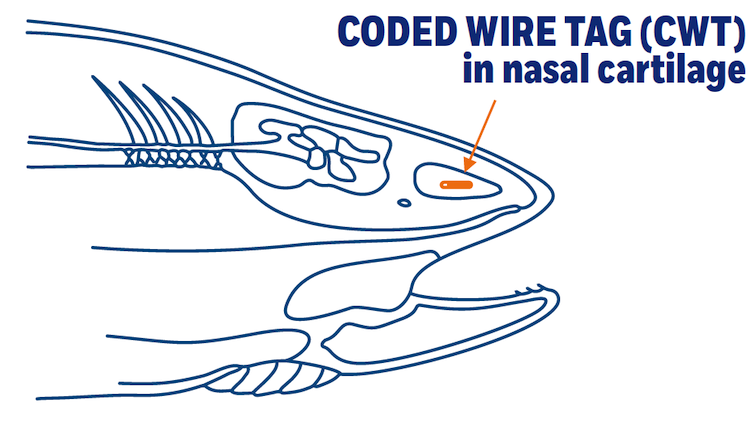
Before millions of juvenile salmon are released into the Pacific each year from hatcheries, the adipose fin is clipped on many of them and in a small percentage a microscopic 1mm Coded Wire Tag (CWT) is injected into their snout. This tiny piece of wire holds the secret to that fish’s life story—its hatchery of origin, brood year, and more.
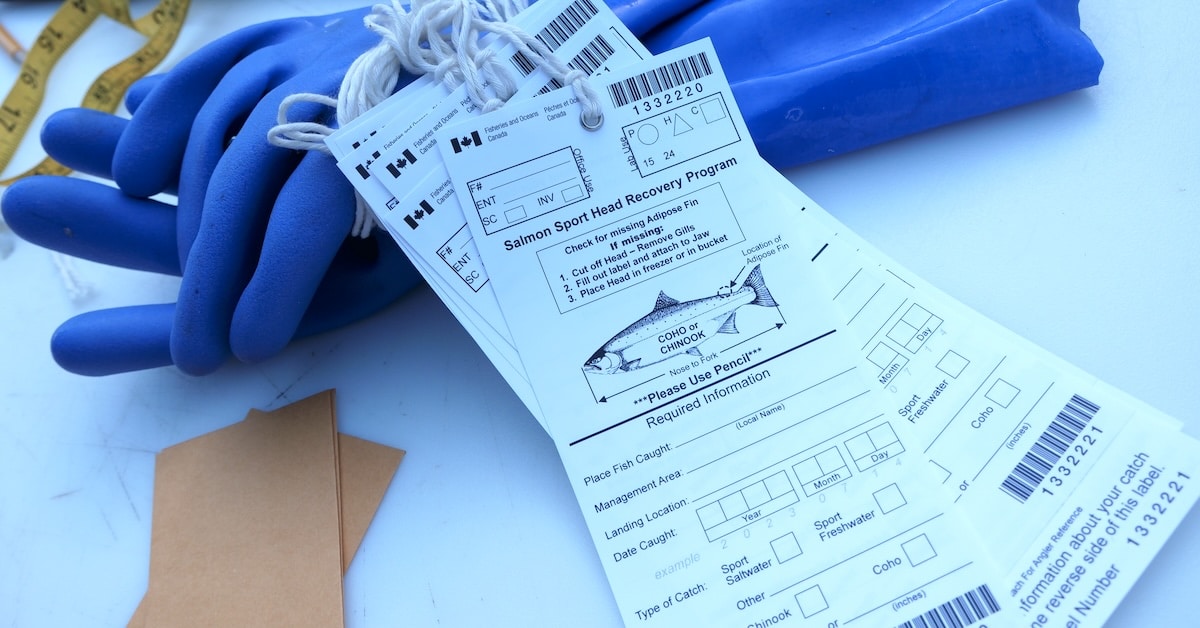
When you drop a fin-clipped head off at a Salmon Head Recovery Depot (like a local marina or tackle shop), DFO scientists carefully extract and read that tag.
2025 Data: What Did We Learn?
I’ve been diving into the preliminary CWT recovery data from the 2025 BC Recreational Fisheries, generated on March 25, 2026. Here’s a breakdown of what the numbers are telling us.
Note: It’s important to remember that these recovery numbers are dependent upon tagging rates, survival rates, sampling rates, total catch, and management actions. They should not be used to make direct inferences on stock status.
Top Hatcheries Contributing to Our Catch
From which hatcheries were the most CWTs recovered? Looking at the 3,880 total CWTs recovered from both Chinook and coho, the top list is heavily dominated by BC hatcheries. Below is the breakdown of the top 10 contributors:
| Hatchery Facility | Tags Recovered |
|---|---|
| *Inch Creek (BC) | 1,307 |
| Robertson Creek (BC) | 348 |
| Big Qualicum River (BC) | 251 |
| Quinsam River (BC) | 233 |
| Chilliwack River (BC) | 189 |
| Puntledge River (BC) | 89 |
| Nitinat River (BC) | 78 |
| Shuswap River (BC) | 75 |
| Marblemount (WA) | 71 |
| Lyons Ferry (WA) | 70 |
*Inch Creek leads primarily due to high coho recoveries in freshwater tributaries (1,106 tags in freshwater vs 201 in saltwater).
Age Breakdown: The Chinook Sweet Spot
For Chinook recreationally caught in 2025, the data highlights a clear “sweet spot” for 4-year-old fish. A 4-year-old caught in 2025 started its life cycle during the 2021 brood year.
Chinook Recovery by Age (Total Tags: 1,988)
Regional Breakdown: Where Are Our Fish Coming From?
The proportions of CWTs by province or state tell a fascinating story about migration patterns:
- West Coast Vancouver Island (Areas 21-27, 121-127): A true melting pot. 287 tags from BC, 229 from Washington, 54 from Oregon, 2 from California, and 1 from Idaho.
- Johnstone Strait & Strait of Georgia (Area 13): Heavily domestic. 353 tags from BC compared to Washington’s 43.
- Northern BC (Areas 1-5, 101-105, 142): 165 tags from BC, 15 from Alaska, and 2 from Washington.

Technical Insights: Trolling and Sampling
To maximize your contribution to the Salmon Head Recovery Program, it is helpful to understand how these fish are interacting with your gear. High-traffic feeding grounds like the West Coast of Vancouver Island see diverse stocks migrating through. When trolling for Chinook, maintaining consistent speeds (typically 2.0 to 3.0 mph) and monitoring your depth is critical for targeting the 3 and 4-year-old “sweet spot” fish identified in the 2025 data. If you are catching smaller, unclipped fish, consider adjusting your lure size or colour—greens and glow patterns remain staples in BC coastal waters—to selectively target legal, hatchery-origin salmon.
Seasonal Trends: When Are We Catching Them?
Summer months reign supreme for head recoveries. Out of 14,837 total heads recovered (including those without labels):
- July: 4,037 heads
- August: 3,772 heads
- June: 2,881 heads
- September: 954 heads
Pro Angler Resource
Want to dial in your gear even further? Check out our detailed guide on using flashers to trigger more strikes.
Conclusions: Why Your Participation Matters
Looking at the 2025 data, a few things are crystal clear. First, BC hatcheries—especially Inch Creek and Robertson Creek—are putting a large number of marked fish onto our lines. Second, the West Coast of Vancouver Island remains an incredibly diverse feeding ground, hosting fish from all over the Pacific Northwest. And finally, the bulk of our recreational Chinook fishery relies heavily on 3- and 4-year-old fish.
The Coded Wire Tag program only works if we do our part. Every time you skip turning in a fin-clipped head, that data is lost forever. More data means better science, more precise management decisions, and ultimately, better fishing for all of us.
Next time you’re on the water, keep an eye out for that missing adipose fin. Bag the head, fill out the label, and drop it off at your local depot.
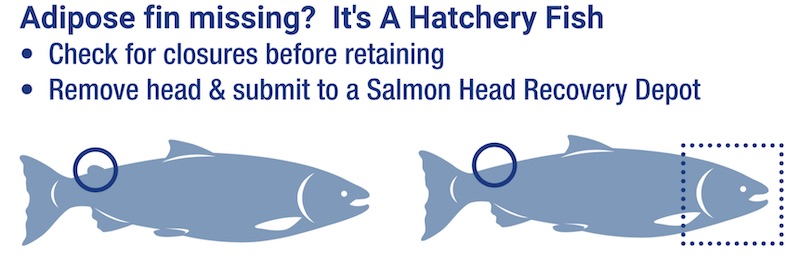
Adipose fin-clipped hatchery Chinook