

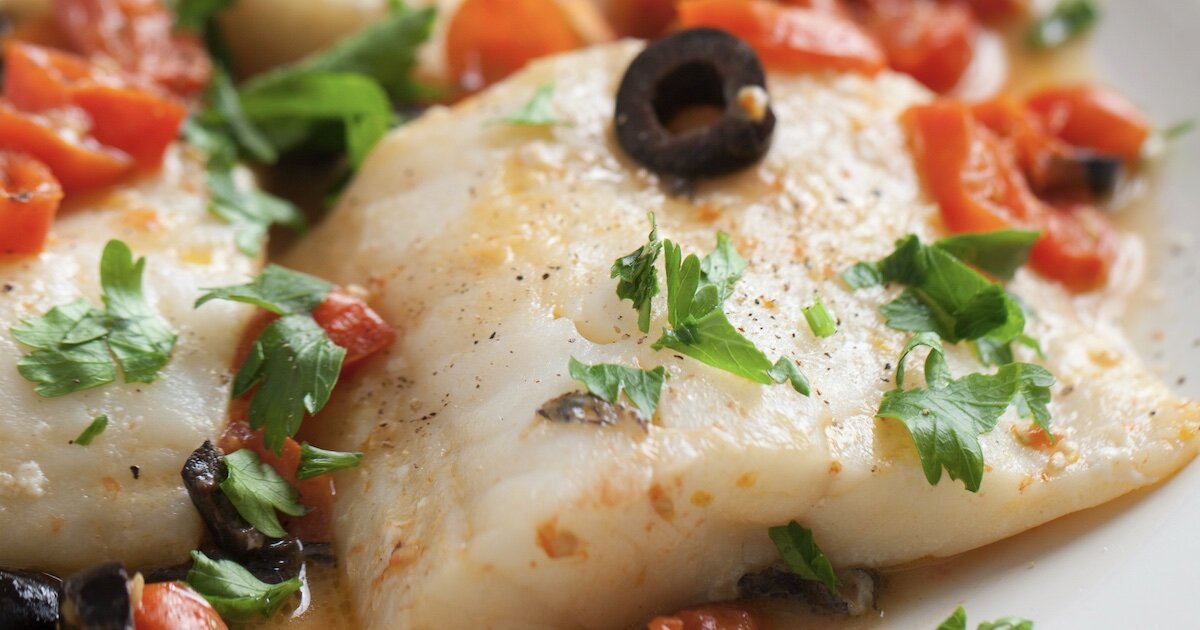
If you are looking for an easy, restaurant-quality halibut recipe, this Halibut with Olives & Tomato is a dead simple dish.
Why This Mediterranean Halibut Recipe Works
Halibut is nothing less than ambrosia. Its delicate flavour stands easily on its own with little need for sauces and sides. As with any fish, however, a little acid and a savoury touch can turn a perfect main course into a life-changing experience that leaves you with those “Remember when we had…” cravings.
Halibut can be the easiest and most difficult fish to cook at the same time. It’s all about erring on the side of undercooking rather than overcooking—the best way to ruin a good piece of halibut is to overcook it. I suggest preparing your halibut into portion-sized pieces and watchfully pan frying them in this dead simple, stupidly delicious recipe, with optional Mediterranean-inspired sauce. Just remember … I warned you.
Because wild Pacific halibut is incredibly lean, its thick-flaked white flesh can dry out in a matter of seconds. For a perfectly juicy result, pull your fillets off the skillet when the internal temperature hits 130°F to 135°F. Carry-over cooking while the fish rests will bring it up to an ideal, tender 140°F internal temperature.
When managing a pristine West Coast catch, a great halibut recipe requires an understanding of texturing. Halibut harvested from the deep cold waters off Vancouver Island holds a clean, dense profile. When you introduce the high-heat sear of a cast-iron or heavy-bottomed skillet, you create a beautiful golden crust that seals in natural moisture before tossing in your acidic components.

Joel Unickow with a fresh caught halibut
Perfecting the Pan-Reduction Sauce
The magic of this dish unfolds directly in the pan pan-fusion process. Once your fillets have achieved a stunning sear, reducing the burner heat lets you blister sweet cherry tomatoes, shallots, garlic, and rich, briny Kalamata olives in the remaining oils. Deglazing the cooking surface with a generous splash of dry white wine lifts those caramelized bits off the pan, resulting in an automated, gourmet emulsification when swirled with a cold pat of butter.
| Preparation Parameter | Target Standard |
|---|---|
| Ideal Portion Size | 5 to 6 oz (140-170g) per fillet |
| Skillet Temperature | Medium-High (Screaming Hot Initial Sear) |
| Optimum Pull Temp | 130°F – 135°F internal |
| Wine Pairing Profile | Crisp Pinot Gris, Sauvignon Blanc, or unoaked Chardonnay |
This classic Pacific Northwest halibut recipe pairs beautifully with a crisp white wine, which cuts through the buttery richness of the reduction while complementing the bright notes of the burst tomatoes.
Halibut with Olives & Tomato
Ingredients
Equipment
Method
- Sauce: Heat a good glug of oil in a small saucepan on medium-high heat. In a medium bowl add garlic,cherry tomatoes, shallots, olives, and salt and pepper to taste. Put your mixture into the saucepan and cook, stirring occasionally, until tomatoes start to break down. Add white wine, bring to a boil, then reduce heat to simmer while you cook the fillets. Squeeze in lemon juice to taste.
- Pat fillets until dry, and generously salt and pepper both sides.In a small to medium-sized skillet,heat butter and drop in fillets on medium-high heat, presentation side down.Carefully watch the fillets—after 2-3minutes, they should be golden and crisp before flipping. Squeeze a wedge of lemon on the fish as it cooks. Gently flip the fillets and cook until just slightly firm to the touch. Prying apart a small section should reveal a slightly transparent—this is when you move toplate the fish (it will continue to cook while resting). Squeeze another wedge of lemon on, then spoon on your sauce mixture. Sprinkle with parsley and serve with an additional lemon wedge.Serve with a good, rustic, crusty bread and your favorite complementary vegetable side, like small potatoes and/or asparagus. Prepare to be wowed!
Nutrition
Tried this recipe?
Let us know how it was!🌊 Master Your Coastal Kitchen
Want more exclusive, chef-tested seafood strategies and regional fishing breakdowns sent straight to your door? Don’t miss out on seasonal fishing patterns and elite recipes from across British Columbia. Subscribe to Island Fisherman Magazine Today.
This article appeared in Island Fisherman Magazine. Never miss another issue—subscribe today!