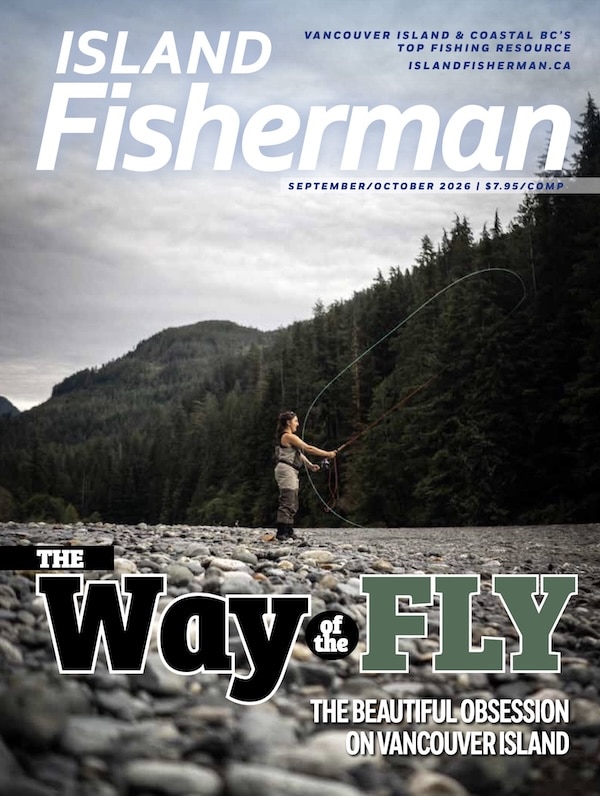

I’ve spent the last few days reading through the letters you’ve sent us. I didn’t just see data points or policy complaints; I saw photos of grandchildren, stories of 60-year traditions, and a deep-seated fear that the “soul” of our coastal communities is being auctioned off.
The Department of Fisheries and Oceans (DFO) is currently reviewing the Salmon Allocation Policy (SAP). While the jargon sounds clinical, the reality is emotional. This review could end priority access for the public fishery, replacing it with “fixed shares” that treat our heritage like a cold commodity.
With the January 23, 2026 deadline looming, these aren’t just opinions—they are the heartbeat of the British Columbia coast.
The “Wall” of Memories: Protecting Our Legacy
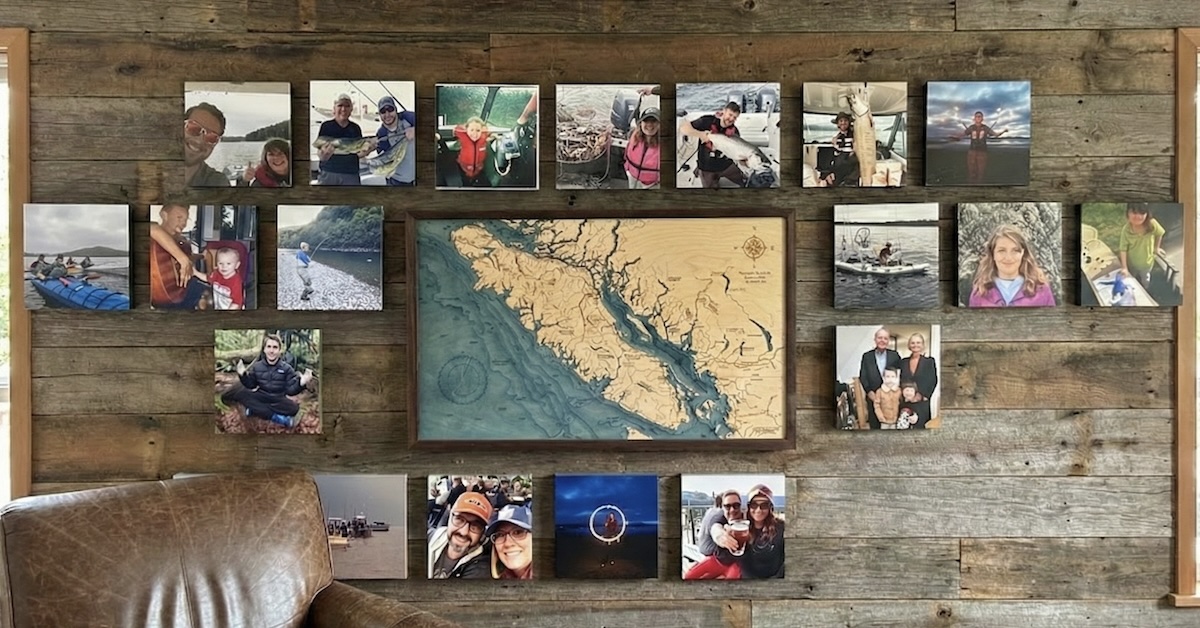
For many of us, the kitchen or mudroom wall tells the story of our lives. Bob and Elaine Hayden from Sooke shared a story that stopped me in my tracks:
“My wife began posting pictures of our catch on the wall. Visitors marvelled at them, and it ignited our grandchildren’s interest. They all wanted to ‘Get on the Wall.’ These youngsters will be denied that happiness if the government prioritizes tonnage over BC family fishers. We are fighting for the next generation’s right to that joy.”
This isn’t just about a fish on a hook. It’s about the bond between a grandfather and a grandson. It tradition. It’s legacy. It’s about the “Wall” that keeps families connected to the water. As Tom Hearsey put it, taking away these traditions is quite simply “cruel and unfeeling.”
This cartoon perfectly illustrates the “why” behind our fight. I included it because it captures the soul of the BC angling community: fishing isn’t just a hobby we pick up and put down; it’s a lifelong thread that connects us to our past and binds us to our future.
When we talk about the Salmon Allocation Policy (SAP) review, we aren’t just debating “tonnage” or “quotas”—we are fighting to protect the heritage of BC sport fishing. This isn’t just about the fish we catch today; it’s about ensuring that the next generation has the same opportunity to build these lifelong bonds on the water, long after we are gone.
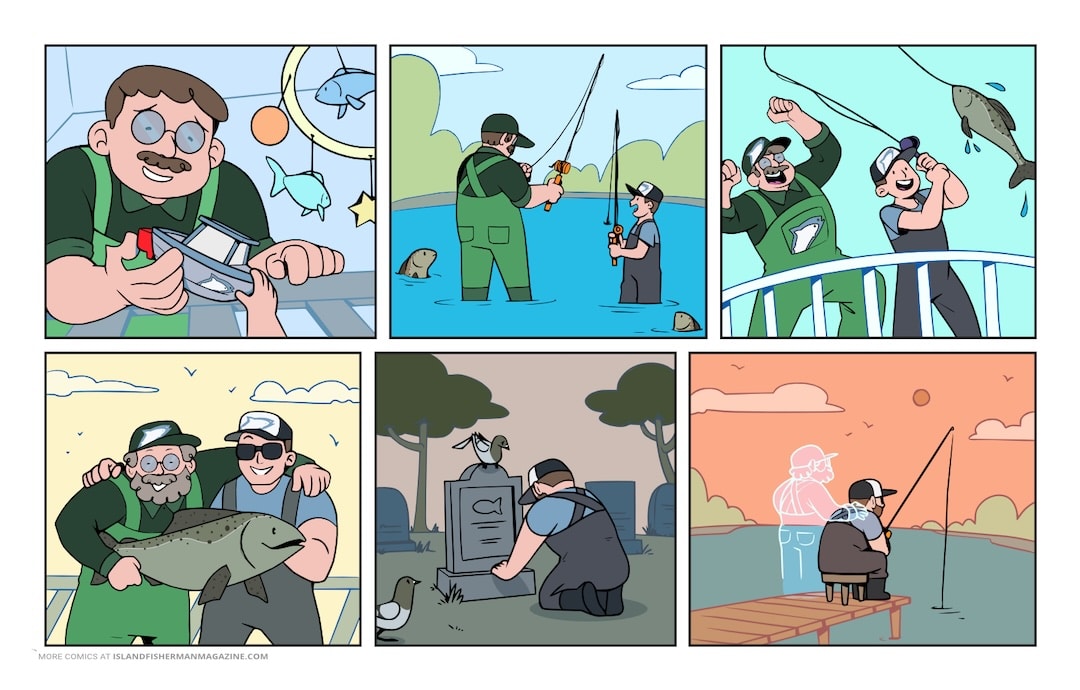
It’s our culture, it’s our heritage—it’s legacy. Art: Island Fisherman magazine
Sixty Years on the Water: A Community Under Threat
We are told that changes are necessary for “modernization,” but those who have spent decades on the water see a different reality. Richard Dobler, who has fished both sides of Vancouver Island for 60 years, notes that the salmon are there—but the common sense is missing.
“The last few years have been the best fishing for Springs and coho I’ve ever seen,” Richard says. “It would be a devastating mistake for the economy of many small businesses if we lose access now.”
This sentiment is echoed by everyone from tackle shop owners to lodge operators. Our coastal towns don’t run on “fixed shares”; they run on the sport fishing dollar. When a family comes to the Island to fish, they buy gas, they stay in hotels, and they eat at local restaurants. If the DFO removes the opportunity to fish, they remove the economic lifeblood of our towns.
We published an extensive breakdown here: Recreational Fishing Generates $1.276 billion in Revenues: A Breakdown of BC’s Coastal Economy
Stewardship: We Pay for the Fish We Can’t Catch
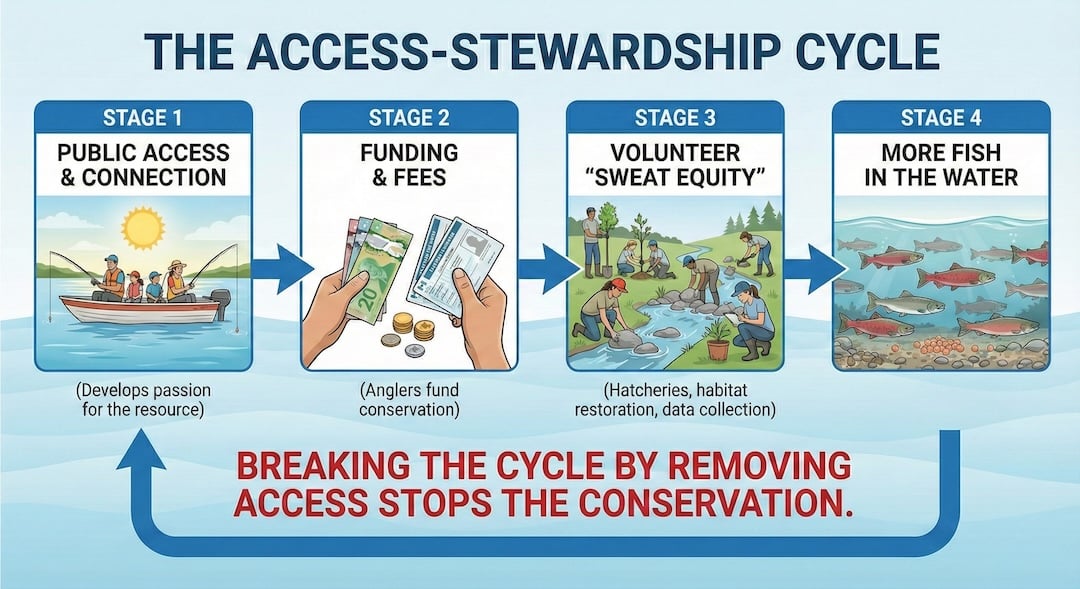
There is a growing, painful feeling that the recreational angler—the very person who pays for the salmon stamps and funds the hatcheries—is being ignored. We aren’t talking about a small special interest group; we are talking about an army of over 372,000 licensed anglers, nearly 90% of whom are BC residents living right here on the coast. What the DFO often overlooks is that the public fishery is self-funding and self-recovering. Every time you buy a Salmon Conservation Stamp, you are directly funding community restoration.
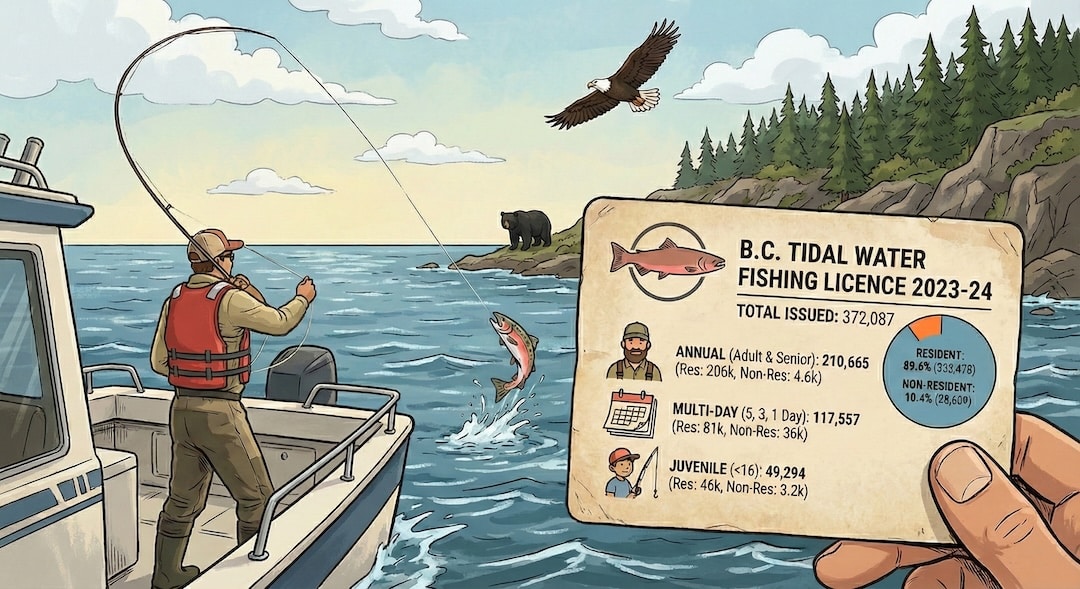
The public fishery is a “user-pay” system that generates over $1.2 billion in gross sales and supports more than 9,000 jobs—far outperforming the commercial sector in value-per-fish. But our contribution goes beyond money:
-
Volunteer Power: Across BC, nineteen “Community Economic Development” hatcheries—like the Nanaimo River Hatchery—rely on public volunteers to clip tens of thousands of adipose fins each year.
-
Hatchery Support: Organizations like the Nootka Sound Watershed Society and local rod and gun clubs spend thousands of hours and millions of dollars on habitat restoration, from clearing debris to excavating side channels for rearing juveniles.
-
Selective Fishing: We lead the way in Mark Selective Fisheries (MSF), which allow us to catch abundant hatchery fish while protecting wild stocks of concern—a strategy the DFO continues to stall on despite its proven success.
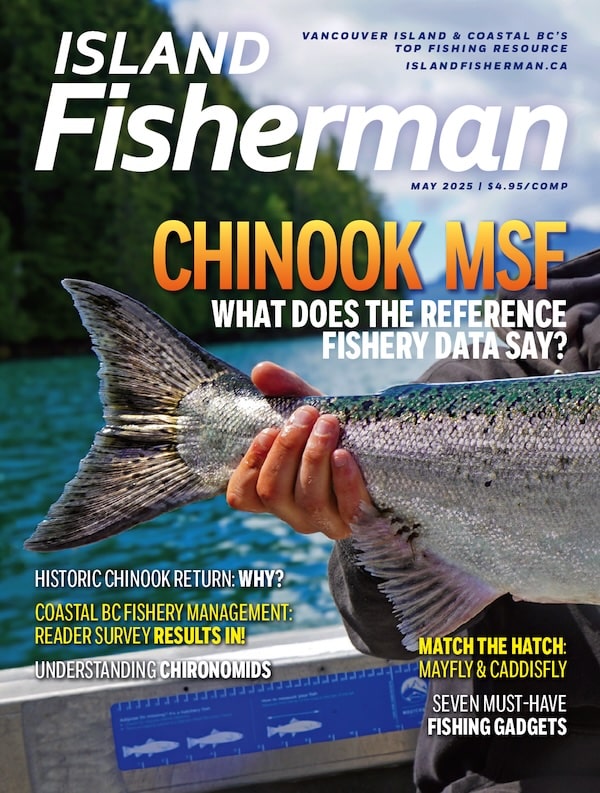
May Issue Island Fisherman magazine 2025
We are the ones clearing the streams and clipping the fins. To be told we are the “problem” that needs to be “modernized” out of existence is an insult to every volunteer on the coast. John McKay’s frustration is one I hear every day:
“I send polite, science-based letters. I donate to local hatcheries. But I am convinced this government is stopping your right to fish regardless of science or logic. They are out of touch with the common folk.”
The Responsibility of Government: Access for All
We all agree on conservation. We all respect First Nations’ legal rights. But as Adrian Wall wisely reminds us, the government’s job is to manage the resource for all Canadians:
“Salmon require the support of all Canadians to sustain the ecosystem. It is paramount that policies grant as much access to the public as possible.”
The urgency of this policy review is underscored by a profound lack of public confidence in current management. Recent survey data reveals that a staggering 84% of respondents believe the DFO manages the fishery based on politics rather than science. Furthermore, 96% of participants agree that it is critical for elected officials to understand the public fishery’s contributions to BC, yet there remains a deep-seated feeling that these values are being sidelined.
For the ‘heart of the coast’ to keep beating, the final Salmon Allocation Policy must move beyond political expediency and finally align with the scientific and economic realities of the families who depend on these waters.
Final Thoughts: The Wall That Defines Us
As I look at the 2025 Brag Board highlights from our November-December 2025 issue and thumb though our issues, I see more than just fish. I see a map of life on this coast. They are the record of the sunrise conversations, the shared silence of the troll, and the pure, electric joy of a double-header. But as I read the DFO’s proposed Salmon Allocation Policy (SAP) review, those future photos feel like they are being erased. We are being told that “modernization” requires us to step aside, even as the salmon return in numbers we haven’t seen in a generation.

Island Fisherman Brag Board 2025
The Salmon Allocation Policy (SAP) review is the fight of a generation. If we lose priority access, we don’t just lose a hobby—we lose a piece of who we are as British Columbians.
The clock is ticking. You have until January 23, 2026 to make your voice heard.
-
Action: Email DFO: [email protected]
-
Message: Tell them about your “Wall.” Tell them about your 60 years of history. Tell them that the public fishery is the heart of this coast.
-
Help: Visit FishingRights.ca to get you started.
Let’s make sure our grandchildren have their own stories to put on the wall.
Get the documented history of our fishery as it happens—subscribe to Island Fisherman magazine today.